“Great price. Highly recommend this company for any service or repair.”
Thermal Imaging Water Detection in Henderson, NV
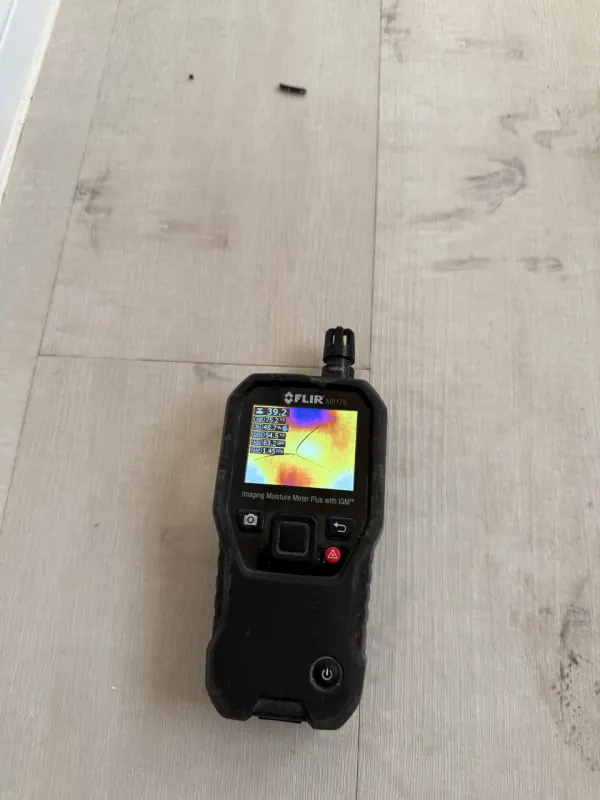
A thermal camera shows temperature, not water. Wet materials usually read cooler than dry ones, so the camera helps us find the suspect spots on a ceiling or wall without opening anything. Then we check each one with a moisture meter, because a cool spot can also be a draft, a stud or a gap in the insulation.
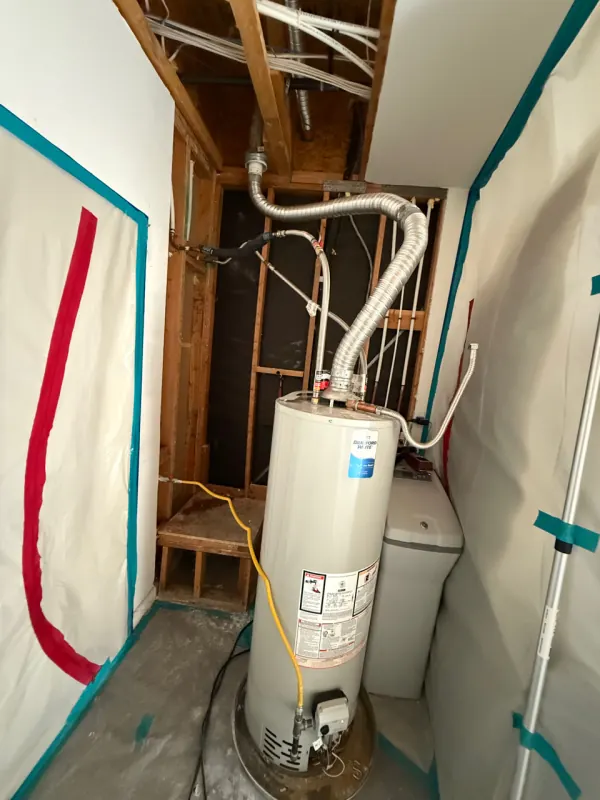
Around Henderson, we use it most for ceilings under attic air handlers, walls behind showers and kitchens, and slab floors where a hot-water line might be leaking. It's a fast way to narrow a big house down to a few spots worth testing.
24/7 Response
IICRC-Certified
Licensed & Insured
Insurance Support
Google Reviews
10 reviews with a five-star rating.
Real customer experiences from Quality 1st Restoration across water damage, mold, repairs, and restoration.
5.0 10 verified reviews
Write a review
“Quality First Restoration is fair and they cared about me. They helped me through the entire process...”
“I was referred to Quality Restorations from an insurance agent. I was impressed that they answered the call...”
“Literally life savers!! I had been dealing with some skin issues...”
“We had a drainage pipe burst inside the wall of our laundry room, and the leak went downstairs...”
“Quality First Restoration is fantastic! The crew did a wonderful job with water damage.”
“I had the opportunity to meet with Todd. He is knowledgeable and responsive. We made the right choice moving forward...”
“The team at Quality First Restorations did a great job taking care of a water leak above our bathroom...”
“Quality First Restoration did an amazing job from start to finish. Professional, responsive, and high-quality work.”
“So I've worked with Todd at Quality First Restorations previously on a rental I have. The tenants had a leak...”
What the camera can and can't tell you
People usually expect too much from the camera. Here's the honest version.
Can the camera see the water inside my wall?
No. Anyone who says it can is overselling it. A thermal camera reads the surface temperature of whatever it's pointed at. Wet drywall usually runs cooler than dry drywall because the water is evaporating, so it shows up as a darker patch. That patch is a clue. It isn't proof.
What else looks like a leak on the screen?
Plenty. A draft around an outlet. A stud behind the drywall. A gap in the insulation. A cold AC register blowing on the wall. Any one of those can make a cool spot that has nothing to do with water. Shiny surfaces like tile and metal can also bounce heat around and fool the image.
So how do you know it's really wet?
We put a moisture meter on the spot. If the meter reads wet, it's wet. If the camera shows a cool patch and the meter reads dry, we move on. Nobody cuts into that wall.
Will the camera tell you which pipe broke?
Sometimes it narrows the search, like a warm line across the floor where a hot-water pipe runs through the slab. It won't give a plumber an exact spot to dig. Finding and repairing the pipe is a plumber's job. We find what got wet and dry it.
Do you have to open anything to use it?
No. That's the point of starting with the camera. We can scan a ceiling or a long wall in a few minutes without touching it, then test only the spots that look off.
How much does it cost? Will insurance pay?
Water mitigation in the Las Vegas Valley usually costs $1,500 to $4,800. That covers getting the water out, drying the structure and checking it with moisture meters until the readings are back to normal. If drywall, baseboards or flooring had to come out, the repairs are a separate estimate, so you see each part on its own.
The camera itself doesn't move the price much. What it finds does. If the scan and the meter agree on one wet patch of ceiling, it's a small dry-out. If the pattern runs across a ceiling and down two walls, there's more material to dry, and maybe more to replace.
Water mitigation
$1,500–$4,800
Extraction, drying equipment and moisture checks.
Repairs
Priced separately
Only if drywall, baseboards or flooring had to come out.
Estimate
Free
On site, before any work starts.
Insurance or self-pay, you decide
Insurance usually pays when the water came on suddenly, like a supply line that split overnight. A leak that dripped for months usually isn't covered. Your carrier makes that call, not us.
We handle the record: photos, moisture readings and a line-item estimate built in Xactimate, the same software most adjusters use. Then you compare it with your deductible and decide whether to file.
Paying yourself? Ask about the self-pay discount. The estimate is free, and you see the price before we start.
Book a free estimatePlanning figures from our work in the Las Vegas Valley, not a quote for your property.
How we use a thermal camera on a water job
- 1
Give it something to see
The camera needs a temperature difference. If the house has been closed up and everything's the same temperature, we may run the AC or wait for the day to warm the room before we scan.
- 2
Scan wide
We sweep the ceiling, the walls around the fixture or appliance, and the floor. Anything cooler, warmer or oddly shaped gets noted.
- 3
Rule out the usual suspects
Studs, vents, outlets, windows and reflections get checked off first. A cool patch in a straight vertical line every sixteen inches is usually framing.
- 4
Put a meter on every suspect spot
Each patch that's left gets a moisture reading. The meter decides what's wet. The image goes in the file next to that number.
- 5
Hand off to the right trade
If the pattern points at an active plumbing, roof or AC problem, we tell you who to call. Once the source is stopped, the confirmed wet areas go on the drying plan.
A cool spot is a question. The meter answers it.
The camera can light up over a perfectly dry stud bay just because the insulation inside has slumped. If that wall had been cut based on the image alone, you'd be paying to patch drywall that was never wet.
So the rule is simple. No wall gets opened because of an image. It gets opened because a meter says the material is wet and won't dry in place.
Using instruments to confirm pre-restoration conditions is part of the inspection framework described by the IICRC S500 professional standard .
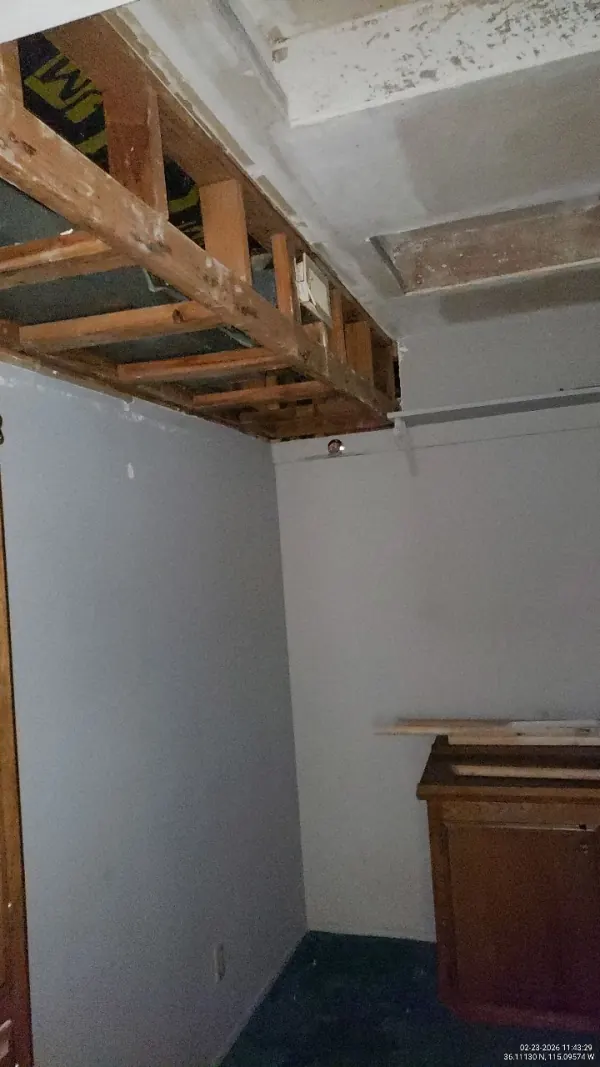
Ceilings are where the camera helps most.
In a lot of valley homes, the air handler sits in the attic, and its condensate line drips when it clogs. A roof can leak during a monsoon storm, then water runs along a truss before it drops. Either way, the ceiling below can look normal for a while.
Scanning a ceiling from the floor takes a few minutes. It tells us where to put the meter and the ladder. And it keeps us from pulling down drywall across the whole room.
What's included
The camera is one tool on a water job. Here's what we do with it and what we hand to someone else.
What we do
- A thermal scan of the ceilings, walls and floors around the suspected leak
- Moisture meter readings on every suspect spot the camera turns up
- Thermal images and readings saved for your insurance file
- A straight answer on what's wet, what's dry and what the next step is
- Drying and repair of the confirmed wet areas once the source is stopped
What we don't do
- Repairing pipes or slab leaks. That's a plumber.
- Fixing a clogged condensate line or the AC unit. That's an HVAC tech.
- Roof repair. A roofer fixes the leak, and we dry what's under it.
- Energy audits or insulation work.
The meter readings from a scan end up on a moisture map, which is what decides what gets opened and when drying is done. Both are part of our water leak detection work.
Thermal imaging questions
How accurate is thermal imaging water detection?
It's useful for showing where to look. It's bad at proving anything by itself. The camera only sees surface temperature, so it can miss water that's the same temperature as the room and flag cool spots that are dry. That's why every spot it finds gets checked with a moisture meter.
Can thermal imaging find a slab leak?
Sometimes. A leaking hot-water line under a slab can warm the floor above it enough to show up. A cold line usually won't. A plumber confirms and repairs slab leaks. We handle the wet floor and the drywall around it.
How much does a thermal scan cost?
On a water job, the scan is part of figuring out what's wet, and it's folded into the dry-out price. Dry-outs in the Las Vegas Valley usually run $1,500 to $4,800. The on-site estimate is free.
Will insurance pay for thermal imaging?
If the water damage is covered, the inspection that measured it usually goes along with that claim. The images help, because the adjuster can see where the water was before anything got opened. Your carrier decides what's covered.
Can I just buy a phone thermal camera and do this myself?
You can, and they're handy for spotting a cool patch. The hard part is reading it. Without a meter, you'll either miss wet material or chase framing and drafts. If you find something, call us and we'll check it properly.
More water damage restoration services in Henderson.
Thermal Imaging Water Detection is one part of Water Leak Detection. The pages below cover the rest of that job and the related water damage restoration work around it.
Water Damage Restoration in Henderson, NVPart of Water Leak Detection
- Water Leak Detection Water leak detection using thermal screening, moisture meters, and mapping to find hidden leaks behind walls, under slabs, and above ceilings.
- Moisture Mapping
- Thermal Imaging Water Detection · this page
Related water damage restoration services
- Structural Drying Drying the building itself after water damage, including framing, subfloor and the inside of wall cavities.
- Ceiling Water Damage Repair Ceiling water damage repair for stained or sagging drywall. We find how far the water spread, dry it, and rebuild with the texture matched.
- Roof Leak Water Damage Roof leak water damage cleanup after storms, wind, or damaged roofing.
- AC Leak Damage Cleanup AC leak cleanup for ceiling stains, wet drywall, and moisture from condensate line issues.
- Mold inspection Mold inspection for visible growth, musty odors, and moisture concerns.
Straight answers before you call.
Real questions from Henderson homeowners, answered by the crew that does the work. Read up, then call when you're ready.
All guidesClear work, clean documentation, no mystery in the middle.
For Thermal Imaging Water Detection, you should be able to see what we found and what we did about it. That's what the paperwork is for.
When we leave, you should have a plain explanation of the work and paperwork that still makes sense weeks later if an adjuster asks.
Certified standards
IICRC-certified technicians work to the published industry standards instead of judging the job by how it looks.
Claim-ready documentation
Photos and scope notes are collected as the work moves, so you and your adjuster can see what changed and why.
Measured drying
Crews meter the wet materials before and during the job and move equipment to wherever the readings are still high.
One accountable plan
The emergency work and the rebuild stay under one plan, so nothing falls into the gap between two contractors.
Local loss experience
The team works across Henderson and the Las Vegas Valley, where slab leaks, supply lines, roof leaks and AC drain lines are the usual sources.
What we tell you before work expands
What needs action now
What needs attention today and what can wait. If part of it belongs to a plumber or roofer, we say so.
What should stay closed
We don't open finished walls or ceilings until the readings and the access tell us it's worth it.
What happens next
Stabilize first. Repair decisions come after the building is under control.
Water damage restoration in Henderson, Las Vegas, and nearby communities.
From slab leaks and burst pipes to monsoon water and roof leaks, every water loss starts differently. We identify the source, remove standing water, dry affected materials, and plan the cleanup around the property.
Request emergency water cleanupCoverage
Las Vegas Valley
Las Vegas Henderson Summerlin North Las Vegas Paradise Spring Valley Enterprise Whitney Sunrise Manor Boulder City
Need help with water damage, fire damage, mold, or rebuilding?
Call Quality 1st Restoration. We help homes and businesses across the Las Vegas Valley with water damage restoration, fire and smoke cleanup, mold remediation, and building restoration.