“Great price. Highly recommend this company for any service or repair.”
Water Leak Detection Services in Las Vegas, NV
We find hidden water leaks behind walls, under slab floors and above ceilings. We work out where the water went and where it's coming from, without tearing the house apart to look.
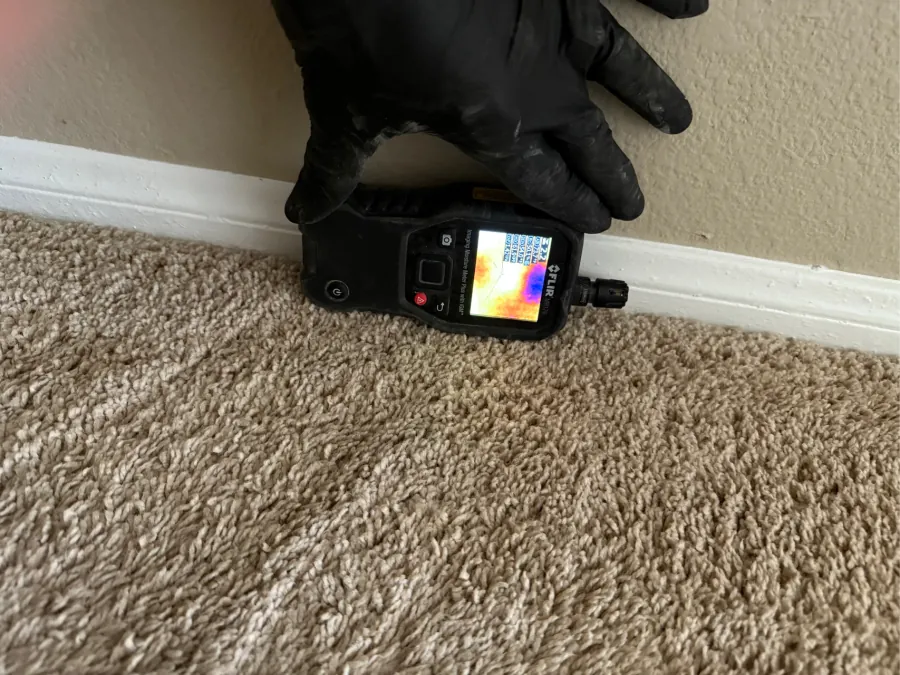
A thermal camera narrows the search, a moisture meter confirms what's wet, and a map of the readings shows how far it spread. A plumber repairs the pipe. We dry and rebuild what the water reached.
Where did the water go? Where's it coming from? And who do you call next?
Assessment logic
Screen Confirm Map
Google Reviews
10 reviews with a five-star rating.
Real customer experiences from Quality 1st Restoration across water damage, mold, repairs, and restoration.
5.0 10 verified reviews
Write a review
“Quality First Restoration is fair and they cared about me. They helped me through the entire process...”
“I was referred to Quality Restorations from an insurance agent. I was impressed that they answered the call...”
“Literally life savers!! I had been dealing with some skin issues...”
“We had a drainage pipe burst inside the wall of our laundry room, and the leak went downstairs...”
“Quality First Restoration is fantastic! The crew did a wonderful job with water damage.”
“I had the opportunity to meet with Todd. He is knowledgeable and responsive. We made the right choice moving forward...”
“The team at Quality First Restorations did a great job taking care of a water leak above our bathroom...”
“Quality First Restoration did an amazing job from start to finish. Professional, responsive, and high-quality work.”
“So I've worked with Todd at Quality First Restorations previously on a rental I have. The tenants had a leak...”
Water actively escaping? Shut it off only if you can do so safely, stay clear of wet electrical areas, and call a plumber to stop the source. Call us when building materials may also be wet.
You can suspect a leak without knowing where the water traveled.
The visible mark is only one data point. Water can move along framing, flooring layers, cabinet bases, or other paths before it shows on a finished surface. Supply lines are a common culprit, which is why insurers recommend inspecting plumbing systems before a failure rather than after.
These signs do not identify a failed pipe by themselves. They do tell you it is time to separate the source question from the wet-material question.
- 01 A ceiling or wall stain changes shape or color
- 02 Baseboards, flooring edges, or cabinets begin to swell
- 03 A material stays damp after the visible water is gone
- 04 A musty odor appears near a past or suspected water loss
- 05 A leak alarm or water meter suggests activity, but the affected area is unclear
How much does it cost? Will insurance pay?
Water mitigation in the Las Vegas Valley usually costs $1,500 to $4,800. That covers getting the water out, drying the structure and checking it with moisture meters until the readings are back to normal. If drywall, baseboards or flooring had to come out, the repairs are a separate estimate, so you see each part on its own.
With leak detection, the size of the search sets the price. One stain under a bathroom is usually a short visit with a camera and a meter. A slab leak that could be anywhere under the house takes longer. So does a ceiling stain with an attic, a roof and an AC line all above it. What we find sets the rest: a small wet patch is a small dry-out, and water that ran under walls into other rooms means more to dry and rebuild.
Water mitigation
$1,500–$4,800
Extraction, drying equipment and moisture checks.
Repairs
Priced separately
Only if drywall, baseboards or flooring had to come out.
Estimate
Free
On site, before any work starts.
Insurance or self-pay, you decide
Insurance usually pays when the water came on suddenly, like a supply line that split overnight. A leak that dripped for months usually isn't covered. Your carrier makes that call, not us.
We handle the record: photos, moisture readings and a line-item estimate built in Xactimate, the same software most adjusters use. Then you compare it with your deductible and decide whether to file.
Many policies treat finding a leak and repairing the pipe differently from the water damage it caused. Your carrier decides. Our readings and photos show where the water went either way.
Paying yourself? Ask about the self-pay discount. The estimate is free, and you see the price before we start.
Book a free estimatePlanning figures from our work in the Las Vegas Valley, not a quote for your property.
Two questions. Often two trades.
“Where is the plumbing failure?” and “What building materials got wet?” sound similar. They lead to different work.
A plumber stops and repairs the active leak.
We can usually tell you which line, drain or fixture the water is coming from. The plumber opens it up and makes the repair. If water is still escaping, that comes first.
Quality 1st finds and measures what got wet.
We scan the suspect areas, confirm them with a meter and map how far the water went. Then we dry it and put back what had to come out.
A useful assessment moves from clue to confirmation.
Thermal imaging helps narrow attention. Moisture readings test the materials. The map of those readings shapes the restoration decision.
- 01
Start with the symptom
Tell us what changed, where you see it, and whether water is still running. That first detail helps identify the right trade.
- 02
Screen the suspect area
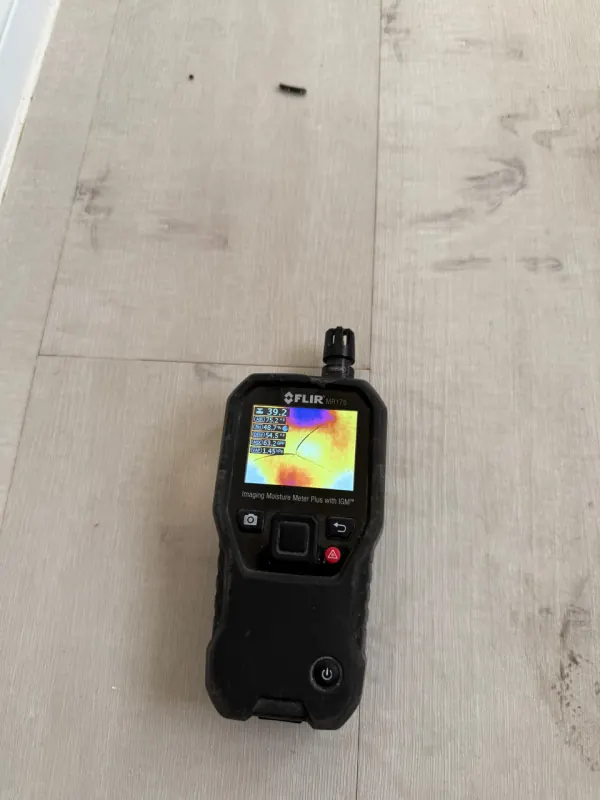
A thermal camera sweeps the ceilings, walls and floors near the symptom. It shows temperature patterns worth checking, which can narrow a whole room down to a few spots.
- 03
Confirm material moisture
A cool patch on the camera could be water. It could also be a draft. Every suspect spot gets a moisture-meter reading, and the meter decides what's wet.
- 04
Map the next step
We show you where the wet stops and which direction the water came from. Then you know whether the next call is a plumber, a roofer, an HVAC tech or our drying crew.
A thermal pattern is a lead. The meter makes the call.
Infrared cameras read surface-temperature differences. Moisture can create a pattern, but so can air movement, framing, or an insulation gap. That is why a suspect area is checked with a moisture meter before it drives a drying or material-removal decision.
That distinction is also reflected in FLIR’s guidance on using thermal imaging for water-leak investigation .
A water leak detector alerts you. An assessment interprets the building.
A consumer water leak detector may sense water at one location or flag unusual flow, depending on the device. It can tell you to look closer. It does not automatically identify the failed plumbing component or show every material the escaped water reached.
Our part starts there. We check the building around the alert, find what's wet and figure out whether it needs drying, a small repair or nothing at all.
For an independent overview of device types and limits, see the EPA WaterSense guide to leak-detection and flow-monitoring devices .
A device alert
A prompt to investigate a sensor location or unusual water use.
Plumbing diagnosis
The source-location and repair question for the appropriate plumbing professional.
Moisture assessment
The affected-material and restoration-planning question handled here.
Three details make the first conversation more useful.
- 01
What changed?
A stain, odor, soft material, detector alert, or unexplained meter movement.
- 02
Where is it?
Which room, what surface, and what's the closest sink, toilet or appliance. Don't open anything to find out.
- 03
Is water still running?
If yes, say so first. Active source control may need to happen before restoration assessment.
If no water is being used, a meter check may indicate unexplained water use, but it will not locate the failed source. Follow the Las Vegas Valley Water District’s meter-check instructions and call a professional when the source is unclear.
Detection is useful when it leads to the right next action.
These related pages explain the narrower methods and the restoration work that may follow after an active source is under control.
Thermal imaging water detection What an infrared camera can and can't show, and why a meter has the final say. Moisture mapping The sketch of every reading that decides what gets opened and when drying is done. Plumbing leak cleanup Drying out and rebuilding once a plumber has fixed the line. Water damage cleanup and repair The restoration path when a confirmed leak has damaged the building.
Water leak detection service FAQs
If your situation does not fit neatly into one answer, call 888-453-3591 and describe what you see.
Q1 Does Quality 1st repair the plumbing leak?
No. We find where the water went and trace it back toward where it's coming from, whether that's a supply line, a drain, the roof or an AC line. A licensed plumber repairs the pipe. Then we dry and rebuild what got wet.
Q2 Can a thermal camera show the exact broken pipe?
Not by itself. A thermal camera shows surface temperature, and drafts, framing or thin insulation can make the same patterns water does. We confirm with a moisture meter and follow the wet readings toward the source. That tells a plumber which wall or fixture to open. It isn't a pinpoint on the pipe.
Q3 What if a water leak detector or smart sensor sends an alert?
Treat the alert as a reason to go look. The sensor only knows water reached it. If water is running, close the valve or the main if you can do it safely and call a plumber. If the floor, cabinets or a ceiling might be wet, call us and we'll measure how far it went.
Q4 Can you check behind walls or under flooring?
Yes. The camera and meters read through the surface without cutting anything, so we can check behind drywall, under tile and laminate, and above a ceiling from the room below. Sometimes the readings say a small hole is the only way to see inside, and we'll tell you why before we make one.
Q5 What happens if the readings show hidden moisture?
If the leak is still active, the plumber goes first. Once it's stopped, we set up drying on the wet areas and cut out only what won't dry in place. Most dry-outs take three to five days, and you get the readings that show when it's done.
Not sure whether you need a plumber or restoration help first?
Call Quality 1st and describe what changed, where you see it, and whether water is still running. We’ll help you identify the right next step without treating a thermal image as a plumbing diagnosis.