“Great price. Highly recommend this company for any service or repair.”
Structural Drying in Henderson, NV
Structural drying means drying the house itself after a leak: the framing, the subfloor and the inside of the walls. We set dehumidifiers and air movers, take moisture readings every visit, and call it done when the wet areas match a dry spot in the same house. Most jobs take three to five days.
Desert air fools people. A wet carpet in Henderson can feel dry by the next afternoon while the bottom of the wall behind it is still soaked. We size the setup to the loss. A small area gets a couple of air movers and a dehumidifier. A bigger one gets more equipment and sometimes a closed-off drying area.
24/7 Response
IICRC-Certified
Licensed & Insured
Insurance Support
Google Reviews
10 reviews with a five-star rating.
Real customer experiences from Quality 1st Restoration across water damage, mold, repairs, and restoration.
5.0 10 verified reviews
Write a review
“Quality First Restoration is fair and they cared about me. They helped me through the entire process...”
“I was referred to Quality Restorations from an insurance agent. I was impressed that they answered the call...”
“Literally life savers!! I had been dealing with some skin issues...”
“We had a drainage pipe burst inside the wall of our laundry room, and the leak went downstairs...”
“Quality First Restoration is fantastic! The crew did a wonderful job with water damage.”
“I had the opportunity to meet with Todd. He is knowledgeable and responsive. We made the right choice moving forward...”
“The team at Quality First Restorations did a great job taking care of a water leak above our bathroom...”
“Quality First Restoration did an amazing job from start to finish. Professional, responsive, and high-quality work.”
“So I've worked with Todd at Quality First Restorations previously on a rental I have. The tenants had a leak...”
What people ask while the fans are running
Drying is the part of the job you live with for a few days. These questions come up a lot.
The floor looks dry. Why is the equipment still here?
Because the surface dries first. The bottom plate of the wall, the back of the drywall and the wood under your flooring hold water much longer. If we pull the equipment when the room looks dry, the moisture left behind can come back as a smell, warped flooring or mold.
How do you know when it's actually dry?
We take a reading on the same kind of material in a part of the house the water never touched. That's the dry reference. The wet areas are done when they read close to it. Not when a timer runs out.
Do you have to tear my walls open?
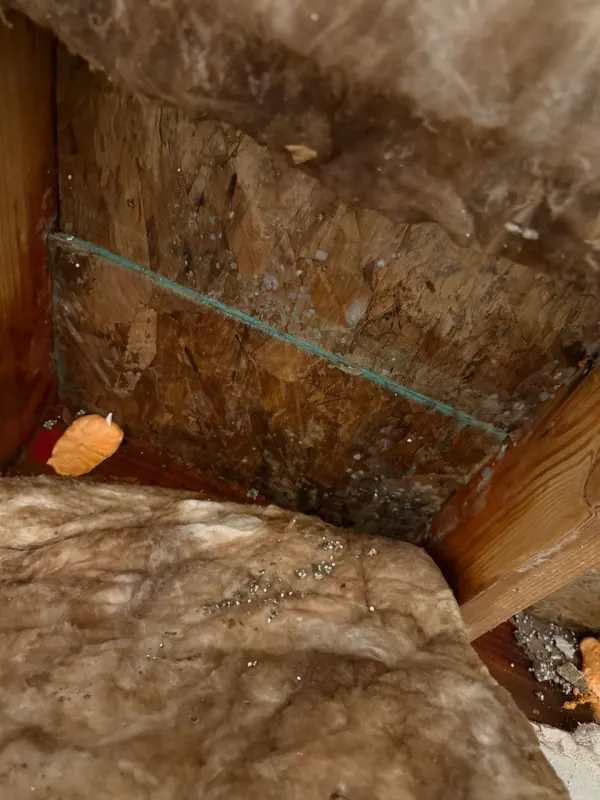
Not always. If the drywall can dry in place, we leave it. When water got inside the wall and can't get out through the painted face, we may drill small holes at the bottom or cut the lower section so air can reach the studs. Before any cut, the area gets sealed off with plastic so dust and spores don't travel.
Why does it take three to five days?
Wood and drywall give up water slowly, and only as fast as the air around them can take it. The dehumidifiers keep that air dry so the materials keep releasing moisture. Push harder than the material can handle and wood can crack or warp.
Can we stay in the house while it dries?
Usually, yes. The equipment runs day and night. It's loud, and the rooms being dried get warm. Most families keep living around it. We'll tell you if there's a reason not to, like a contaminated area.
How much does it cost? Will insurance pay?
Water mitigation in the Las Vegas Valley usually costs $1,500 to $4,800. That covers getting the water out, drying the structure and checking it with moisture meters until the readings are back to normal. If drywall, baseboards or flooring had to come out, the repairs are a separate estimate, so you see each part on its own.
For drying, the bill follows how much material is wet and how long it takes to come down. A single wet wall on tile dries fast. Water that got under wood flooring, into cabinets or through a ceiling needs more equipment for more days.
Water mitigation
$1,500–$4,800
Extraction, drying equipment and moisture checks.
Repairs
Priced separately
Only if drywall, baseboards or flooring had to come out.
Estimate
Free
On site, before any work starts.
Insurance or self-pay, you decide
Insurance usually pays when the water came on suddenly, like a supply line that split overnight. A leak that dripped for months usually isn't covered. Your carrier makes that call, not us.
We handle the record: photos, moisture readings and a line-item estimate built in Xactimate, the same software most adjusters use. Then you compare it with your deductible and decide whether to file.
Adjusters often ask why the equipment stayed as long as it did. The daily moisture log answers that, so we keep it for every job.
Paying yourself? Ask about the self-pay discount. The estimate is free, and you see the price before we start.
Book a free estimatePlanning figures from our work in the Las Vegas Valley, not a quote for your property.
How structural drying works
- 1
Map the moisture
We take readings on the walls and floor, then in the cabinets and on the ceiling below, and mark where the wet area ends. We also read rooms the water never reached for a dry reference.
- 2
Open what won't dry closed
The area gets sealed off with plastic and a zipper door first, so dust and any mold spores stay put. Then wet carpet pad, soaked insulation and drywall that traps water against the framing come out. Everything else stays.
- 3
Set up the drying
Air movers go around the room, angled so they push air in a circle like a slow tornado, across the wet surfaces and into opened cavities. A dehumidifier sits in the middle to pull that moisture out of the air, and an air scrubber filters dust and airborne particles like mold spores.
- 4
Read it every visit
We check the same marked spots each time and write the numbers down. Equipment gets moved or added as areas dry at different rates.
- 5
Sign off against the dry reference
When the wet spots read close to the dry reference, drying is finished. You get the log, and so does your carrier if there's a claim.
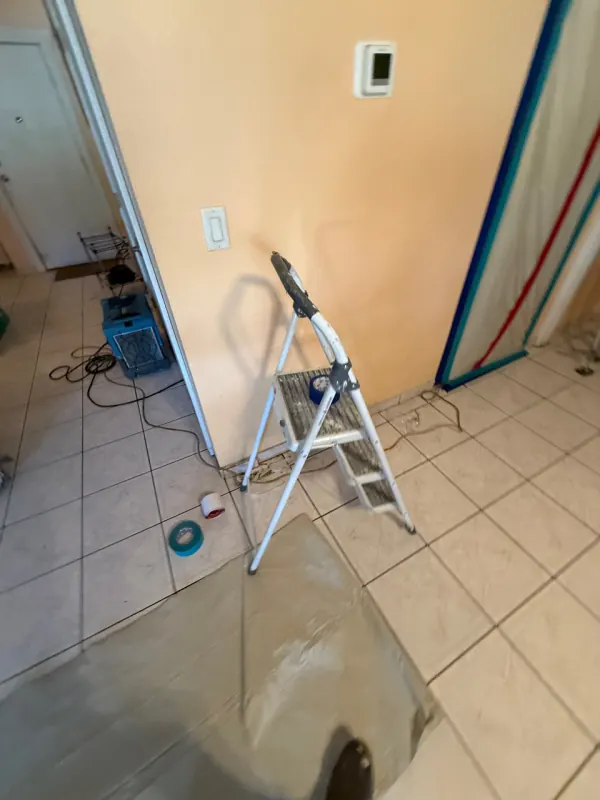
An air mover without a dehumidifier just relocates wet air.
Drying takes both: air moving across the wet surfaces, and a dehumidifier pulling that moisture out of the room.
We track temperature and humidity on each visit and change the equipment count as the job goes.
The ANSI/IICRC S500 water restoration standard covers drying technology, moisture instruments, and project documentation.
The dehumidifier is the part people skip when they try this themselves. Our dehumidification services page explains what it does and why fans alone don't finish the job.
What's included
Drying is its own phase with its own finish line. Here's what that covers.
What we do
- Moisture mapping and dry reference readings
- Removing wet pad, insulation and drywall that won't dry in place
- Dehumidifiers and air movers sized to the wet area
- Readings at marked spots on every visit, written down
- A drying log for you and your carrier
- IICRC-certified technicians running the job
What we don't do
- Fixing the leak that caused it. That's a plumber, roofer or HVAC contractor.
- Repairing HVAC equipment or appliances.
- Installing leak sensors or automatic shutoff valves.
Structural drying questions
What is structural drying?
It's drying the building itself after water damage: the studs, the subfloor, the bottom of the walls and the inside of wall cavities. Mopping and fans handle the surface. Structural drying gets the water out of the materials underneath.
How much does structural drying cost?
The drying is part of the dry-out, which usually runs $1,500 to $4,800 in the Las Vegas area. More wet rooms, more days and more equipment push it up. We give you a written number on site before we set anything up.
Will insurance pay for structural drying?
If your policy covers the water loss, drying is normally part of it. Your carrier decides. Our daily readings show why each day of equipment was needed.
Is structural drying the same as water extraction?
No. Extraction comes first: pulling standing water out of carpet and off the floor with vacuums and pumps. Structural drying is the days after that, getting the water out of the wood and drywall that soaked it up. A job needs both, in that order.
Can I turn the equipment off at night?
Please don't. Every hour it's off, the air in the room picks up moisture again and the drying stalls. If the noise is a real problem, call us and we'll see what can be rearranged.
More water damage restoration services in Henderson.
Structural Drying covers a few specific situations, and each page below goes deeper on one of them. If the damage is bigger than one task, start at the main category page and we'll scope the whole job.
Water Damage Restoration in Henderson, NVPart of Structural Drying
Related water damage restoration services
- Moisture Mapping Moisture mapping to locate hidden water behind walls, under flooring, and inside building materials.
- Thermal Imaging Water Detection Thermal imaging to find hidden moisture patterns behind ceilings, walls, and flooring.
- Water damage removal Fast water damage removal for standing water from leaks, floods, burst pipes, or appliance failures. We extract water and start drying to limit damage.
- Water damage cleanup & repair Cleanup and repair for Henderson and Las Vegas homes and businesses, including water removal, drying, moisture checks, and restoration after leaks, floods, or storm damage.
- Water damage-related mold removal Mold removal tied to water damage, leaks, or hidden moisture. We identify affected materials, contain the area, and remove growth.
Straight answers before you call.
Real questions from Henderson homeowners, answered by the crew that does the work. Read up, then call when you're ready.
All guides- Can You DIY Water Damage Restoration in 2026? What You Need to Know in Henderson
- What Is the Proper Mitigation Process for Category 2 Water Damage? A Henderson Homeowner's Guide
- Should You Replace Water-Damaged Materials or Let Them Dry Out? A Henderson Homeowner's Guide
- Clean, Gray, and Black Water Damage in Las Vegas & Henderson
Clear work, clean documentation, no mystery in the middle.
For Structural Drying, you should be able to see what we found and what we did about it. That's what the paperwork is for.
When we leave, you should have a plain explanation of the work and paperwork that still makes sense weeks later if an adjuster asks.
Certified standards
IICRC-certified technicians work to the published industry standards instead of judging the job by how it looks.
Claim-ready documentation
Photos and scope notes are collected as the work moves, so you and your adjuster can see what changed and why.
Measured drying
Crews meter the wet materials before and during the job and move equipment to wherever the readings are still high.
One accountable plan
The emergency work and the rebuild stay under one plan, so nothing falls into the gap between two contractors.
Local loss experience
The team works across Henderson and the Las Vegas Valley, where slab leaks, supply lines, roof leaks and AC drain lines are the usual sources.
What we tell you before work expands
What needs action now
What needs attention today and what can wait. If part of it belongs to a plumber or roofer, we say so.
What should stay closed
We don't open finished walls or ceilings until the readings and the access tell us it's worth it.
What happens next
Stabilize first. Repair decisions come after the building is under control.
Water damage restoration in Henderson, Las Vegas, and nearby communities.
From slab leaks and burst pipes to monsoon water and roof leaks, every water loss starts differently. We identify the source, remove standing water, dry affected materials, and plan the cleanup around the property.
Request emergency water cleanupCoverage
Las Vegas Valley
Las Vegas Henderson Summerlin North Las Vegas Paradise Spring Valley Enterprise Whitney Sunrise Manor Boulder City
Need help with water damage, fire damage, mold, or rebuilding?
Call Quality 1st Restoration. We help homes and businesses across the Las Vegas Valley with water damage restoration, fire and smoke cleanup, mold remediation, and building restoration.