Certified standards
IICRC-certified technicians follow accepted drying, cleaning, containment, and remediation procedures instead of deciding by appearance alone.
Almost every mold call we run started as a water issue nobody addressed. A slow shower pan leak, a slab leak somebody put off, a bathroom fan that has not actually moved air for two years.
Treating the mold without dealing with the moisture source means we are back in the same spot a few months later. We work the two together so it stays gone.
Why the area gets sealed off
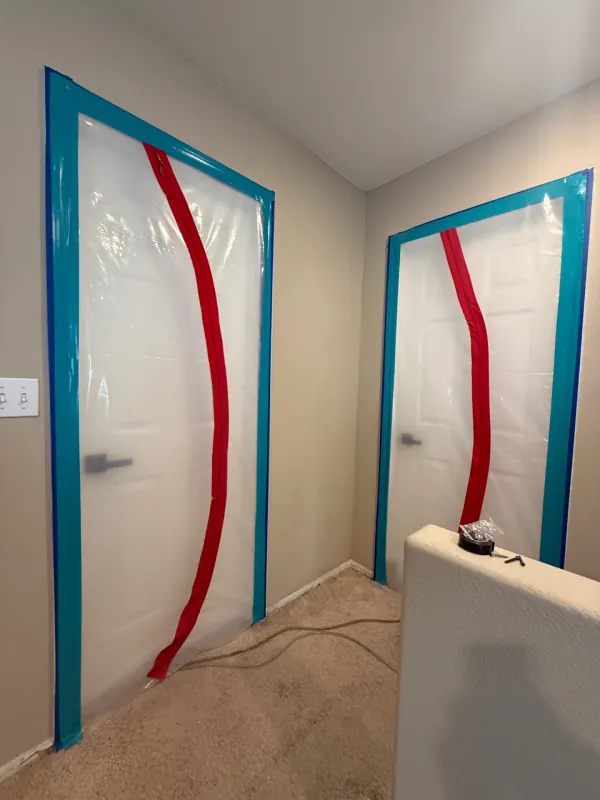
It is genuinely worse to start the demo without sealing the work area first. The disturbance pushes microscopic spores down the hallway, into the HVAC return, and across the rest of the house.
We seal with poly, run negative air through HEPA filtration, and verify the containment holds before any drywall comes down.
What gets pulled, what stays
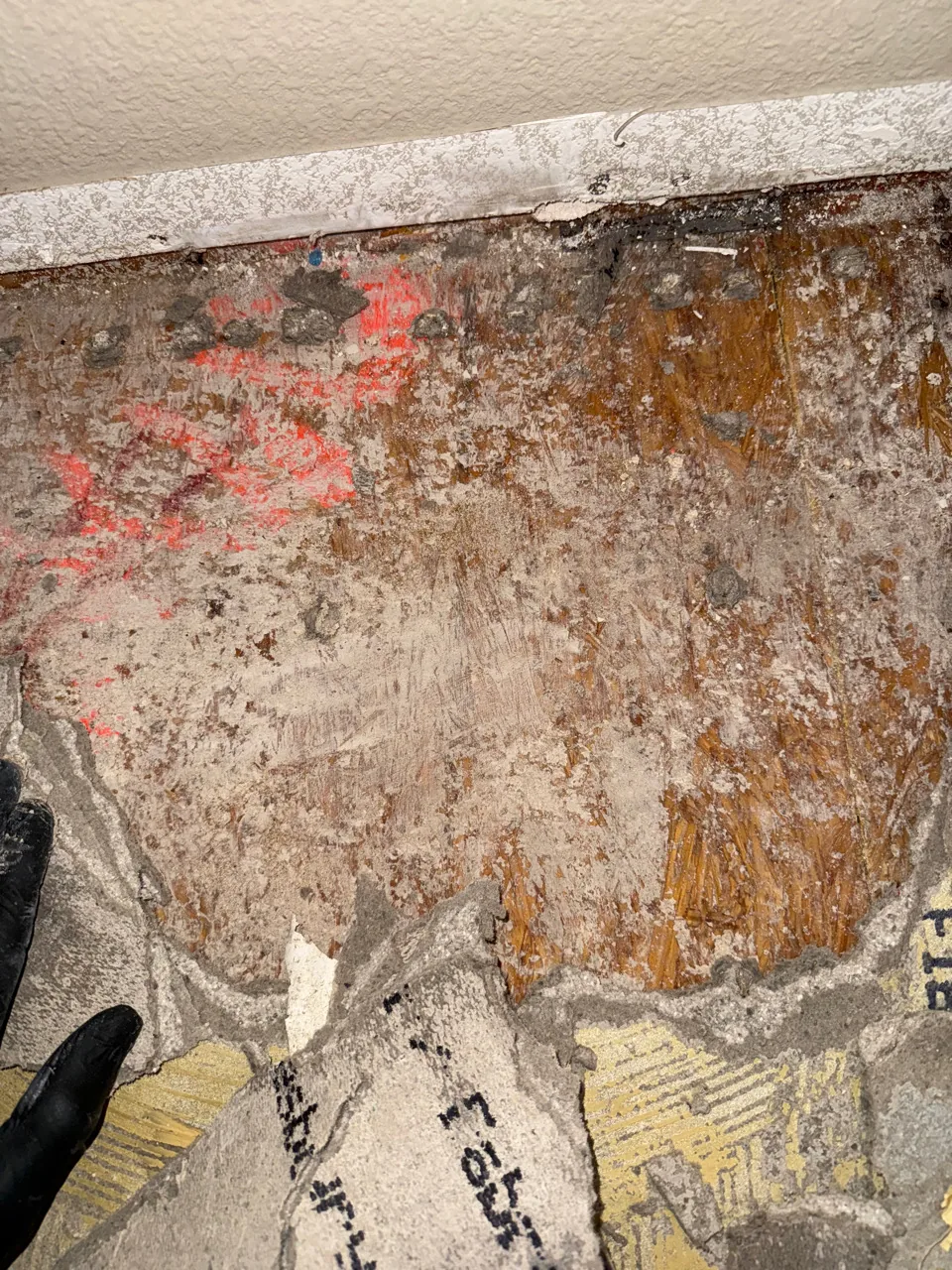
Affected drywall and absorbent materials cannot be cleaned in place to a standard a sane person would sign off on, so they come out.
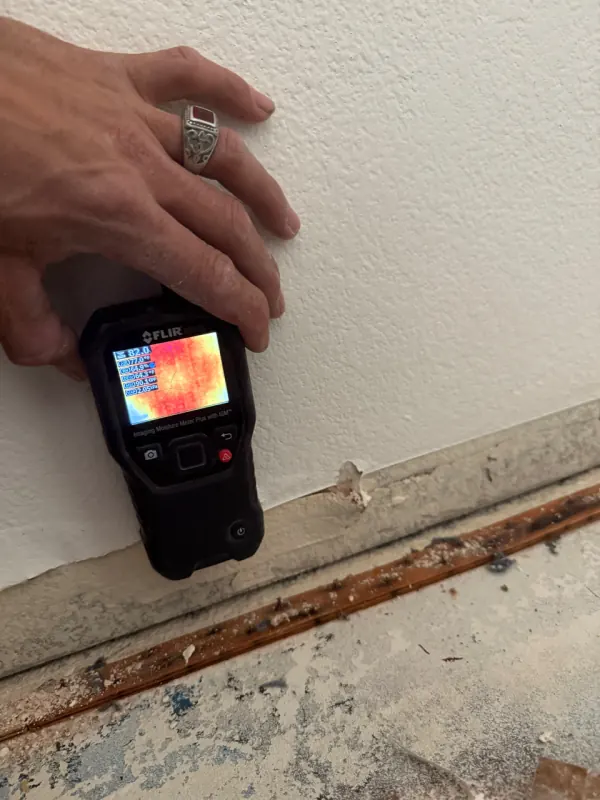
Studs, plates, and subfloor get HEPA-vacuumed, wiped, treated with antimicrobials, and verified dry with meter readings before the rebuild begins.
The EPA explains that mold can penetrate porous materials, which may need to be discarded; see its guidance for cleaning moldy materials .
Water Damage Restoration Service
Water Damage Mold Removal is one part of our water damage restoration service work. If the damage is bigger than one task, start at the main category page and we'll scope the whole job.
Water Damage Restoration in Henderson, NVGuides & answers
Real questions from Henderson homeowners, answered by the crew that does the work. Read up, then call when you're ready.
All guidesWhy trust us
For Water Damage Mold Removal, trust comes from what gets verified on site: the source, the moisture, the affected materials, the cleanup scope, and the record that supports the job afterward.
A clean restoration job should leave you with a dry structure, a clear explanation of what was done, and documentation that makes sense weeks later if an adjuster asks a question.
IICRC-certified technicians follow accepted drying, cleaning, containment, and remediation procedures instead of deciding by appearance alone.
Photos, scope notes, equipment logs, and moisture readings are collected as the work moves so homeowners and adjusters can see what changed.
Crews test affected materials before and during the job, then adjust air movers, containment, and dehumidification to match the actual moisture load.
Emergency cleanup, controlled demolition, drying, cleaning, and build-back coordination stay under one restoration plan instead of being handed off blindly.
The team works across Henderson and the Las Vegas Valley, where slab leaks, appliance lines, roof leaks, AC condensate issues, and fast desert drying conditions are common.
What needs immediate attention, what can wait, and what should be handled by a licensed trade outside the restoration scope.
We avoid opening finished materials until moisture readings, contamination risk, and practical access have been checked.
Emergency response stays focused on stabilization first, then drying, cleaning, and repair decisions after the building is under control.
From slab leaks and burst pipes to monsoon water and roof leaks, every water loss starts differently. We identify the source, remove standing water, dry affected materials, and plan the cleanup around the property.
Request emergency water cleanupCall Quality 1st. We answer 24/7 and help with water removal, drying, cleanup, repairs, and insurance paperwork.