Certified standards
IICRC-certified technicians follow accepted drying, cleaning, containment, and remediation procedures instead of deciding by appearance alone.
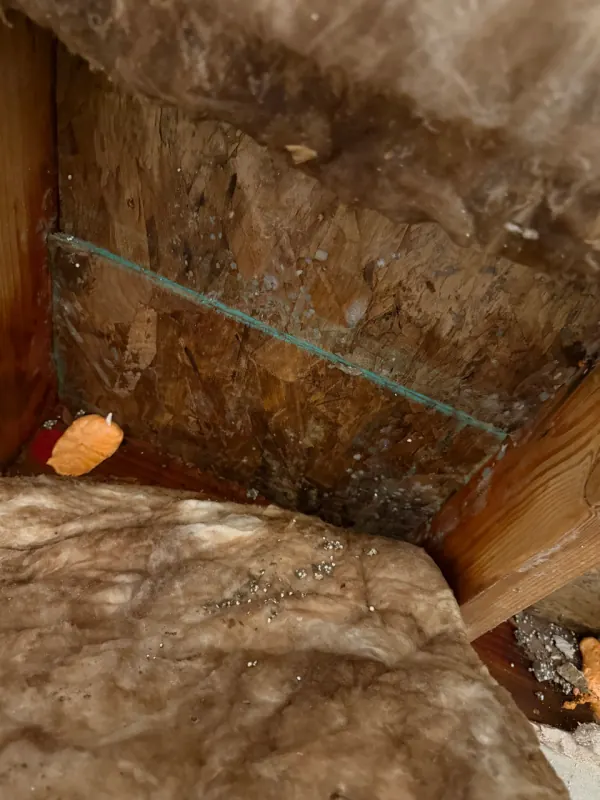
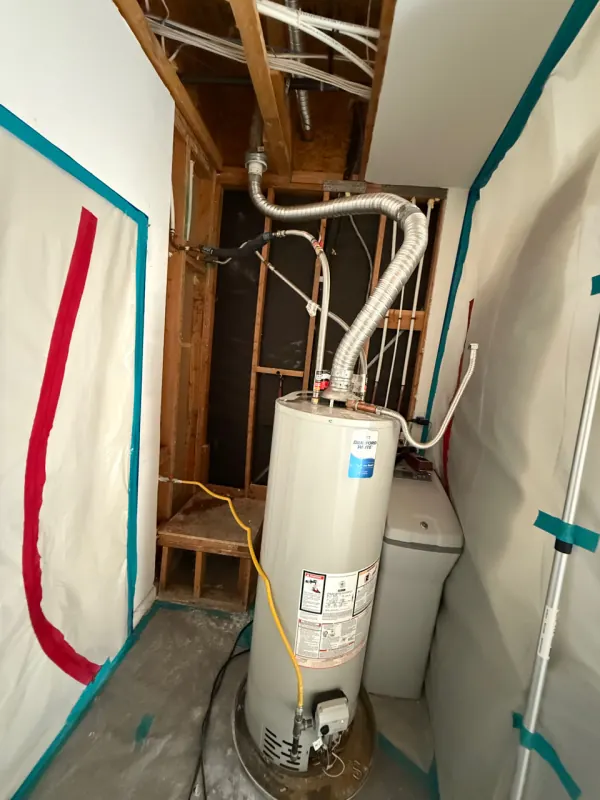
Structural drying decides whether a clean restoration job stays clean. The visible surface dries quickly. The framing, subfloor, and wall cavities behind it take real time, and they hold the kind of hidden moisture that turns into a mold problem two months after everybody thought the job was done.
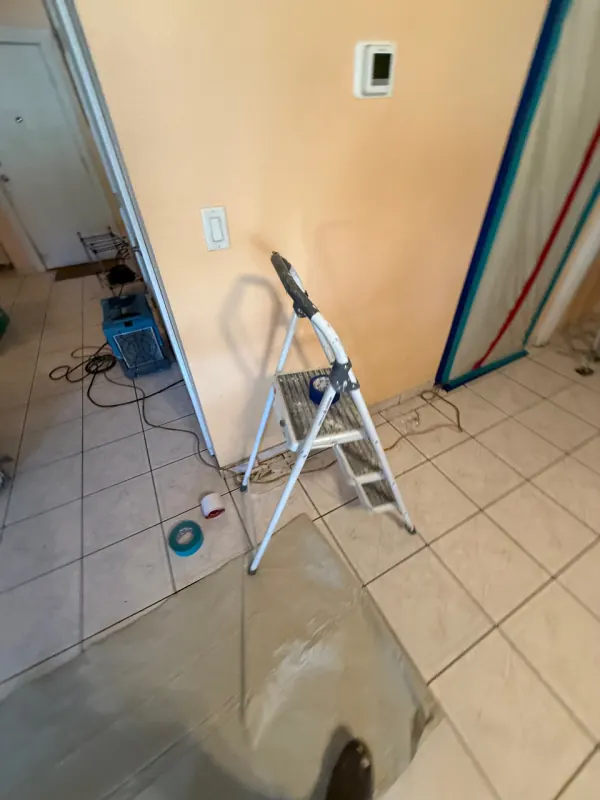
We size the drying setup to the loss instead of using a one-room standard for every job. Small areas run on a couple of air movers and a portable dehumidifier. Larger or saturated losses need a chamber, multiple LGRs, and serious airflow.
Air movement and dehumidification work as a pair
Real drying needs both: directional airflow across wet surfaces and dehumidification pulling that moisture out of the room.
We monitor with hygrometers, log temperature and humidity, and adjust the equipment count as the job progresses.
The ANSI/IICRC S500 water restoration standard covers drying technology, moisture instruments, and project documentation.
The job ends when the numbers say it ends
Equipment does not get pulled because the room looks dry. It gets pulled when the meter readings hit the target.
Those daily logs go to the carrier as part of the file so the dry-out is something somebody can verify on paper instead of a vague claim about how long the equipment ran.
Water Damage Restoration Service
Structural Drying is one part of our water damage restoration service work. If the damage is bigger than one task, start at the main category page and we'll scope the whole job.
Water Damage Restoration in Henderson, NVGuides & answers
Real questions from Henderson homeowners, answered by the crew that does the work. Read up, then call when you're ready.
All guidesWhy trust us
For Structural Drying, trust comes from what gets verified on site: the source, the moisture, the affected materials, the cleanup scope, and the record that supports the job afterward.
A clean restoration job should leave you with a dry structure, a clear explanation of what was done, and documentation that makes sense weeks later if an adjuster asks a question.
IICRC-certified technicians follow accepted drying, cleaning, containment, and remediation procedures instead of deciding by appearance alone.
Photos, scope notes, equipment logs, and moisture readings are collected as the work moves so homeowners and adjusters can see what changed.
Crews test affected materials before and during the job, then adjust air movers, containment, and dehumidification to match the actual moisture load.
Emergency cleanup, controlled demolition, drying, cleaning, and build-back coordination stay under one restoration plan instead of being handed off blindly.
The team works across Henderson and the Las Vegas Valley, where slab leaks, appliance lines, roof leaks, AC condensate issues, and fast desert drying conditions are common.
What needs immediate attention, what can wait, and what should be handled by a licensed trade outside the restoration scope.
We avoid opening finished materials until moisture readings, contamination risk, and practical access have been checked.
Emergency response stays focused on stabilization first, then drying, cleaning, and repair decisions after the building is under control.
From slab leaks and burst pipes to monsoon water and roof leaks, every water loss starts differently. We identify the source, remove standing water, dry affected materials, and plan the cleanup around the property.
Request emergency water cleanupCall Quality 1st. We answer 24/7 and help with water removal, drying, cleanup, repairs, and insurance paperwork.