
Las Vegas Mold · Explained
Types of Mold in Las Vegas Homes: Colors, Health, and Cleanup
Quality 1st Restoration
The short answer
Common indoor molds include Cladosporium, Penicillium, and Aspergillus. Alternaria and Stachybotrys chartarum can also occur when building materials stay damp. A mold's color does not identify its species or prove toxicity. The right response is to fix moisture, assess the affected materials, and clean or remove growth safely.
Las Vegas is dry outside, but homes can still develop mold. A plumbing leak behind a vanity, an AC drain that backs up, a roof leak during monsoon weather, or damp material under flooring can create a small wet environment where mold grows.
The important question is not whether a patch is black, green, or white. The important questions are what is growing, where did the moisture come from, how far did it travel, and what needs to be cleaned or removed?
Common types of mold found in homes
The CDC identifies Cladosporium, Penicillium, and Aspergillus among the most common indoor molds. (1) A home in Henderson, Summerlin, Enterprise, North Las Vegas, or anywhere else in the valley can have the same general indoor mold groups. The local difference is usually the moisture source, not a special desert species.
| Mold name | Where it is discussed | What a visual inspection cannot prove |
|---|---|---|
| Cladosporium | Common indoors and outdoors; can appear on damp surfaces. | Color alone cannot confirm the genus. |
| Penicillium | Common indoor mold associated with damp porous materials. | A photo cannot establish exposure or health risk. |
| Aspergillus | Common in indoor and outdoor environments. | Most people do not become ill, but risk varies by health status. |
| Alternaria | Environmental mold that can enter buildings and settle indoors. | Its presence does not identify the water source. |
| Stachybotrys chartarum | Associated with persistently wet cellulose-rich materials. | “Black mold” is not a species diagnosis or a toxicity test. |
These names are educational. They are not a field identification from a phone photo or a colored spot on drywall. The only reliable way to know what is present is to use a qualified assessor and a defined sampling plan when testing serves a real purpose. In many visible-growth situations, cleaning and moisture correction matter more than naming the species.
Mold color is not a safety rating
Black is not a scientific category of household mold. Dark growth can belong to different mold groups, and light-colored growth can still create an indoor air and material problem. The EPA explains that molds come in many colors and that no mold grows without water or moisture. (2)
Do not use color to decide that a patch is harmless. Do not use color to claim that a patch is toxic, either. The correct next step is to control moisture and determine whether the affected material can be cleaned or needs removal.
What mold can do inside a Las Vegas home
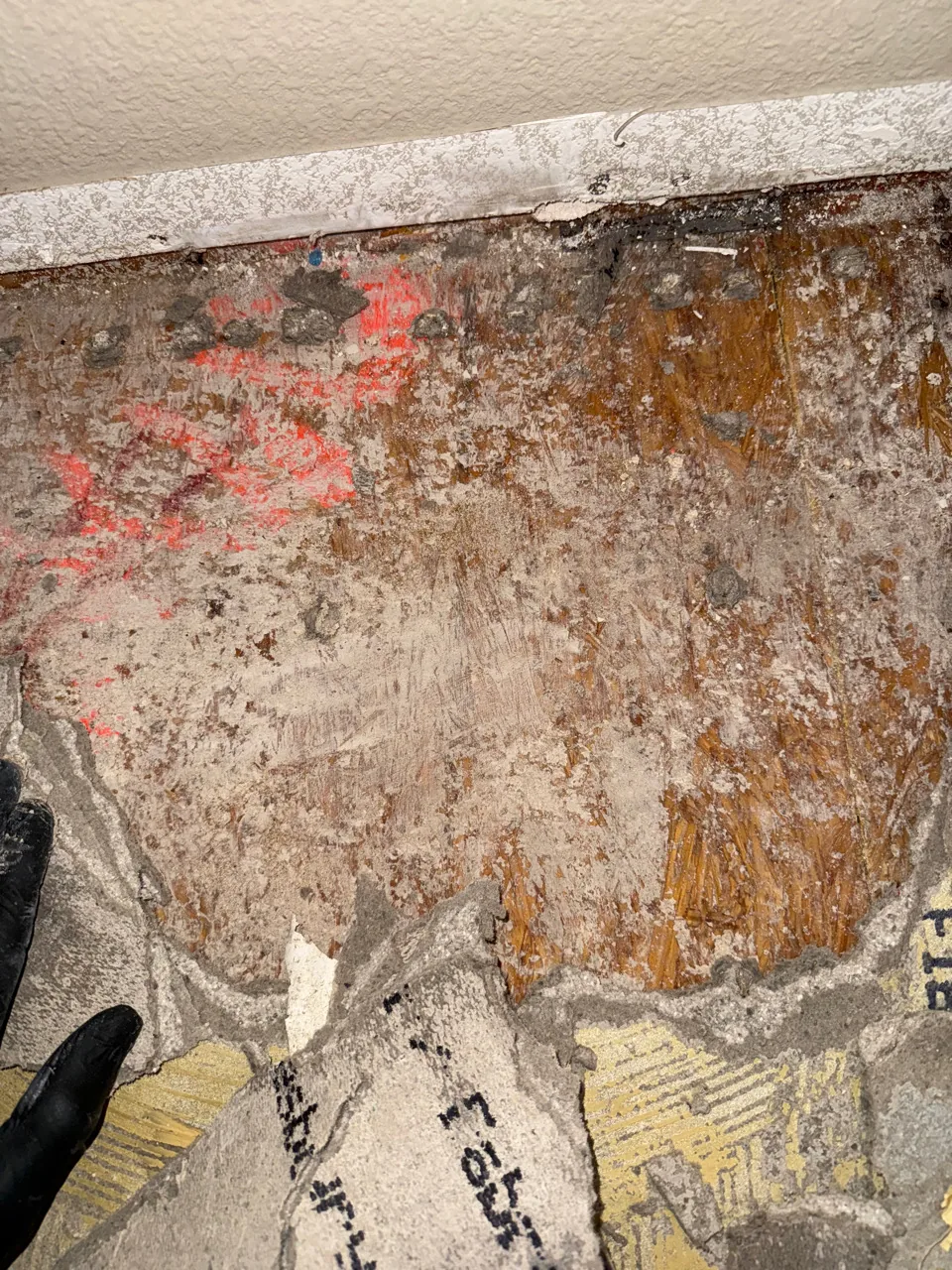
Mold grows when spores land on a wet or damp material. Drywall paper, cabinet backing, carpet padding, insulation, wood framing, dust, wallpaper adhesive, and fabrics can all provide a place for growth when moisture remains.
The CDC says exposure to damp and moldy environments can cause a range of effects or none at all. Reported effects include stuffy nose, sore throat, coughing, wheezing, burning eyes, and skin irritation. People with asthma or mold allergies can have stronger reactions, and people with chronic lung disease or weakened immune systems can face additional risk. (1)
That is why a mold cleanup page should not promise a medical outcome. Restoration work addresses the building: the moisture source, affected materials, containment, cleaning, removal, and drying. Contact a healthcare professional for persistent breathing problems or other concerning symptoms.
If mold dries out, is it gone?
No. Drying can stop active growth, but it does not prove that growth, fragments, or spores have been removed. If a Henderson wall cavity, cabinet base, or flooring assembly gets wet again, remaining contamination can become active again.
The EPA states that spores do not grow without moisture, while also explaining that a mold problem can return when the water problem is not fixed. (2) “The room feels dry” is not the same as “the affected materials are clean and dry.”
If the mold followed a leak, connect the mold inspection to water damage restoration in Henderson so the moisture path and repair scope are handled together.
Why Las Vegas homes still get mold
The valley’s dry outdoor air does not dry a wet building cavity automatically. Common moisture sources include:
- AC condensate lines, drip pans, and wet insulation
- Supply-line leaks behind cabinets or walls
- Washing-machine, dishwasher, refrigerator, and water-heater leaks
- Roof, window, stucco, garage, and patio intrusion after concentrated rain
- Irrigation overspray or drainage that keeps one side of a structure damp
- Floodwater or sewage backups that require contaminated-water cleanup
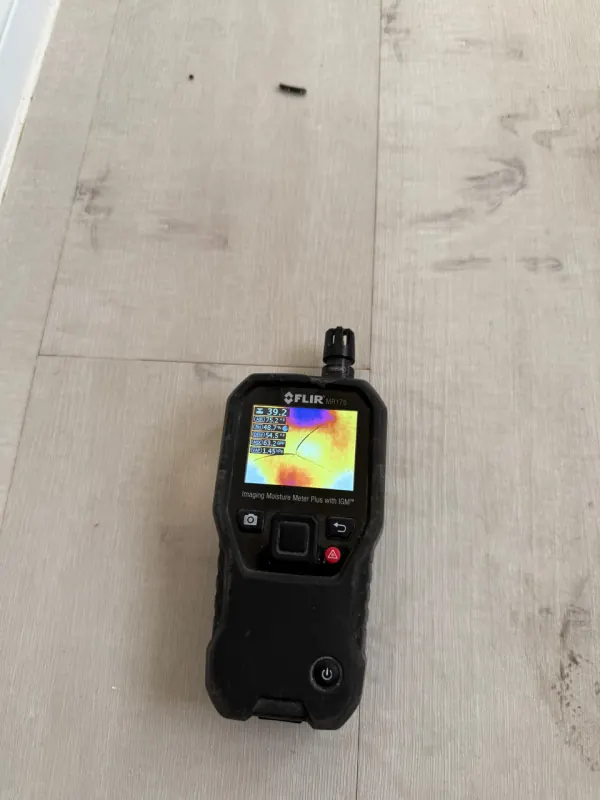
The visible spot is often smaller than the affected area. Water can travel along framing, under flooring, behind baseboards, and inside cabinets. A professional mold inspection uses visual review, moisture readings, humidity checks, and selective access when needed.
What professional mold cleanup involves
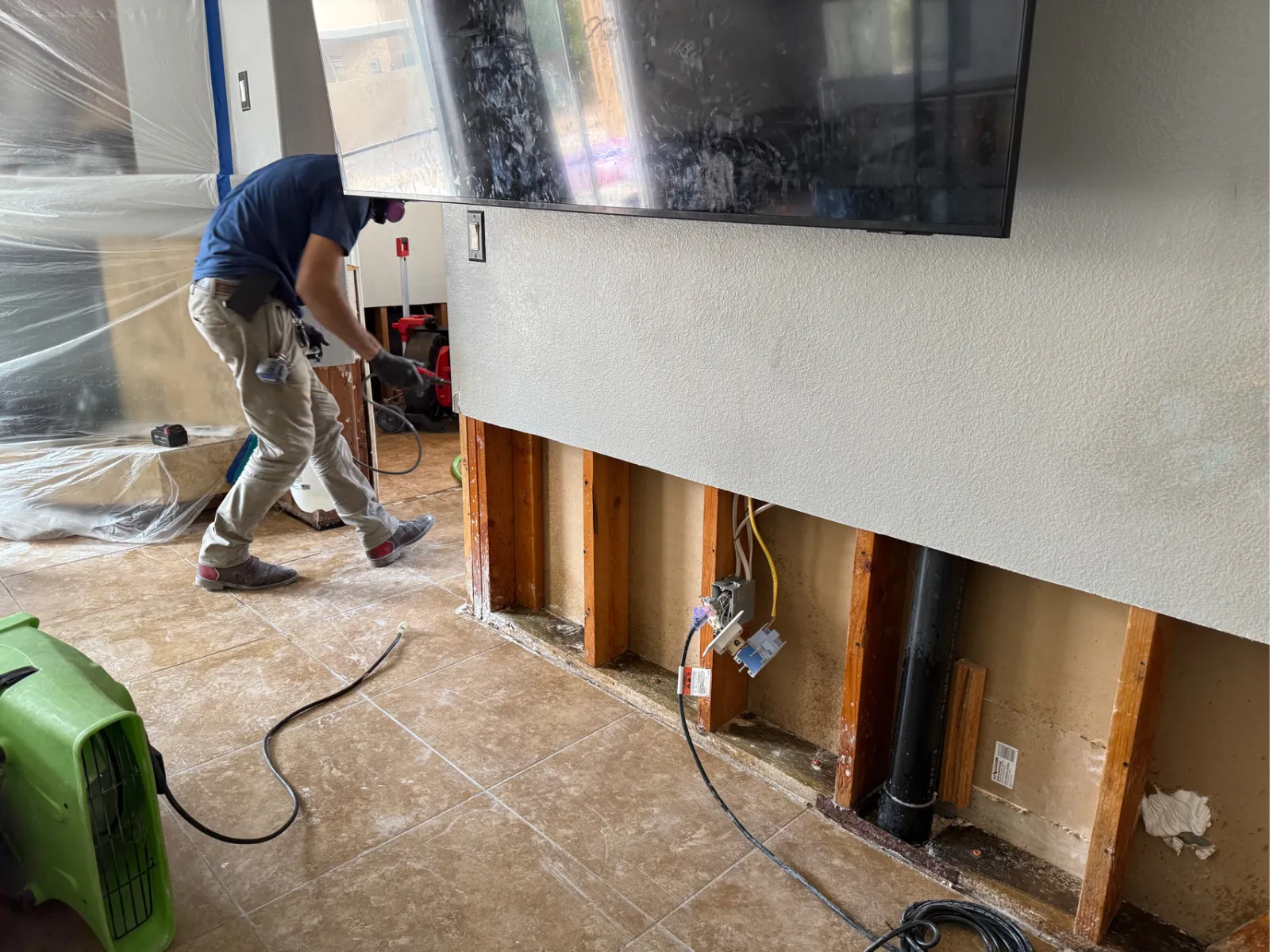
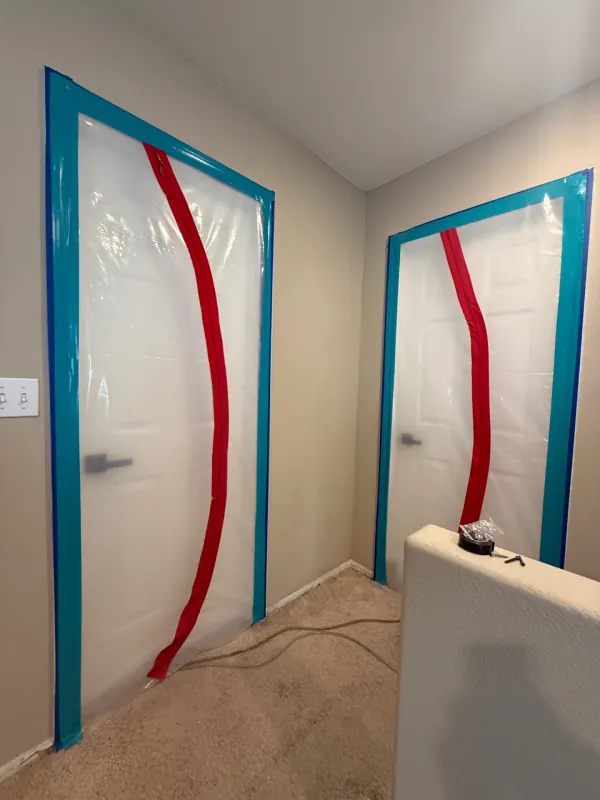
The ANSI/IICRC S520 Standard for Professional Mold Remediation covers inspection, documentation, safety, containment, structural remediation, HVAC remediation, contents, and post-remediation verification. (3) A practical cleanup plan commonly includes:
- Locate and correct the moisture source.
- Define the affected area and protect nearby occupants and materials.
- Contain the work area when the scope requires it.
- Remove porous materials that cannot be cleaned and dried.
- Clean salvageable surfaces using methods appropriate for the material.
- Dry the structure and verify the moisture condition.
- Address HVAC or contents concerns when the affected area reaches those systems.
Cleaning visible growth without correcting the leak is incomplete. Painting over it is not remediation. A small surface issue may have a narrow scope, but hidden growth, repeated moisture, HVAC involvement, or contaminated water calls for a more careful plan. Our Las Vegas mold remediation service explains the process and the supporting options.
What to do after finding mold in Henderson or Las Vegas
Stop the source if it is safe. Keep children, pets, and people with respiratory sensitivity away from the work area. Avoid sanding, scraping, or opening a wall without a plan. Take photos, note when the moisture started, and arrange an inspection when the growth is spreading, hidden, recurrent, or connected to water damage.
Quality 1st Restoration serves Henderson and the Las Vegas Valley with mold inspection, moisture mapping, water-damage mold removal, and post-mold HVAC decontamination. If you see visible growth or smell a persistent musty odor, start with the source and the affected materials instead of guessing from color.
References
- Centers for Disease Control and Prevention, “Mold.” Common molds and health overview.
- U.S. Environmental Protection Agency, “A Brief Guide to Mold, Moisture and Your Home,” and “How do I get rid of mold?” Mold and moisture guidance; Cleanup guidance.
- ANSI/IICRC, “Standards for Professional Water Damage Restoration and Mold Remediation.” IICRC standards overview.
Seeing mold or tracking down a musty odor? Start with the moisture source.
Quality 1st evaluates mold and hidden moisture across Las Vegas, Henderson, and the surrounding valley.
888-453-3591