
Las Vegas Mold · Explained
Can Mold Grow in Las Vegas Even Though It’s Dry?
Quality 1st Restoration
The short answer
Yes. Las Vegas is dry outdoors, but a leak can create a humid pocket behind drywall, beneath flooring, or inside a cabinet. Mold needs moisture, not a humid city. Plumbing failures, AC condensation, roof intrusion, appliance leaks, irrigation, and monsoon rain can keep indoor materials wet long enough for growth.
Las Vegas homeowners assume the dry climate protects their properties from mold. A swollen baseboard, an earthy odor when the AC starts, or dark spotting beside a bathroom vanity proves otherwise. The climate outside and the moisture inside a building are not the same thing.
Mold in Las Vegas is not caused by the desert. It is caused by hidden moisture inside desert homes.
Open air can exchange heat and moisture.
Wet paper, wood, and insulation receive little airflow.
Can mold really grow in the Las Vegas desert?
Yes. Mold spores occur indoors and outdoors in every climate. They move through doors, windows, vents, clothing, shoes, dust, and pets. Researchers measuring outdoor air at five Las Vegas Valley locations found airborne fungal spores at every monitoring site, with the mix and concentration changing by place and season.(1) A newer Las Vegas study using fungal DNA measurements also found clear seasonal variation.(2)
Those studies show that fungi exist in desert air. They do not show that Las Vegas homes are moldier than homes in humid cities. Spores alone are not the problem. Growth begins when a spore reaches material with enough available moisture.
The EPA puts the controlling fact plainly: indoor molds do not grow without water or moisture.(3)
A house already provides the material. Drywall paper, wood framing, cabinet backing, carpet padding, dust, wallpaper adhesive, insulation, and fabrics supply nutrients. Normal indoor temperatures also support many molds. In a well-maintained Las Vegas home, moisture is the limiting ingredient.
Why outdoor dryness does not dry the inside of a wall
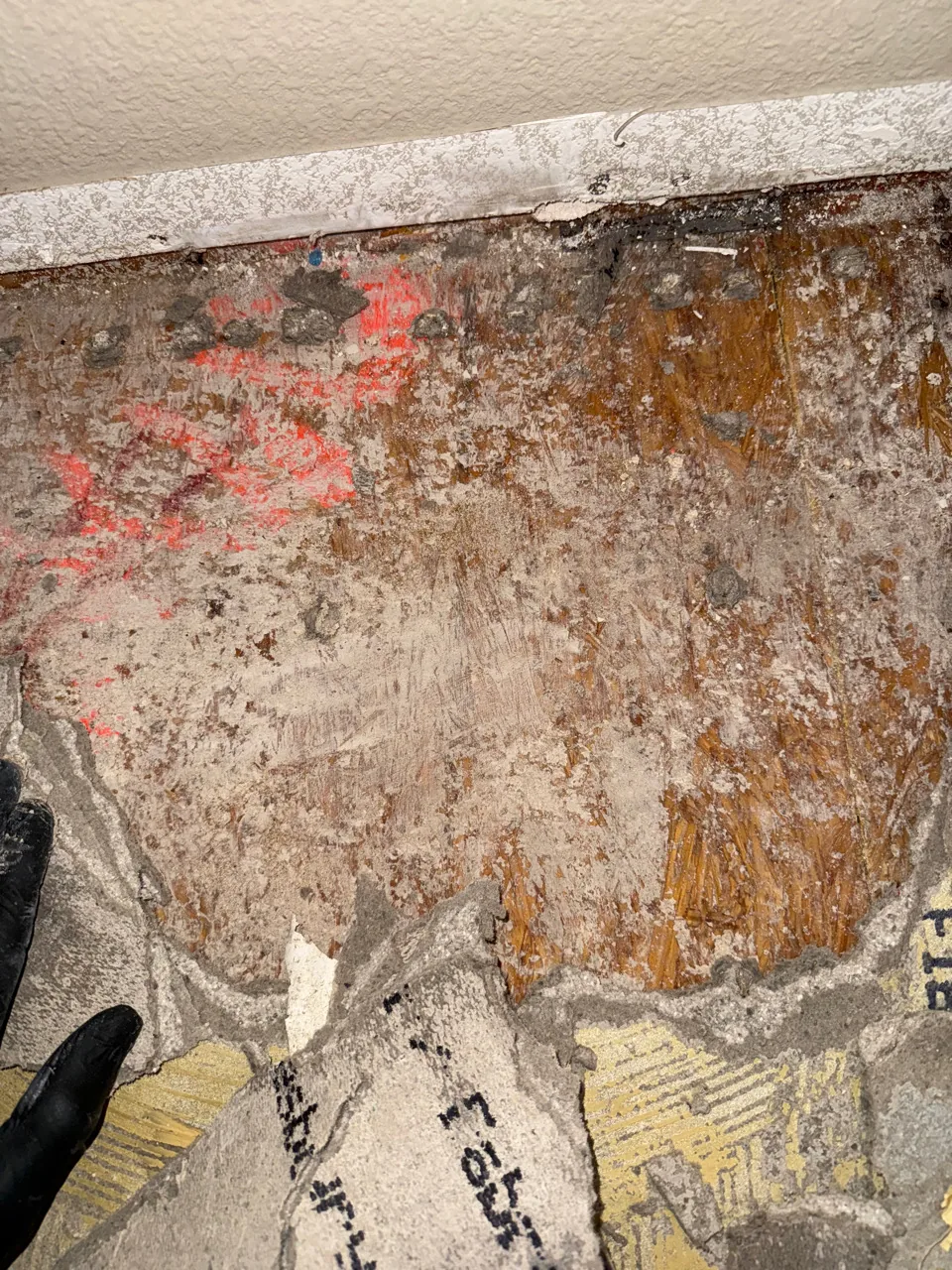
A wet wall cavity behaves like its own small climate. Water collects behind drywall, under a cabinet toe-kick, beneath vinyl plank or carpet padding, inside insulation, or around a plumbing penetration. These spaces receive little airflow. The painted surface dries first while the paper backing and wood plate remain damp.
University of Nevada Extension guidance notes that areas that become wet and dry slowly give mold enough time to develop.(4) Opening a window or lowering the thermostat does not solve a hidden wet-material problem.
Dry desert air cannot protect material that remains wet behind a wall, beneath a floor, or inside a cabinet.
The visible mark underestimates the loss. Water follows framing, seams, fasteners, and gravity. Treat a four-inch stain as an exit point, not the boundary of the damp area. Professional moisture mapping traces the affected materials instead of stopping at the visible edge.
The moisture sources that matter in Las Vegas homes
Indoor growth in the valley follows an identifiable water event or a slow leak. The source ranges from a sudden flood to a silent drip behind a cabinet.
Supply lines, toilet seals, refrigerators, washers, and water heaters.
Blocked condensate drains, wet pans, coils, insulation, and ductwork.
Roof, window, stucco, garage, and low-point water entry.
Sprinklers, broken lines, and soil sloped toward the structure.
Plumbing and appliance leaks
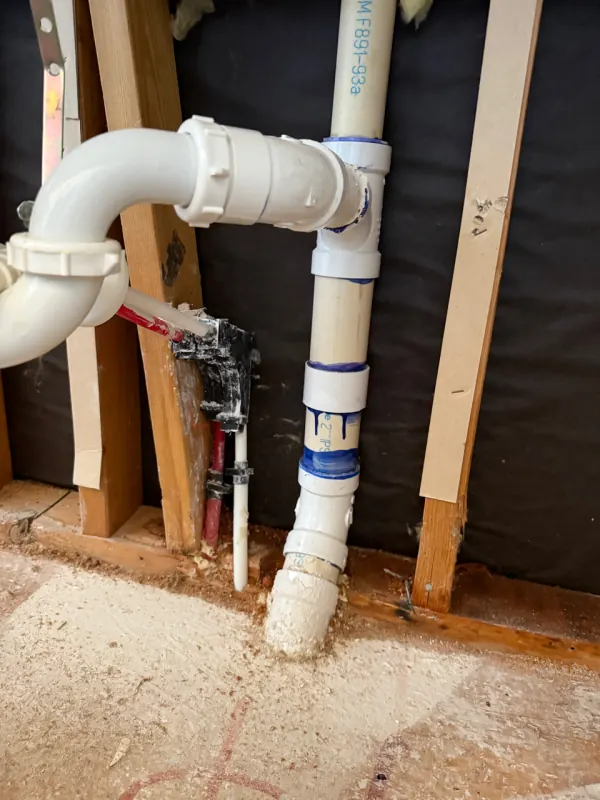
Under-sink supply lines, toilet seals, refrigerator ice-maker lines, washing-machine hoses, water heaters, and tub or shower connections release water into materials before anyone sees a puddle. A slow leak is especially deceptive because it feeds the same concealed area for weeks.
If growth follows a known leak, water-damage mold removal has to address both halves of the problem: the affected material and the water condition that allowed the growth.
AC condensate and HVAC moisture
Air conditioners run hard through a Las Vegas summer. A cooling coil removes moisture from air, and that condensation has to drain somewhere. When a condensate line clogs, a pan holds water, or insulation around cold equipment becomes wet, the system can create a persistent local moisture source. EPA homeowner guidance specifically recommends keeping AC drip pans clean and drain lines unobstructed.(3)
An odor that becomes stronger when the system runs signals a moisture or contamination problem around the HVAC system. Inspect the return area, drain assembly, nearby wall cavities, and accessible equipment. When remediation affects HVAC components, the scope includes post-mold HVAC decontamination. Duct cleaning is not a substitute for fixing a condensate leak.
Evaporative coolers
Some older Las Vegas Valley properties still use evaporative cooling. These systems intentionally add moisture to supply air. That does not mean a swamp cooler automatically causes mold. Trouble begins when equipment leaks, ventilation is inadequate, pads or pans are neglected, or indoor moisture remains elevated around susceptible materials.
Monsoon rain, roofs, and flash flooding
Las Vegas gets little annual rain, but totals do not tell the whole story. The National Weather Service explains that monsoon moisture typically reaches the valley during July and August, when thunderstorms can produce intense rain and flash flooding in dry washes and low-lying areas.(5)
One concentrated storm can find a lifted roof edge, failed window seal, stucco crack, overflowing patio, or poorly drained garage. Summerlin, Henderson, North Las Vegas, Enterprise, and Paradise do not share identical construction or drainage conditions, but the building-science question is the same everywhere: did water reach a porous material, and did that material dry?
Irrigation and exterior drainage
A misdirected sprinkler can wet the same section of stucco every morning. A broken irrigation line can saturate soil beside the slab. Soil graded toward the structure holds water against the building instead of moving it away. Nevada guidance recommends keeping sprinklers off buildings and directing surface water away from foundations.(4)
Repeated wetting matters more than the amount from any single cycle. The surface can dry between events while moisture continues migrating behind it.
What the 24 to 48 hour window actually means
EPA and NIOSH guidance recommends drying water-damaged materials within roughly 24 to 48 hours to reduce the chance of mold growth.(3)(6) That is a response target, not a promise that every wet wall becomes visibly moldy at the same hour.
- First hoursDrywall, insulation, wood, and flooring absorb water beyond the visible surface.
- Within 24 to 48 hoursSpores begin germinating when temperature, material, and moisture remain favorable.
- Following daysThe risk of odor, visible colonies, and deeper growth increases.
Water cleanliness, temperature, airflow, material type, and how deeply the water traveled all change the timeline. The useful conclusion is not “panic at hour 48.” It is “do not wait several days to find out whether the back of the wall is still wet.”
Which molds are commonly found indoors?
The CDC identifies Cladosporium, Penicillium, and Aspergillus among the most common indoor molds.(7) Alternaria is common outdoors and enters buildings. Stachybotrys chartarum grows on chronically wet cellulose material, but it is not the default result of every Las Vegas leak.
Visual inspection does not reliably identify a mold species. Age, surface, light, moisture, and growth stage all affect appearance.
MythBlack color proves a mold is toxic.
FactColor does not identify the species or establish mycotoxin production.
“Black mold” is a popular description, not a scientific species name. A dark patch belongs to any of several mold groups. Some molds produce mycotoxins under specific conditions, but finding a potentially toxigenic mold does not prove that toxins are present. The response stays the same: address the water and remove indoor growth using a scope appropriate to the affected material.
Signs of hidden moisture or mold
Look beyond color. Hidden moisture changes the material around it:
- A persistent musty or earthy odor
- Paint that bubbles, peels, or repeatedly discolors
- Swollen baseboards or cabinet panels
- Soft, crumbling, or sagging drywall
- Warped laminate, wood, or loose flooring
- Damp carpet or padding
- Staining below a sink, toilet, window, or roof line
- Condensation or standing water near AC equipment
- An odor that becomes stronger when the HVAC system runs
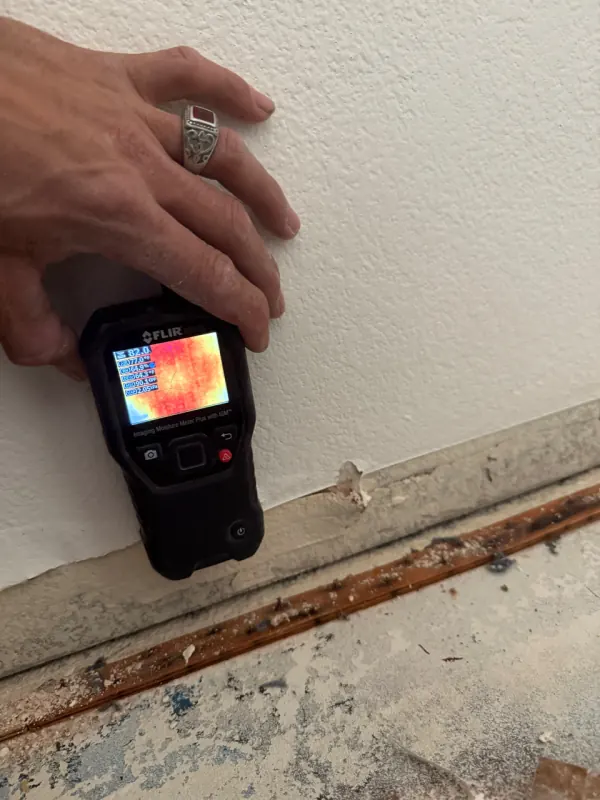
Mold grows on the backside of drywall, below carpet padding, behind wallpaper, above ceiling material, and inside wall cavities. A professional mold inspection combines visual and odor assessment with moisture meters, humidity measurements, selective cavity inspection, and review of plumbing or HVAC sources.
Thermal imaging locates surface-temperature differences. Those patterns identify areas associated with moisture, missing insulation, air leakage, or another anomaly. A thermal camera does not photograph mold through a wall. Moisture readings and physical inspection determine what the temperature pattern means.
Do you need mold testing?
Visible mold and clear moisture problems do not require species testing before action begins. CDC and NIOSH guidance does not recommend routine air sampling as the first answer because no health-based indoor-air standard converts every spore count into “safe” or “unsafe.” NIOSH gives greater weight to careful visual inspection and musty-odor detection for locating dampness problems.(6)
Testing serves a defined purpose when growth is hidden, the source remains unclear, documentation is required for a dispute, or an independent assessor defines a clearance protocol. A lab name does not fix a wet wall.
The better first questions are:
- Where did the water come from?
- Which materials are still wet?
- What can be cleaned, and what must be removed?
- How will the work area be contained?
- How will dryness and source correction be verified?
Can mold affect your health?
People respond differently to damp and moldy environments. Some experience no symptoms. Reported effects include nasal irritation, coughing, wheezing, burning eyes, and skin irritation. People with asthma or mold allergies face stronger reactions, while those with weakened immune systems or chronic lung disease face greater infection risk. CDC documents these effects and the differences in individual response.(7)
A restoration company evaluates building materials and moisture. It does not diagnose the cause of a medical symptom. Contact a qualified healthcare professional for persistent wheezing, breathing difficulty, fever, or other concerning symptoms. Remediation is not medical treatment.
What to do when you find visible or hidden mold
What to do now
- Stop the water source. Shut off a leaking line when it is safe, or arrange the appropriate plumbing, roofing, or HVAC repair.
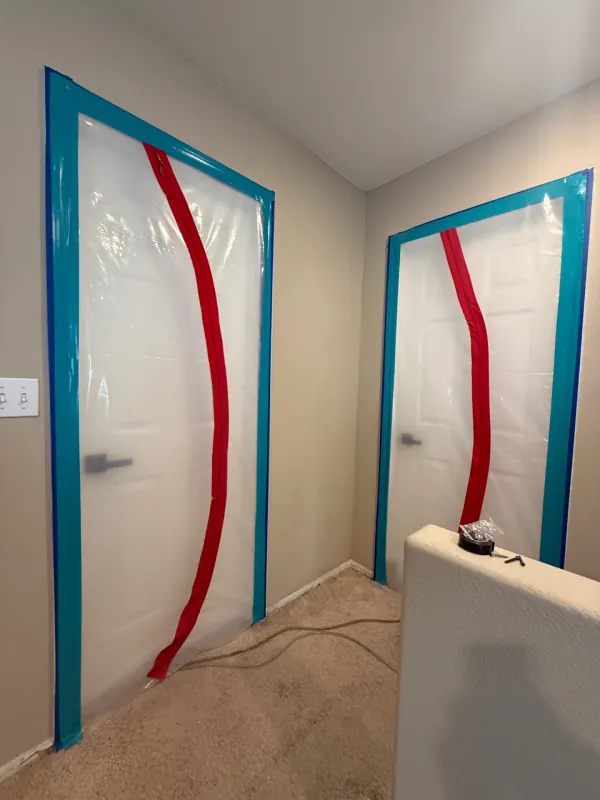
- Avoid disturbing visible growth. Scrubbing, sanding, or opening a wall without containment can spread dust and spores.
- Document the area. Photograph staining, damaged materials, and the water source before items are moved.
- Have hidden moisture evaluated. The affected area extends beyond what is visible.
Painting over growth or water damage does not correct the cause. NIOSH warns that covering damaged or moldy surfaces creates further problems.(6) Bleach is not a universal answer for porous materials such as drywall, insulation, carpet padding, or swollen composite cabinetry.
What professional mold remediation includes
A defensible process begins with water, not chemicals:
- Locate and correct the moisture source.
- Measure and document the affected area.
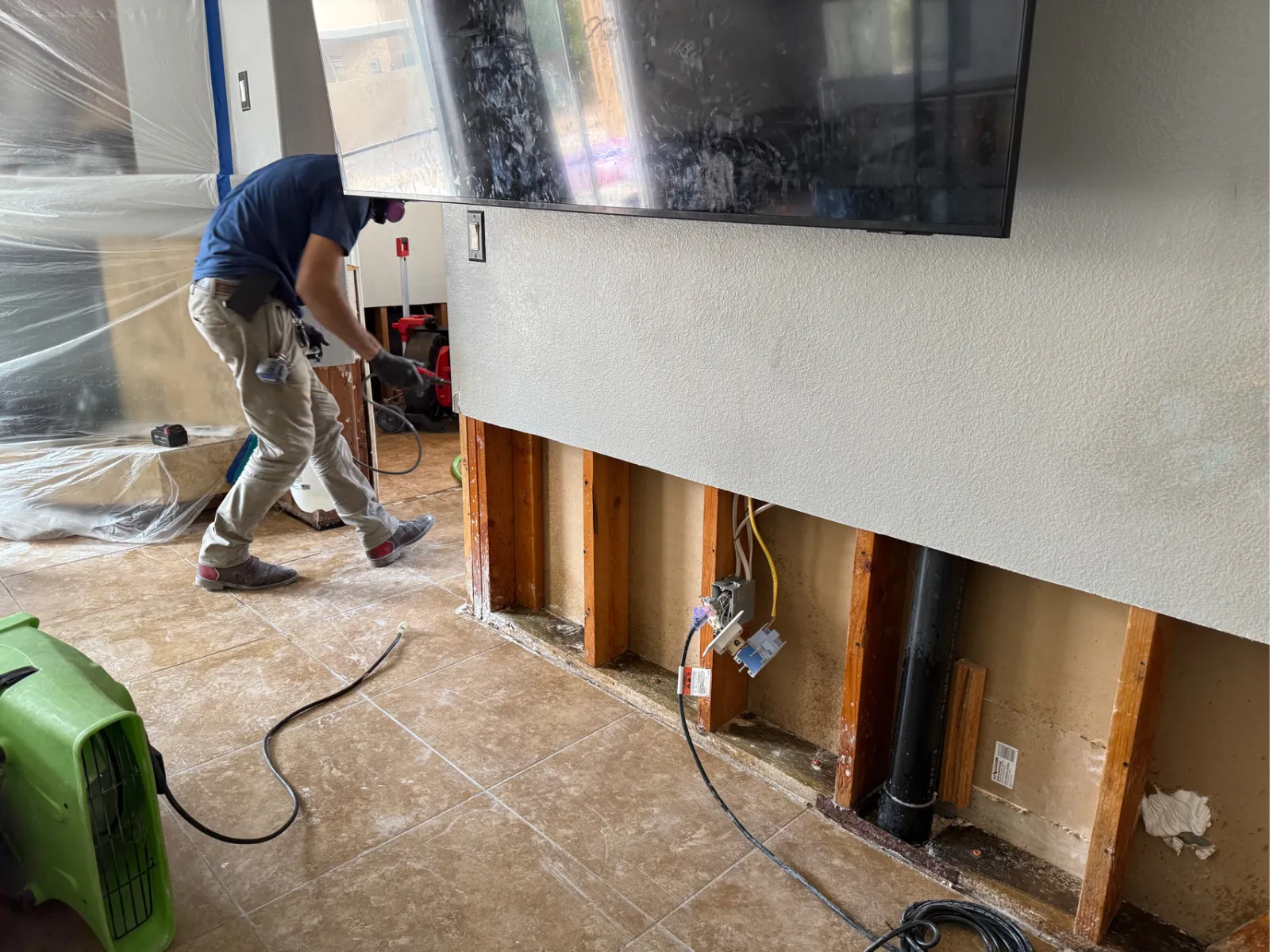
- Establish containment when the scope calls for it.
- Control airborne dust and spores during removal.
- Remove unsalvageable porous materials.
- Clean salvageable structural materials.
- Dry the structure to appropriate moisture targets.
- Verify that the source and moisture condition have been corrected.
That is the difference between wiping a visible patch and solving the building problem behind it. Our Las Vegas Valley mold-remediation hub explains containment, HEPA filtration, controlled removal, drying, and the supporting services for each loss.
Local help across the Las Vegas Valley
The moisture source changes from property to property. A Henderson slab leak, a Summerlin roof intrusion, a North Las Vegas appliance failure, and an Enterprise AC condensate backup look different on arrival. None of them is explained by regional humidity alone.
Quality 1st Restoration evaluates mold and moisture concerns across Las Vegas, Henderson, Paradise, Spring Valley, Enterprise, Whitney, Sunrise Manor, Boulder City, and nearby valley communities. When you see growth, smell a persistent musty odor, or know materials stayed wet after a leak, identify how far the moisture traveled before deciding on cleanup. Once you know the moisture source, professional mold removal in Las Vegas walks through when that job is a weekend DIY cleanup and when it needs containment and a crew.
The bottom line
Las Vegas’s dry climate helps only when building materials can actually dry. Water trapped behind drywall, under floors, inside cabinets, or around AC equipment can create the local conditions mold needs even while the desert air outside remains dry.
Find the source. Measure the moisture. Dry what can be saved. Contain and remove what cannot. That approach is more accurate and more useful than treating every dark spot as “toxic black mold” or assuming the desert will take care of it.
References
- PubMed, “Variation in airborne fungal spore concentrations among five monitoring locations in a desert urban environment.” Study abstract.
- Aerobiologia, “Quantitative universal fungal PCR analysis of environmental air samples from Las Vegas, Nevada.” Research article.
- U.S. Environmental Protection Agency, “A Brief Guide to Mold, Moisture and Your Home.” EPA homeowner guidance.
- University of Nevada, Reno Extension, “Inspection and Management of Harmful Structural Molds.” Nevada guidance.
- National Weather Service Las Vegas, “Climate of Las Vegas.” Local climate overview.
- CDC/NIOSH, “Mold, Testing, and Remediation.” Testing and remediation guidance.
- Centers for Disease Control and Prevention, “Mold.” Health and common mold overview.
Seeing mold or tracking down a musty odor? Start with the moisture source.
Quality 1st evaluates mold and hidden moisture across Las Vegas, Henderson, and the surrounding valley.
888-453-3591