
Water Damage · Answered
Does Homeowners Insurance Cover Water Damage? What's Covered and What Isn't
Quality 1st Restoration
The short answer
Homeowners insurance usually covers water damage that is sudden and accidental, like a burst pipe. It generally does not cover gradual leaks, poor maintenance, flooding, or the cost to repair the source itself. Coverage has limits, and mold is often excluded or capped.
You found water where it shouldn’t be, and somewhere in the panic a practical question shows up: is my insurance going to pay for this? The honest answer is some of it, probably — but the parts people assume are covered often aren’t, and the parts they don’t think about are where the real money goes.
Most of what surprises homeowners about water damage claims comes down to one thing. Policies have limits and exclusions that nobody reads until they need them. We deal with those gray areas every week, and we even have a former insurance agent on our staff, so we understand coverage better than most restoration companies do. Here’s the plain version of what a standard policy does and doesn’t do.
Does homeowners insurance cover water damage?
Usually, yes — but only the right kind. A standard homeowners policy is built to cover water damage that is sudden and accidental. A pipe bursts in the wall overnight and soaks your ceiling. A water heater fails without warning. That’s the classic covered event, and in that situation your insurer will typically pay to dry the structure and put it back together. (1)
What most owners don’t realize is that coverage comes with limits, and certain things can be denied outright. The dollar amount your policy will pay isn’t unlimited, and some causes fall outside the policy entirely. So “yes, water damage is covered” is true and misleading at the same time. The better question is which water damage, and that’s where it gets specific.
Does insurance cover the source of the water damage?
This is the big one, and it’s the part that catches almost everyone off guard. Usually, no. Insurance may pay to clean up and repair the damage the water caused, but not to fix the thing that caused it.
Say a roof leak lets water into your home. A standard policy will often cover the wet drywall, insulation, and flooring. But the roof itself? You’ll most likely pay out of pocket to get that repaired. Same story with plumbing — if a failed pipe or fitting is the culprit, fixing the pipe is typically on you, even when the resulting water damage is covered. These are case-by-case calls, and the exact wording of your policy matters, but the pattern holds far more often than not.
Here's the sentence to remember: insurance may cover the damage but not the cause. It will often pay to dry your house and put the drywall back. It usually will not pay to fix the pipe or the roof that soaked it. That surprises people every single time.
That gap is exactly why choosing the right restoration company matters. The wrong call in the first day or two — mislabeling the cause, missing documentation, letting the damage spread — can turn a covered claim into a fight. A crew with real insurance claim experience helps you separate what the policy will pay for from what it won’t, before you’re in too deep to change course.
Does homeowners insurance cover water damage from a leak?
It depends entirely on the kind of leak. A sudden leak — a supply line that lets go all at once — is generally treated like any other sudden and accidental loss and is usually covered. A gradual leak is a different animal. Water that seeps slowly behind a wall or under a sink for weeks or months is almost always excluded, because insurers class it as a maintenance problem rather than an accident. (1)
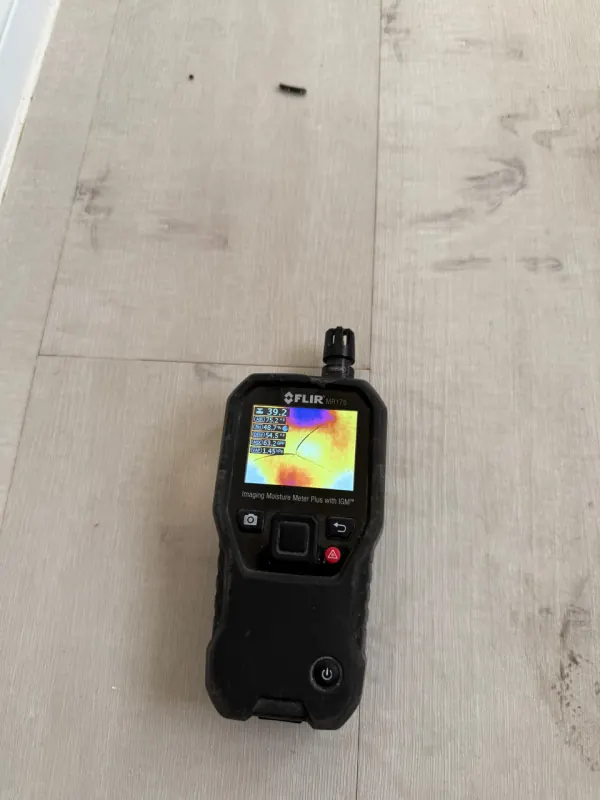
This is why documentation and speed matter so much. The longer water sits, the more a slow drip looks like neglect on paper, even when you had no way of seeing it. A leak inside a wall cavity can run for weeks before a stain ever shows on the surface, and by then the insurer is looking at rotted framing and asking why you didn’t catch it sooner. When we scope a job, part of what we’re doing is figuring out — and recording — what actually happened, which feeds straight into whether the claim gets paid. Moisture readings, photos, and a clear cause help make the case that this was a hidden failure, not deferred maintenance. If you want the full breakdown of how leaks turn into damage, our guide to the different types of water damage walks through the categories adjusters use.
Is flood damage covered by homeowners insurance?
Almost never. Flooding is not covered by a standard homeowners policy. Rising water from the outside — storm runoff, an overwhelmed wash, water coming up from ground level — falls outside the policy entirely and needs its own separate flood insurance, typically through the National Flood Insurance Program. (2)
"Water damage caused by a flood is not covered under a standard homeowners insurance policy. To be covered for flood damage, you need a separate flood insurance policy."
— Insurance Information Institute (1)The distinction the policy cares about is where the water came from. A pipe bursting inside your home is a plumbing event and usually covered. Water rising into your home from outside is a flood and usually isn’t. Same puddle on your floor, completely different coverage.
Does homeowners insurance cover mold?
Often no, and this is another one people get burned on. Mold is one of the most commonly denied or capped items on a water damage claim. Some policies exclude mold entirely; others cover it only when it results directly from a covered event and even then cap the payout at a low limit. (3)
The frustrating part is that mold is preventable with speed. It can start growing on wet materials within 24 to 48 hours, so the same delay that makes a leak look like neglect also gives mold time to take hold — and then the insurer points to that delay as a reason to deny the mold portion. If growth has already started, you’re likely looking at mold removal alongside the water cleanup, and it pays to know up front how your specific policy treats it.
The hidden costs, and how to protect yourself
Put it together and a few things become clear. Your deductible comes out first, so on a smaller loss the check from your insurer can be thin once that’s subtracted. The source repair — the roof, the pipe, the failed valve — is usually yours to pay. Mold may be limited or excluded depending on how your policy is written. And you have a duty to mitigate, meaning you’re expected to stop the water and prevent further damage right away, not wait around for an adjuster to show up. Sitting on the problem to “let insurance handle it” is one of the fastest ways to have a claim reduced.
None of that means you shouldn’t file. It means you should go in knowing what’s actually covered so nothing blindsides you. That’s where having the right people in your corner earns its keep — from documenting the cause correctly to handling the cleanup and repair in a way that holds up with the adjuster. If the damage traces back to your roof, our roof leak water damage crew can also flag what will and won’t fall under the policy before you commit to anything. Want a sense of the numbers involved? See our breakdown of what water damage restoration actually costs.
References
- Insurance Information Institute, "Water Damage: What's Covered; What's Not." https://www.iii.org/press-release/water-damage-whats-covered-whats-not-111809
- FEMA / National Flood Insurance Program, FloodSmart. https://www.floodsmart.gov/
- U.S. Environmental Protection Agency, "Mold Cleanup in Your Home." https://www.epa.gov/mold/mold-cleanup-your-home
If you’re staring at water damage in Henderson or anywhere in the Las Vegas Valley and aren’t sure what your policy will cover, start at our water damage restoration hub or just call us at 888-453-3591 — we answer 24/7 and we’ll help you figure out the next move.
Water still spreading? Every hour it sits, the repair gets bigger.
Quality 1st Restoration answers 24 / 7 / 365 across Henderson and the Las Vegas Valley.
888-453-3591