Bathroom mold after a tenant leak
"Todd walked me through everything and was able to help fix the problem."
If you searched mold removal near me after a leak, musty smell, or bathroom mold problem, the first step is containment. Quality 1st handles mold remediation in Henderson with HEPA filtration, controlled removal, drying, and documentation.
There is a real difference between cleaning mold and remediating it. Cleaning can work on the right hard surface, but remediation means containment, negative air, porous material removal, structural drying, and a clear paper trail.
Mold remediation work has to feel controlled from the first call. These Google reviews show how customers describe Todd, the repair process, communication, and final results.
Bathroom mold after a tenant leak
"Todd walked me through everything and was able to help fix the problem."
Professional restoration work
"Professional, responsive, and high-quality work."
Estimate and schedule
"Kept us within the promised estimate and finished ahead of schedule."
Water leak, drywall repair, and painting
"Identified and fixed the problem, very little mess, completed the job within a few days."
Mold service hub
Bathroom mold, baseboard growth, and musty rooms usually trace back to water that stayed hidden too long. Use these supporting pages when you need the narrower mold service.
Why containment is the part that matters
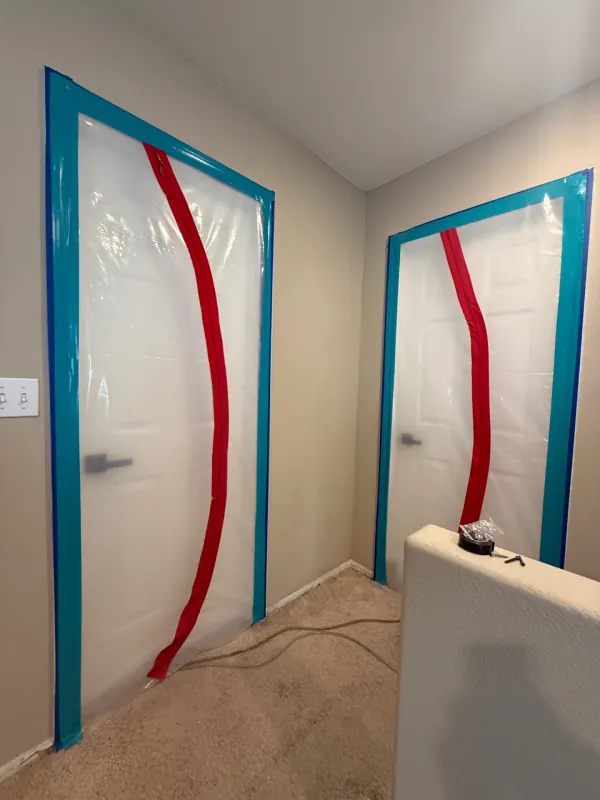
If you cut into a mold-affected wall in a normal living space, you put spores into every duct, return, and adjacent room within minutes. After that, the cleanup is no longer about the original area.
We seal the work zone with poly, set up negative air pressure, and run that air through HEPA filtration so what comes out of the room is cleaner than what was in it.
Black mold concerns
Dark or black growth can be alarming, but color alone does not identify the mold species or show how far moisture has traveled. We scope the affected materials, the moisture source, and the extent of growth instead of treating color as the diagnosis.
When professional removal is needed, the work follows the same controlled process: contain the area, filter the air, remove material that cannot be cleaned, and verify the structure is dry before rebuilding.
What stays, what goes
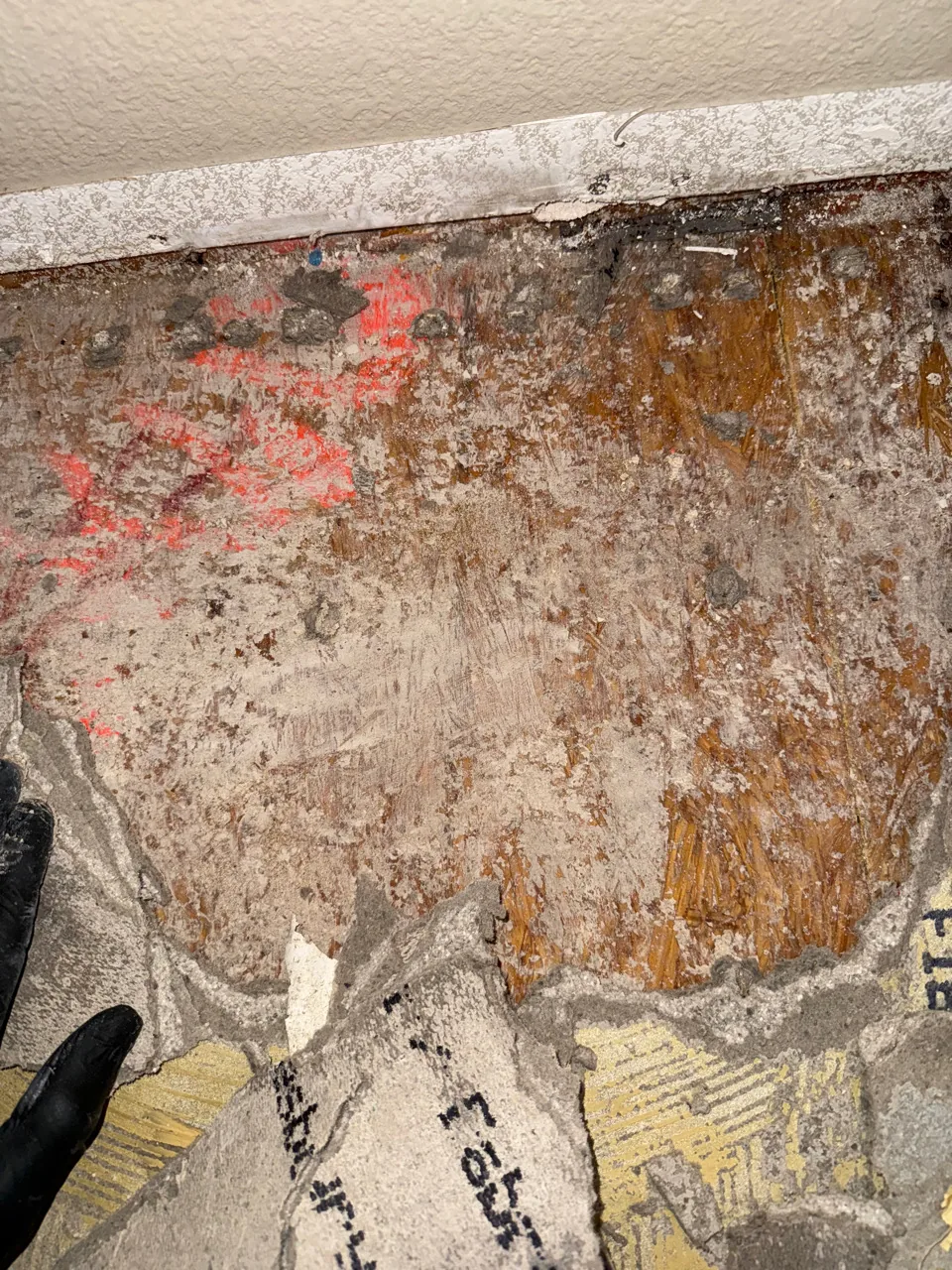
Affected drywall and baseboards almost always come out. They cannot be cleaned in place to a standard you can hand to anyone with a straight face.
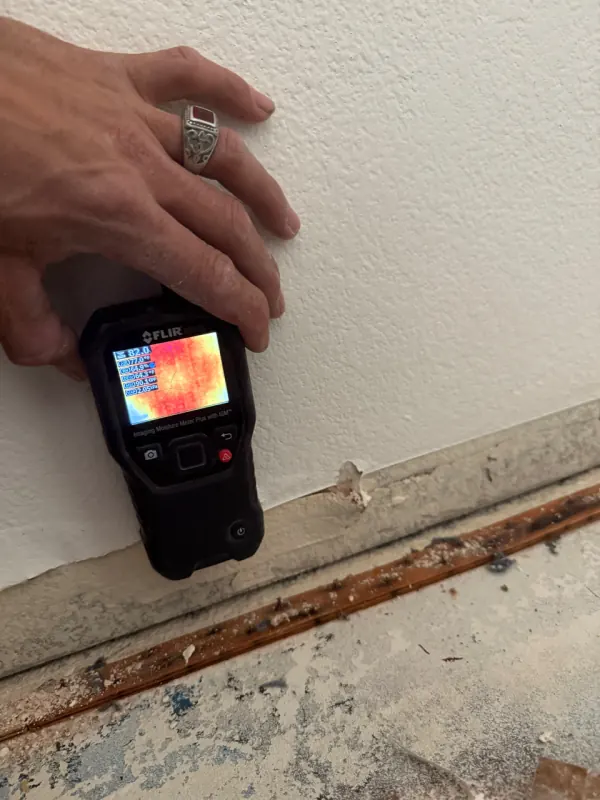
Studs, plates, and subfloor usually stay. They get HEPA-vacuumed and wiped, with an EPA-registered antimicrobial used when appropriate and according to its product label; we verify dryness with meter readings before any rebuild work begins.
Personal protection, material cleanup or removal, and moisture correction are addressed in the EPA's residential mold remediation guide .
Water Damage Restoration Service
Mold Remediation & Mold Removal is one part of our water damage restoration service work. If the damage is bigger than one task, start at the main category page and we'll scope the whole job.
Water Damage Restoration in Henderson, NVGuides & answers
Real questions from Henderson homeowners, answered by the crew that does the work. Read up, then call when you're ready.
All guidesWhy trust us
For Mold Remediation & Mold Removal, trust comes from what gets verified on site: the source, the moisture, the affected materials, the cleanup scope, and the record that supports the job afterward.
A clean restoration job should leave you with a dry structure, a clear explanation of what was done, and documentation that makes sense weeks later if an adjuster asks a question.
IICRC-certified technicians follow accepted drying, cleaning, containment, and remediation procedures instead of deciding by appearance alone.
Photos, scope notes, equipment logs, and moisture readings are collected as the work moves so homeowners and adjusters can see what changed.
Crews test affected materials before and during the job, then adjust air movers, containment, and dehumidification to match the actual moisture load.
Emergency cleanup, controlled demolition, drying, cleaning, and build-back coordination stay under one restoration plan instead of being handed off blindly.
The team works across Henderson and the Las Vegas Valley, where slab leaks, appliance lines, roof leaks, AC condensate issues, and fast desert drying conditions are common.
What needs immediate attention, what can wait, and what should be handled by a licensed trade outside the restoration scope.
We avoid opening finished materials until moisture readings, contamination risk, and practical access have been checked.
Emergency response stays focused on stabilization first, then drying, cleaning, and repair decisions after the building is under control.
From slab leaks and burst pipes to monsoon water and roof leaks, every water loss starts differently. We identify the source, remove standing water, dry affected materials, and plan the cleanup around the property.
Request emergency water cleanupCall Quality 1st. We answer 24/7 and help with water removal, drying, cleanup, repairs, and insurance paperwork.