Can Mold Grow in Las Vegas Even Though It’s Dry?
Quality 1st Restoration
The short answer
Yes. The air outside is dry, but mold doesn't need a humid city. It needs a wet material, and a leak creates one behind drywall, under flooring or inside a cabinet. A plumbing failure, a clogged AC drain, a roof leak during a monsoon storm or a sprinkler hitting the same wall every morning can keep those materials wet long enough for mold to grow.
Yes, mold can grow in Las Vegas, dry air and all. It doesn’t need a humid city. It needs a wet material, and a leak gives it one inside a wall, under a floor or in the back of a sink cabinet, where the desert air never reaches. The climate outside and the moisture inside your house are two different things.
Plenty of homeowners here figure the dry weather protects them. Then a baseboard swells. Or dark spots show up by the vanity.
Mold in Las Vegas isn’t caused by the desert. It’s caused by hidden water inside desert homes.
Open air can exchange heat and moisture.
Wet drywall paper and framing get almost no airflow.
Can mold really grow in the Las Vegas desert?
Yes. Mold spores are indoors and outdoors in every climate. They ride in through doors and vents, on clothes and shoes, in dust, on the dog. Researchers measuring outdoor air at five Las Vegas Valley locations found airborne fungal spores at every monitoring site, with the mix and concentration changing by place and season.(1) A newer Las Vegas study using fungal DNA measurements also found clear seasonal variation.(2)
So fungi are in the desert air. That does not mean Las Vegas homes are moldier than homes in Houston or Miami. Spores alone aren’t the problem. Growth starts when a spore lands on material that’s wet enough.
The EPA puts it plainly: indoor molds don’t grow without water or moisture.(3)
Your house already supplies the food. Drywall paper and wood framing, cabinet backing, carpet pad, household dust, wallpaper paste and fabric, even insulation. All of it works. Room temperature suits most molds fine. In a well-kept Las Vegas home, water is the one ingredient that’s missing, until something leaks.
Why outdoor dryness does not dry the inside of a wall
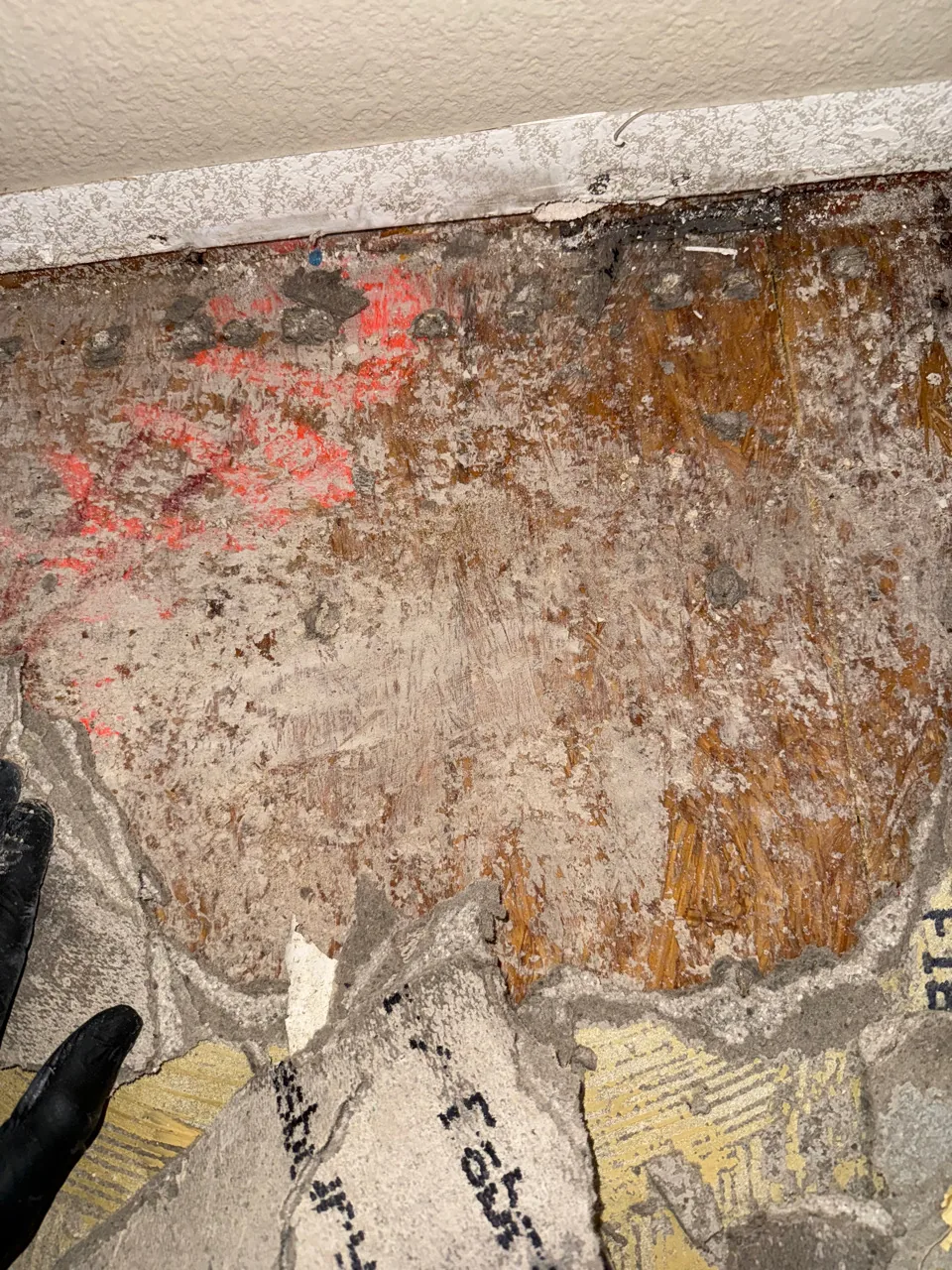
A wet wall cavity acts like its own little climate. Water collects behind drywall and under the cabinet toe-kick. It sits beneath vinyl plank or carpet pad, soaks into insulation, and pools where a pipe comes through the wall. Almost no air moves in those spaces. The painted face dries first while the paper backing and the wood plate behind it stay damp.
University of Nevada Extension guidance says areas that get wet and dry slowly give mold the time it needs.(4) Opening a window or turning down the thermostat won’t fix a wet wall.
Dry desert air cannot protect material that remains wet behind a wall, beneath a floor, or inside a cabinet.
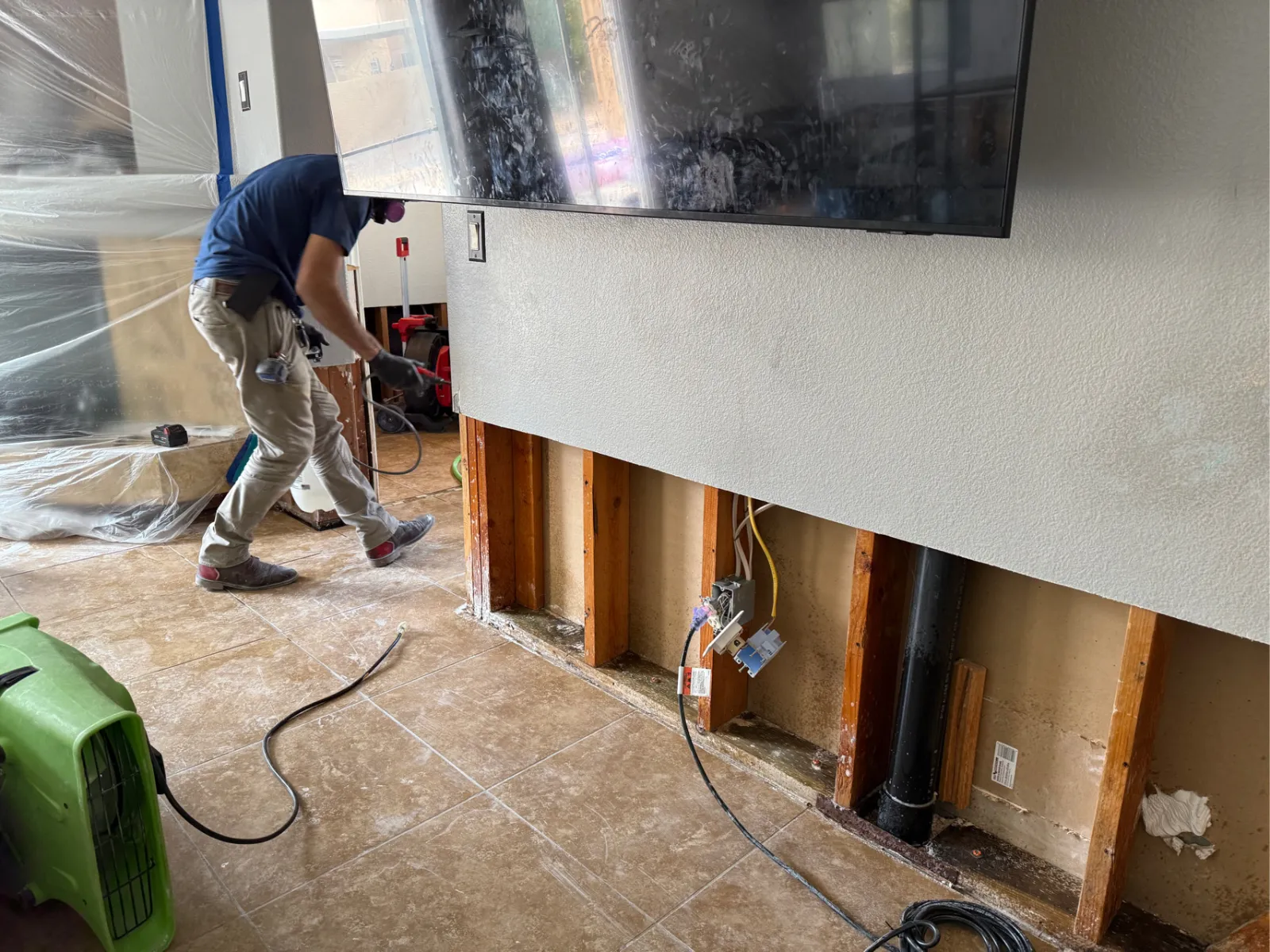
The mark you can see is smaller than the damage. Water runs along framing and seams, follows screws and nails, and goes downhill. Treat a four-inch stain as the place the water came out, not the edge of the wet area. Professional moisture mapping traces the affected materials instead of stopping at the visible edge.
The moisture sources that matter in Las Vegas homes
Indoor mold in the valley traces back to a water event or a slow leak. It can be a sudden flood or a quiet drip behind a cabinet.
Supply lines and toilet seals, fridge ice-maker lines, washer hoses, water heaters.
Blocked condensate drains and wet pans, plus wet coils and ducts.
Roof edges, window seals, stucco cracks, low spots in the yard or garage.
Sprinklers, broken lines, and soil sloped toward the structure.
Plumbing and appliance leaks
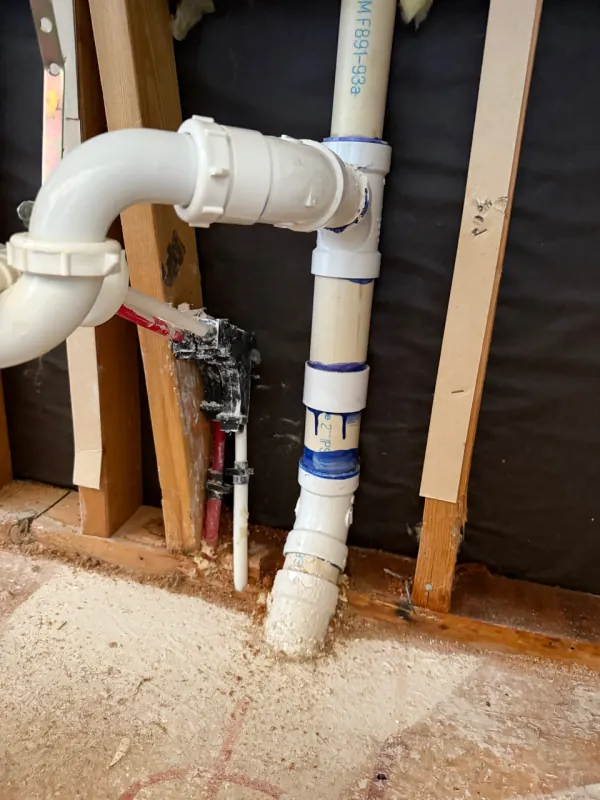
An under-sink supply line or a toilet seal can leak into the cabinet or subfloor long before anyone sees a puddle. So can an ice-maker line or a washer hose, a water heater or a tub connection. Slow leaks are the sneaky ones. They feed the same hidden spot for weeks.
If the mold followed a known leak, water-damage mold removal has to handle both halves of the problem: the damaged material, and the water that let the mold start.
AC condensate and HVAC moisture
Air conditioners run hard all summer here. The cooling coil pulls moisture out of the air, and that water has to drain somewhere. When the condensate line clogs or the pan holds water, or the insulation around cold equipment gets wet, the AC becomes a steady moisture source inside the house. EPA homeowner guidance specifically recommends keeping AC drip pans clean and drain lines unobstructed.(3)
A smell that gets stronger when the system runs points to a moisture or contamination problem around the HVAC. Check the return area and the drain, then the walls next to the unit. If you can’t tell where the water is coming from or what it has reached, start with a mold remediation assessment. Duct cleaning doesn’t fix a condensate leak. The drain repair itself is an HVAC tech’s job.
Evaporative coolers
Some older homes in the valley still run evaporative coolers. Those add moisture to the air on purpose. A swamp cooler doesn’t automatically mean mold. Trouble starts when the unit leaks or the house isn’t vented well, when pads and pans get neglected, or when indoor moisture stays high around drywall and wood.
Monsoon storms, roof leaks and flash floods
Las Vegas doesn’t get much rain in a year, but the yearly total hides how it arrives. The National Weather Service explains that monsoon moisture typically reaches the valley during July and August, when thunderstorms can produce intense rain and flash flooding in dry washes and low-lying areas.(5)
One hard storm finds the lifted roof edge or the failed window seal. It finds the stucco crack, the patio that overflows, the garage that doesn’t drain. Construction and drainage differ between Summerlin and Henderson, or North Las Vegas and Enterprise, but the question is the same in every one of them: did water reach a porous material, and did that material dry?
Irrigation and exterior drainage
A sprinkler aimed wrong soaks the same patch of stucco every morning. A broken irrigation line saturates the soil next to the slab. Dirt graded toward the house holds water against the wall instead of carrying it away. Nevada guidance recommends keeping sprinklers off buildings and directing surface water away from foundations.(4)
Repetition does the damage. The stucco face dries between cycles while moisture keeps working in behind it.
What the 24 to 48 hour window actually means
EPA and NIOSH guidance recommends drying water-damaged materials within roughly 24 to 48 hours to reduce the chance of mold growth.(3)(6) That’s a response target. It doesn’t mean every wet wall turns moldy at the same hour.
- First hoursDrywall and insulation soak up water past what you can see. So do wood and flooring.
- Within 24 to 48 hoursSpores begin germinating when the material stays wet and warm enough.
- Following daysOdor shows up, colonies become visible and growth goes deeper.
How clean the water was changes the timeline. So do temperature and airflow, the type of material and how far the water traveled. The takeaway isn’t “panic at hour 48.” It’s “don’t wait several days to find out whether the back of the wall is still wet.”
Which molds are commonly found indoors?
The molds in Las Vegas homes are the same ones the CDC lists as common indoors everywhere, led by Cladosporium and Penicillium along with Aspergillus.(7) There’s no special desert species. If you want to know which ones turn up where, and why you can’t name one from a photo, we cover that in types of mold in Las Vegas homes.
For this page, one point matters: you can’t tell what a mold is by looking at it.
MythBlack color proves a mold is toxic.
FactColor does not identify the species or establish mycotoxin production.
“Black mold” is a nickname, not a species. Whatever the color, the fix is the same: deal with the water, then remove the growth with a scope that fits the material it’s on.
Signs of hidden moisture or mold
Forget the color. Hidden water changes the materials around it, and that’s what to look for:
- A persistent musty or earthy odor
- Paint that bubbles or peels, or keeps discoloring
- Swollen baseboards or cabinet panels
- Drywall that’s gone soft or started to sag
- Warped laminate or wood, or flooring that’s come loose
- Damp carpet or padding
- Staining below a sink, toilet, window, or roof line
- Condensation or standing water near AC equipment
- An odor that becomes stronger when the HVAC system runs
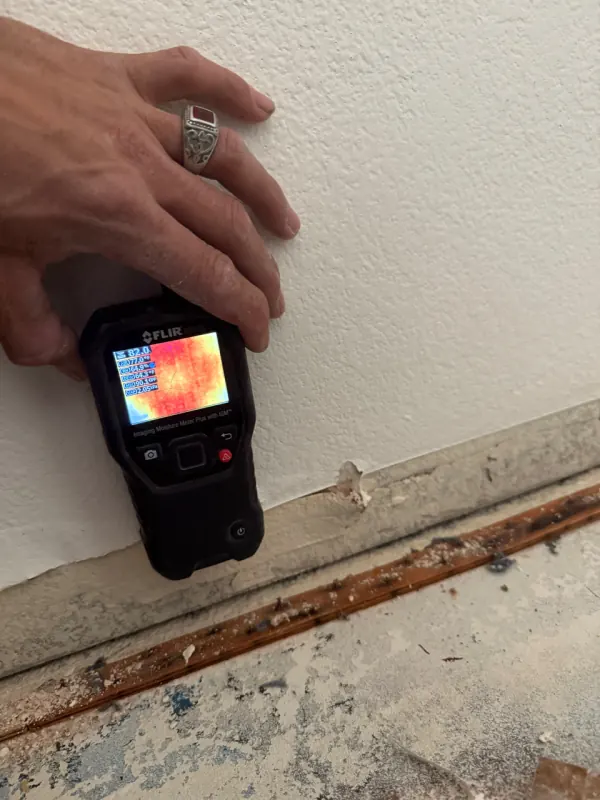
Mold grows where you don’t look: the back side of drywall, under carpet pad, behind wallpaper, above the ceiling, inside the wall. A professional mold inspection pairs a look-and-smell check with moisture meters and humidity readings. Where it’s warranted, the inspector opens a small section of wall and traces the plumbing or HVAC source.
A thermal camera shows differences in surface temperature. A cool patch can mean water, but it can also mean missing insulation or an air leak. The camera does not see mold through a wall. A moisture meter and a hands-on inspection tell you what the pattern actually is.
Do you need mold testing?
If you can see the mold or the water problem is obvious, you don’t need species testing before work starts. CDC and NIOSH guidance does not recommend routine air sampling as the first answer because no health-based indoor-air standard converts every spore count into “safe” or “unsafe.” To find damp spots, NIOSH puts more weight on a careful visual inspection and a nose for musty odors.(6)
Testing earns its place when growth is hidden or the source is unclear, when you need documentation for a dispute, or when an independent assessor is setting a clearance protocol. A lab report doesn’t dry a wet wall.
Better first questions:
- Where did the water come from?
- Which materials are still wet?
- What can be cleaned, and what must be removed?
- How will the work area be contained?
- How will dryness and source correction be verified?
Can mold affect your health?
People react differently to damp, moldy homes. Some never notice a thing. Others report a stuffy or irritated nose, coughing or wheezing, burning eyes, itchy skin. People with asthma or mold allergies tend to react more strongly, and people with weakened immune systems or chronic lung disease face a higher infection risk. CDC documents these effects and the differences in individual response.(7)
We look at building materials and moisture. We don’t diagnose medical symptoms. If someone in the house has ongoing wheezing, trouble breathing or a fever, talk to a doctor. Remediation isn’t medical treatment.
What to do when you find visible or hidden mold
What to do now
- Stop the water source. Shut off the leaking line if it's safe to. The repair itself goes to a plumber, roofer or HVAC tech, depending on the source.
- Avoid disturbing visible growth. Scrubbing it, sanding it or opening the wall without containment spreads dust and spores.
- Document the area. Take photos of the staining and the damaged materials, plus the water source, before anything gets moved.
- Have hidden moisture evaluated. The affected area extends beyond what is visible.
Painting over mold or a water stain doesn’t fix the cause. NIOSH warns that covering damaged or moldy surfaces creates more problems.(6) And bleach isn’t the answer for porous materials like drywall and insulation, carpet pad or swollen particleboard cabinets.
What professional mold remediation includes
A proper job starts with the water. Chemicals come later:
- Locate and correct the moisture source.
- Measure and document the affected area.
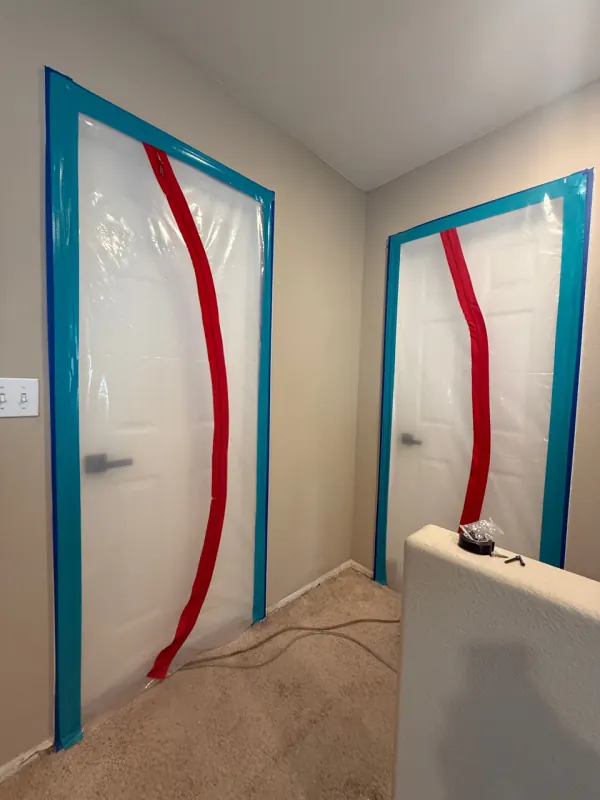
- Seal off the work area with containment before anything is opened.
- Control airborne dust and spores during removal.
- Remove unsalvageable porous materials.
- Clean salvageable structural materials.
- Dry the structure to appropriate moisture targets.
- Verify that the source and moisture condition have been corrected.
That’s the difference between wiping off a patch and fixing the building problem behind it. Our Las Vegas Valley mold-remediation hub explains containment and HEPA filtration, how removal is controlled, and the drying and support services that go with each job. We’re IICRC-certified, the estimate on site is free, and mold jobs start around $2,500.
Local help across the Las Vegas Valley
Every house has its own water story. A Henderson slab leak and a Summerlin roof leak look nothing alike when we walk in. Regional humidity explains neither.
Quality 1st Restoration handles mold and moisture calls across Las Vegas and Henderson, Paradise, Spring Valley, Enterprise, Whitney, Sunrise Manor, Boulder City and the rest of the valley. If you see growth or keep smelling something musty, or you know things stayed wet after a leak, find out how far the water went before you decide on cleanup. Once you know the moisture source, professional mold removal in Las Vegas walks through when that job is a weekend DIY cleanup and when it needs containment and a crew.
References
- PubMed, “Variation in airborne fungal spore concentrations among five monitoring locations in a desert urban environment.” Study abstract.
- Aerobiologia, “Quantitative universal fungal PCR analysis of environmental air samples from Las Vegas, Nevada.” Research article.
- U.S. Environmental Protection Agency, “A Brief Guide to Mold, Moisture and Your Home.” EPA homeowner guidance.
- University of Nevada, Reno Extension, “Inspection and Management of Harmful Structural Molds.” Nevada guidance.
- National Weather Service Las Vegas, “Climate of Las Vegas.” Local climate overview.
- CDC/NIOSH, “Mold, Testing, and Remediation.” Testing and remediation guidance.
- Centers for Disease Control and Prevention, “Mold.” Health and common mold overview.
Seeing mold or tracking down a musty odor? Start with the moisture source.
Quality 1st evaluates mold and hidden moisture across Las Vegas, Henderson, and the surrounding valley.
888-453-3591