Certified standards
IICRC-certified technicians follow accepted drying, cleaning, containment, and remediation procedures instead of deciding by appearance alone.
A puddle at the base of a water softener rarely announces its cause. It could be condensation on the tank, a cracked fitting, a clogged drain line, or something more serious inside the brine or resin tank. The water often starts higher on the unit and runs down before it reaches the floor — which is why guessing at the source from a wet baseboard is a bad bet.
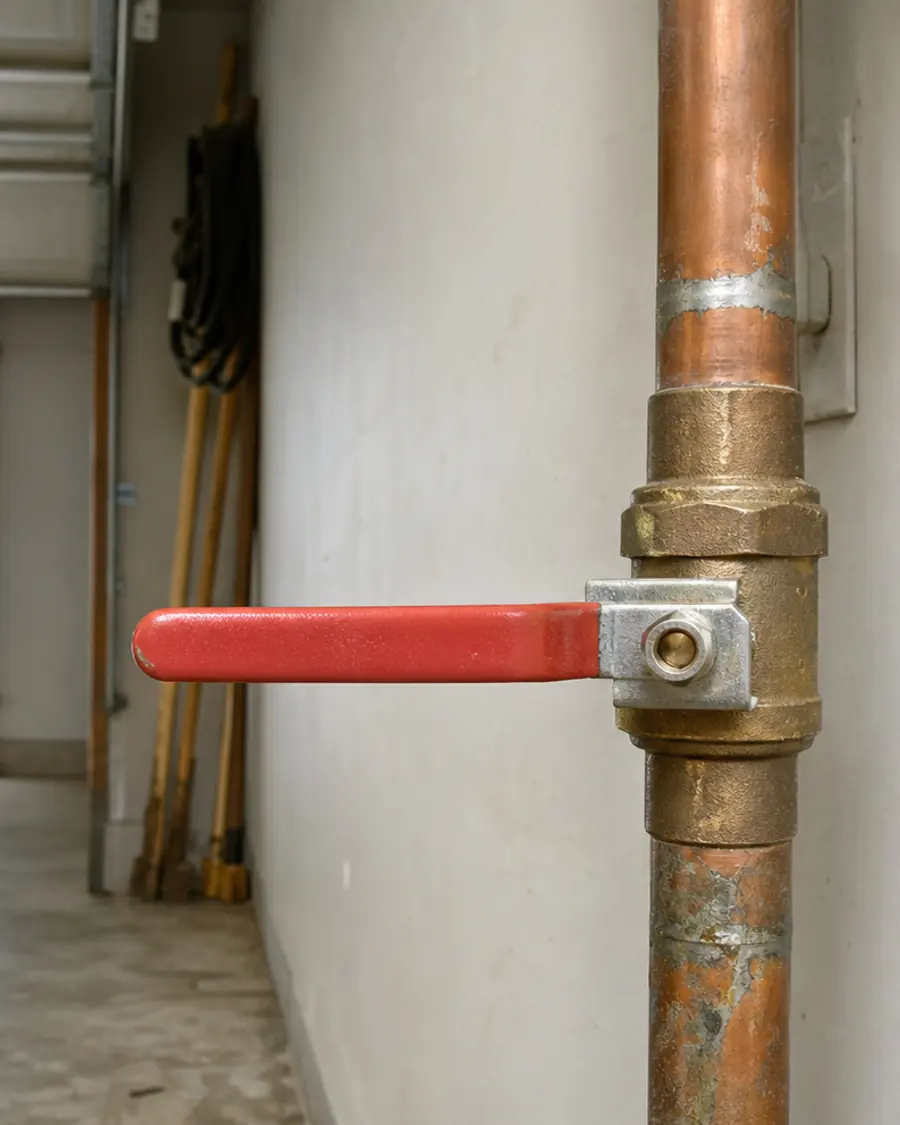
If you can reach it, put the softener on bypass (that routes your home's water supply around the unit instead of through it), and don't disassemble, patch, or force anything on the tank yourself. That's step one. Step two is everything the water already reached: baseboards, drywall, flooring, whatever sat in its path. Quality 1st Restoration handles that half: extraction, drying, and repair. Fixing or replacing the softener itself is a plumber or water-treatment company's job, not ours, and we'll tell you that straight. Call 888-453-3591. Someone answers, day or night.
Where it's coming from
Not every leak is the same leak.
That's also why diagnosing a bottom puddle by eye is unreliable — per Culligan's own guide to a leaking water softener, a leak can start well above the base and travel down the tank before it's visible at all. Our water leak detection page covers how we trace a leak path before anyone opens anything up.
First moves
What comes first? Manufacturers agree on the order of operations: locate the bypass valve and put the softener on bypass, or shut off the water supply to the unit entirely, before doing anything else. Don't disconnect fittings, open the tank, or patch a crack yourself — that's professional-service territory. Once the water's stopped, the floor becomes the priority.
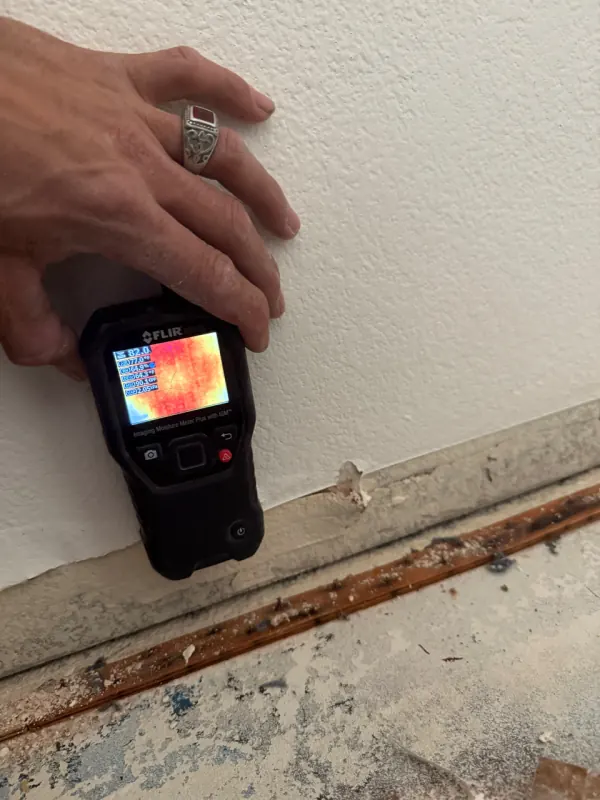
Softeners usually sit against a wall in a garage or utility room. On the jobs we see, water from a floor-level leak doesn't stay put: it travels under the baseboard into the room on the other side before it ever pools somewhere visible. That's a field observation from our own calls, not a rule every leak follows, but it's common enough that we check the far side of that wall as a matter of course. If the leak turns out to be a nearby water heater rather than the softener, our water heater leak cleanup page covers that separate appliance, the two often sit side by side. Either way, moisture mapping is where the real assessment starts: how far the water traveled, not just where it's visible.
When it becomes our job
A softener is plumbed straight into your home's water supply, so a leak isn't a fixed amount of water — it keeps flowing until the unit is bypassed or the supply is shut off. That's the difference between a leak caught in an hour and one that's been running since before anyone got home.
Water leaving the supply side of a softener starts out clean, classified as Category 1, the same category assigned to a broken supply line elsewhere in the house. Clean doesn't mean harmless if it sits, though. Left standing, water damage can begin shifting toward conditions that support mold growth within roughly a day or two, which is part of why the EPA's guidance on mold and moisture is built around fast drying, not cleanup after the fact.
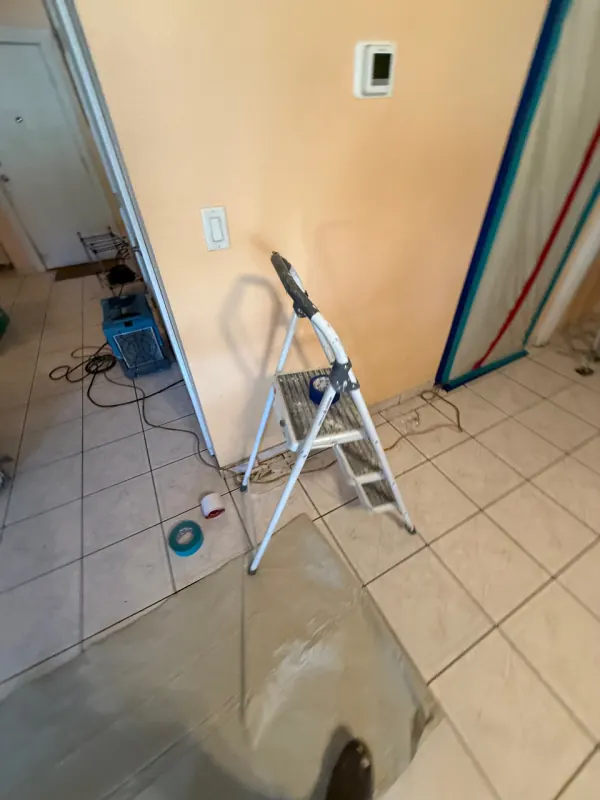
From there, the sequence is always the same: extract the standing water, map how far it traveled, run structural drying until the material reads dry against a known-good reference, and repair whatever didn't survive — drywall, baseboards, flooring. That's the full arc of what we call Water Damage Restoration in Henderson, NV, and a softener leak is one of the more common ways a job like that starts.
Why it's common here
This valley is part of why softeners are common here in the first place. The Las Vegas Valley Water District puts local water hardness at roughly 16 to 17 grains per gallon ("very hard" by its own classification), with the minerals traced back to Colorado River water feeding Lake Mead. The Southern Nevada Water Authority backs the same range and explains the basic trade a softener makes: calcium and magnesium swapped for sodium or potassium as water passes through the resin. Upgrade or standard equipment? Out here, closer to the latter.
Standard equipment still wears out. A typical softener's service life runs about 10 to 15 years, and the failure points that show up late in that window (a cracked resin tank, a rotor valve seal finally giving out) tend to be the more serious ones. The brine tank tends to fail the same way every time: a hardened salt bridge gets broken up by force, and the tool used to do it punches through the plastic at the bottom of the tank. It's a leak source, not a water-quality problem — a puncture means water on the floor, not contaminated water in the pipes.
What the fix involves
Call 888-453-3591 and the phone gets answered, 24 hours a day. The visit starts with assessment: where the water came from, how far it traveled, what it touched. We take moisture readings and photograph the area as we go, which matters later if you're filing a claim, our insurance claim assistance page covers how we document a loss so it holds up with an adjuster.
We can't promise what a policy will pay. That's between you and your carrier. What we can guarantee is that the paperwork isn't built from memory. Drying runs until the material matches a dry reference point, and the rebuild (baseboards, drywall, flooring) gets matched to what was there before.
Quality 1st Restoration is based in Henderson and works throughout the Las Vegas Valley: Las Vegas, North Las Vegas, Summerlin, Paradise, out to Boulder City. If your softener is leaking and you're not sure whether it's condensation or something worse, call 888-453-3591. We'll help you sort out which one it is. And if it's ours to fix, we'll get started.
Call 888-453-3591Before you decide
If your situation does not fit neatly into one answer, call 888-453-3591 and describe what you see.
Usually one of four things: condensation on the tank, a brine-tank problem, a loose or blocked drain line, or a valve connection leaking higher up and running down the tank before it pools. A cracked resin tank is less common but more serious, and usually shows up in older units. The leak point and the puddle aren't always in the same place.
Yes. Bypassing the unit routes your home's water supply around it instead of through it, so your water keeps running. It just won't be softened until the unit is repaired or replaced.
At the point it leaves the supply side of the unit, it's clean water, the same category assigned to a broken supply line elsewhere in the house. It doesn't stay that way indefinitely. Left sitting, it can start creating the conditions mold needs within a day or two, which is why we treat a fast response as part of the job.
It depends on your policy and how the leak happened: sudden, accidental failures are typically treated differently than damage from a unit that's clearly been leaking for a long time. We don't make coverage promises; that's the carrier's call. What we do is document the loss thoroughly: readings, photos, a written scope, so your claim is built on evidence.
Not our call, and we won't pretend otherwise. A plumber or water-treatment company can tell you whether the unit is worth repairing or has reached the end of a typical 10-to-15-year service life. Our job starts once you know the answer: repairing whatever the leak damaged before it was caught.
Water Damage Restoration Service
Water Softener Leak Cleanup is one part of our water damage restoration service work. If the damage is bigger than one task, start at the main category page and we'll scope the whole job.
Water Damage Restoration in Henderson, NVWhy trust us
For Water Softener Leak Cleanup, trust comes from what gets verified on site: the source, the moisture, the affected materials, the cleanup scope, and the record that supports the job afterward.
A clean restoration job should leave you with a dry structure, a clear explanation of what was done, and documentation that makes sense weeks later if an adjuster asks a question.
IICRC-certified technicians follow accepted drying, cleaning, containment, and remediation procedures instead of deciding by appearance alone.
Photos, scope notes, equipment logs, and moisture readings are collected as the work moves so homeowners and adjusters can see what changed.
Crews test affected materials before and during the job, then adjust air movers, containment, and dehumidification to match the actual moisture load.
Emergency cleanup, controlled demolition, drying, cleaning, and build-back coordination stay under one restoration plan instead of being handed off blindly.
The team works across Henderson and the Las Vegas Valley, where slab leaks, appliance lines, roof leaks, AC condensate issues, and fast desert drying conditions are common.
What needs immediate attention, what can wait, and what should be handled by a licensed trade outside the restoration scope.
We avoid opening finished materials until moisture readings, contamination risk, and practical access have been checked.
Emergency response stays focused on stabilization first, then drying, cleaning, and repair decisions after the building is under control.
From slab leaks and burst pipes to monsoon water and roof leaks, every water loss starts differently. We identify the source, remove standing water, dry affected materials, and plan the cleanup around the property.
Request emergency water cleanupCall Quality 1st. We answer 24/7 and help with water removal, drying, cleanup, repairs, and insurance paperwork.