Certified standards
IICRC-certified technicians follow accepted drying, cleaning, containment, and remediation procedures instead of deciding by appearance alone.
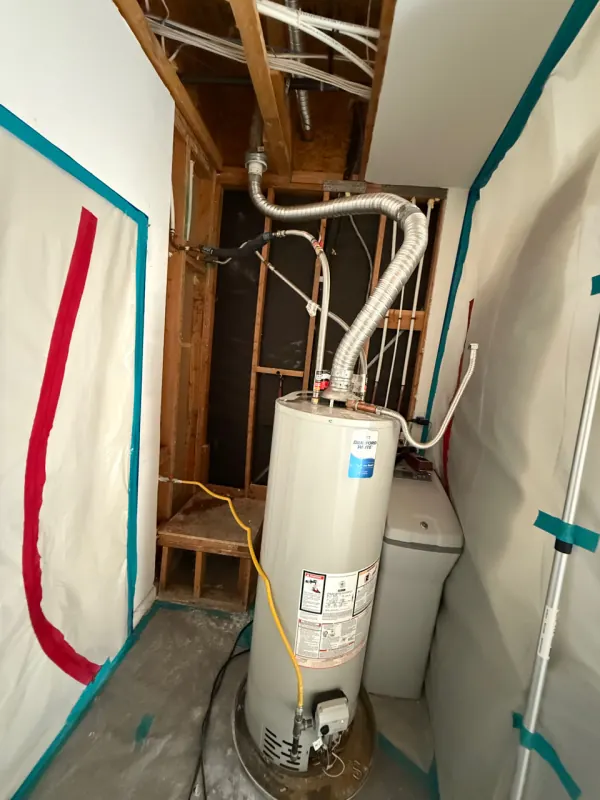
When a tank lets go, it does not drip. It dumps fifty gallons or more onto whatever was below it, then keeps refilling until somebody finds the shutoff. We respond fast and start extraction before the slab and adjacent walls get to soak in it.
Garage closets, indoor utility rooms, and second-floor closet installs all flood differently. We have run all three configurations in Henderson homes.
Where the water actually goes
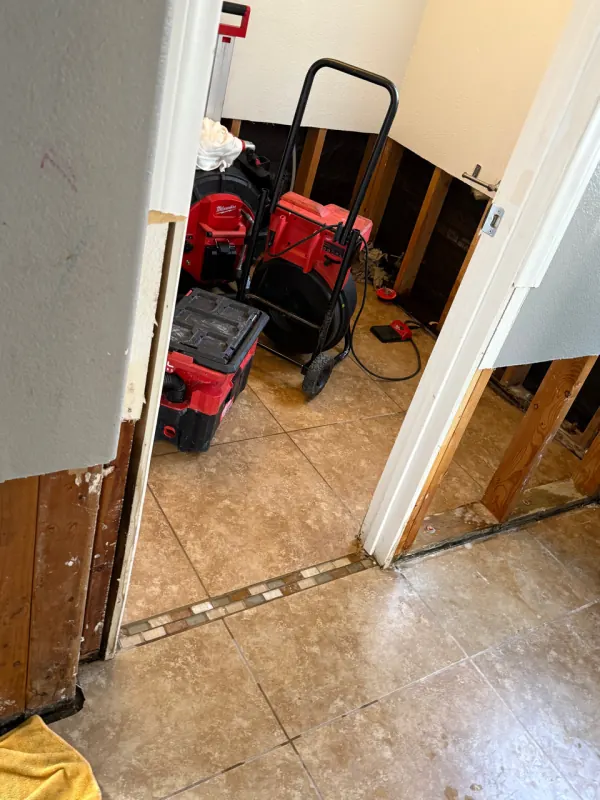
From a second-floor closet, you get ceiling damage on the floor below before you see anything else. From a garage install, the water is in the slab joints and the bottom plate of the wall to the house.
Moisture readings show how far it traveled instead of just where it pooled.
Water can move well beyond the visible puddle, which is why the EPA's building moisture verification guidance includes checks for plumbing systems and concealed assemblies.
Upstairs heater, downstairs damage
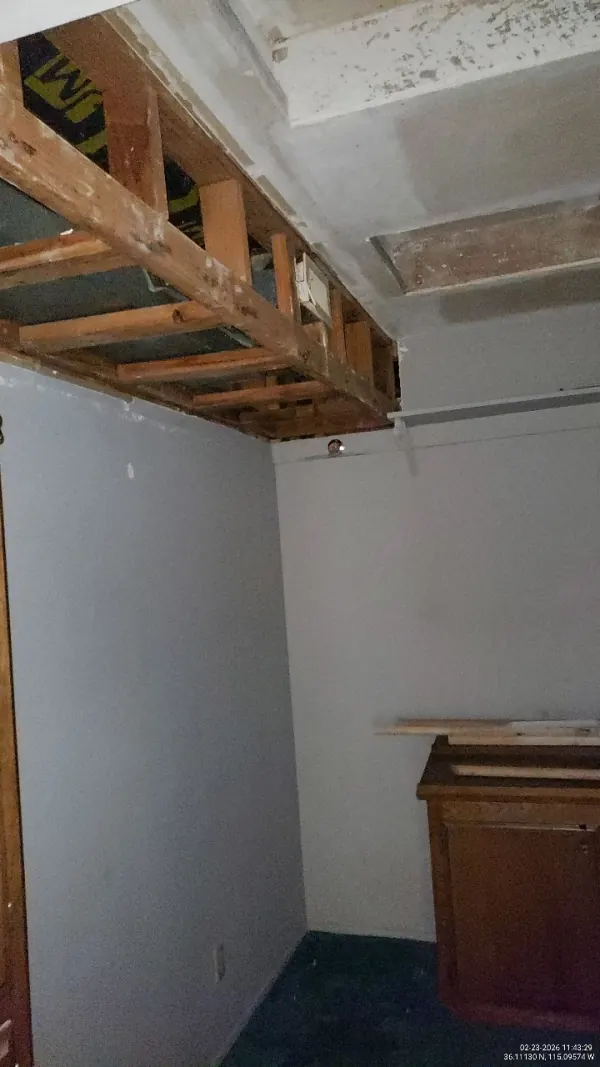
Second-floor closet installs are common in newer construction. When they fail, the ceiling below the closet is the first place you see it.
We open the cavity carefully, dry the framing, and rebuild the ceiling instead of patching over a wet substrate.
Water heaters and water softeners often sit side by side in the same closet or garage corner, and it's not always obvious which one is leaking. Our water softener leak cleanup page covers that appliance separately.
Water Damage Restoration Service
Water Heater Leak Cleanup is one part of our water damage restoration service work. If the damage is bigger than one task, start at the main category page and we'll scope the whole job.
Water Damage Restoration in Henderson, NVWhy trust us
For Water Heater Leak Cleanup, trust comes from what gets verified on site: the source, the moisture, the affected materials, the cleanup scope, and the record that supports the job afterward.
A clean restoration job should leave you with a dry structure, a clear explanation of what was done, and documentation that makes sense weeks later if an adjuster asks a question.
IICRC-certified technicians follow accepted drying, cleaning, containment, and remediation procedures instead of deciding by appearance alone.
Photos, scope notes, equipment logs, and moisture readings are collected as the work moves so homeowners and adjusters can see what changed.
Crews test affected materials before and during the job, then adjust air movers, containment, and dehumidification to match the actual moisture load.
Emergency cleanup, controlled demolition, drying, cleaning, and build-back coordination stay under one restoration plan instead of being handed off blindly.
The team works across Henderson and the Las Vegas Valley, where slab leaks, appliance lines, roof leaks, AC condensate issues, and fast desert drying conditions are common.
What needs immediate attention, what can wait, and what should be handled by a licensed trade outside the restoration scope.
We avoid opening finished materials until moisture readings, contamination risk, and practical access have been checked.
Emergency response stays focused on stabilization first, then drying, cleaning, and repair decisions after the building is under control.
From slab leaks and burst pipes to monsoon water and roof leaks, every water loss starts differently. We identify the source, remove standing water, dry affected materials, and plan the cleanup around the property.
Request emergency water cleanupCall Quality 1st. We answer 24/7 and help with water removal, drying, cleanup, repairs, and insurance paperwork.