
The source question
A plumber stops and repairs the active leak.
Plumbing source diagnosis and repair are not promised by this assessment. If water is still escaping, source control comes first.
Hidden-water assessment · Henderson, NV
When a stain, swollen baseboard, or damp floor suggests a water leak, the first question is not which wall to open. It is which problem needs to be solved.
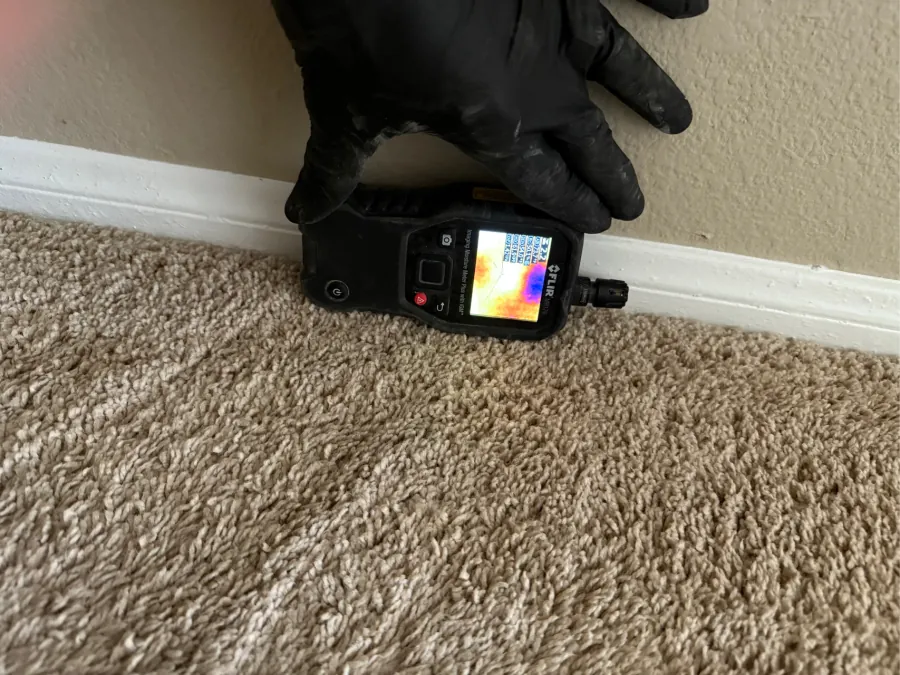
Quality 1st screens building materials with thermal imaging, confirms suspect areas with moisture-meter readings, and maps the apparent spread for restoration planning. A plumber stops and repairs an active plumbing source.
What this assessment answers
Which tested materials appear wet? How far has moisture spread? Which trade or restoration step makes sense next?
Water actively escaping? Shut it off only if you can do so safely, stay clear of wet electrical areas, and call a plumber to stop the source. Call us when building materials may also be wet.
The first clues
The visible mark is only one data point. Water can move along framing, flooring layers, cabinet bases, or other paths before it shows on a finished surface.
These signs do not identify a failed pipe by themselves. They do tell you it is time to separate the source question from the wet-material question.
The trade boundary
“Where is the plumbing failure?” and “What building materials got wet?” sound similar. They lead to different work.
The source question
Plumbing source diagnosis and repair are not promised by this assessment. If water is still escaping, source control comes first.
The building question
We screen suspect areas, confirm readings in tested materials, map the apparent spread, and explain the next restoration step.
What we check
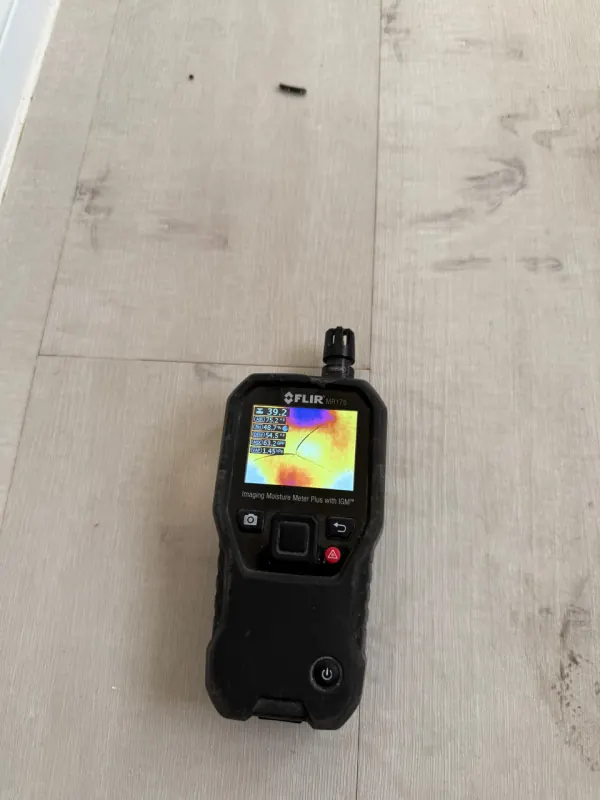
Thermal imaging helps narrow attention. Moisture readings test the materials. The map of those readings shapes the restoration decision.
Tell us what changed, where you see it, and whether water is still running. That first distinction helps identify the right trade.
Thermal imaging helps reveal surface-temperature patterns that deserve a closer look across accessible walls, ceilings, floors, and nearby materials.
A temperature pattern is not proof of water. Moisture-meter readings help confirm which tested materials appear affected.
We explain the apparent wet boundary and whether the next call is source repair, drying, cleanup, selective removal, or restoration planning.
Why confirmation matters
Infrared cameras read surface-temperature differences. Moisture can create a pattern, but so can air movement, framing, or an insulation gap. That is why a suspect area is checked with a moisture meter before it drives a drying or material-removal decision.
That distinction is also reflected in FLIR’s guidance on using thermal imaging for water-leak investigation .
Detector or service?
A consumer water leak detector may sense water at one location or flag unusual flow, depending on the device. It can tell you to look closer. It does not automatically identify the failed plumbing component or show every material the escaped water reached.
This page is for the next decision: assessing suspect building materials and determining what restoration step, if any, should follow source control.
For an independent overview of device types and limitations, see the EPA WaterSense guide to leak-detection and flow-monitoring devices .
A prompt to investigate a sensor location or unusual water use.
The source-location and repair question for the appropriate plumbing professional.
The affected-material and restoration-planning question handled here.
Before you call
A stain, odor, soft material, detector alert, or unexplained meter movement.
The room, surface, and nearest plumbing fixture or appliance—without opening anything yourself.
If yes, say so first. Active source control may need to happen before restoration assessment.
If no water is being used, a meter check may indicate unexplained water use, but it will not locate the failed source. Follow the Las Vegas Valley Water District’s meter-check instructions and call a professional when the source is unclear.
Where the assessment can lead
These related pages explain the narrower methods and the restoration work that may follow after an active source is under control.
Questions before scheduling
If your situation does not fit neatly into one answer, call 888-453-3591 and describe what you see.
No plumbing repair is promised by this service. A plumber stops and repairs an active plumbing source. Quality 1st assesses the affected building materials and can explain the restoration work that may follow.
Not by itself. A thermal camera shows surface-temperature patterns, which can also be caused by air movement, framing, or insulation differences. We use moisture-meter readings to confirm suspect materials, and we do not present that as an exact plumbing-source diagnosis.
Treat the alert as a reason to check, not as a map to the failed component. If water is actively escaping, shut it off only if you can do so safely and call a plumber. If walls, flooring, cabinets, or ceilings may be wet, a restoration moisture assessment can help define the affected area.
Thermal imaging and moisture meters can help screen accessible surfaces and materials, but construction layers and access affect what can be evaluated. We do not promise exact source location or that no material will ever need to be opened.
The next step depends on whether the source is still active and which materials appear affected. Source repair comes first when needed. Drying, cleanup, selective removal, or restoration planning can follow once the water source is under control.
Call Quality 1st and describe what changed, where you see it, and whether water is still running. We’ll help you identify the right next step without treating a thermal image as a plumbing diagnosis.