Bathroom mold after a tenant leak
"Todd walked me through everything and was able to help fix the problem."
Some mold is a weekend cleanup. Some needs containment and a crew. Here's how to tell the difference, and who to call once you know.
You're looking at a musty smell in a spare bedroom, a dark ring under a window, or a soft spot in the drywall after a leak or last monsoon season's rain, and you're trying to figure out whether this is something you handle yourself this weekend or something that needs a crew. That's the question this page is built to answer.
Quality 1st Restoration is based in Henderson and handles mold removal and mold remediation across the Las Vegas Valley, from a single damp patch of drywall to a room that needs full containment. The process runs the same way on every job: find where the moisture came from, seal off and treat the area with HEPA filtration when the scope calls for it, dry the structure back down, and document what was found and what was done. The phone line runs 24/7.
Tap to call on mobile. Available 24/7, every day of the year.
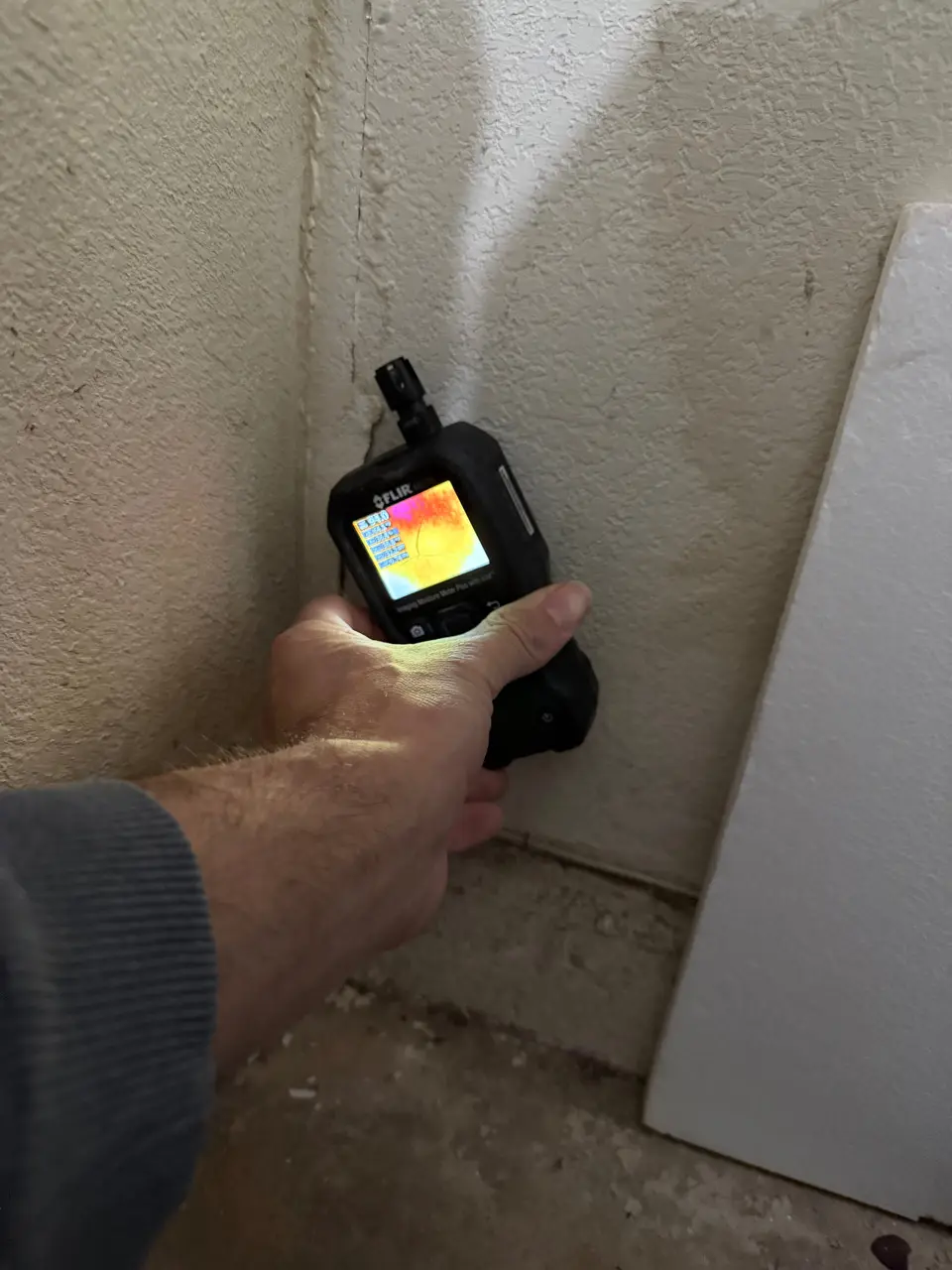
Moisture readings come first. Growth you can see is only part of the picture.
Mold calls move fast once you decide it needs a professional. These Google reviews show how customers describe our communication, cleanup, and follow-through.
Bathroom mold after a tenant leak
"Todd walked me through everything and was able to help fix the problem."
Professional restoration work
"Professional, responsive, and high-quality work."
Estimate and schedule
"Kept us within the promised estimate and finished ahead of schedule."
Water leak, drywall repair, and painting
"Identified and fixed the problem, very little mess, completed the job within a few days."
Decision point
Not every spot needs a crew and a containment barrier. The size of the area, what it's growing on, and who lives in the house all factor into whether this is a job you can do yourself on a Saturday morning or one that needs professional removal. Size is the biggest factor, so start there.
The size test
The EPA draws a fairly clear line. If the moldy area is smaller than about 10 square feet (roughly a 3-by-3-foot patch) on a hard, non-porous surface, and nobody in the home has asthma, allergies, or a weakened immune system, you can generally handle it yourself with gloves, an N-95 respirator, and eye protection.
Past that point, the math changes. EPA guidance treats professional work as the right call once the area is larger than 10 square feet, the water involved was contaminated (think a sewage backup, not a clean supply-line drip), the HVAC system is involved, or anyone in the household has a respiratory condition. Size is only one factor. A small patch fed by dirty water can outrank a bigger patch on a bathroom tile wall.
Timing matters too. Materials that get dried within roughly 24 to 48 hours after a leak or spill generally don't grow mold, according to the EPA. That's a target for stopping a problem before it starts, not a guarantee. If you're past that window and the wall is still damp, treat it as a mold question, not just a drying question.
Bleach can kill mold sitting on the surface of a hard, non-porous material. It doesn't do much for drywall, carpet padding, or ceiling tile, because mold growing on porous materials reaches down into the material itself, and surface-level bleach never gets that far. That's why EPA guidance treats affected porous materials as something to remove in many cases, rather than something to scrub clean.
If your situation matches the professional-removal criteria above (bigger than about 10 square feet, contaminated water, HVAC involvement, or you're just not sure), call 888-453-3591 to talk it through. Quality 1st answers this line 24/7. Prefer to check us out first? Our Google reviews are public.
Call 888-453-3591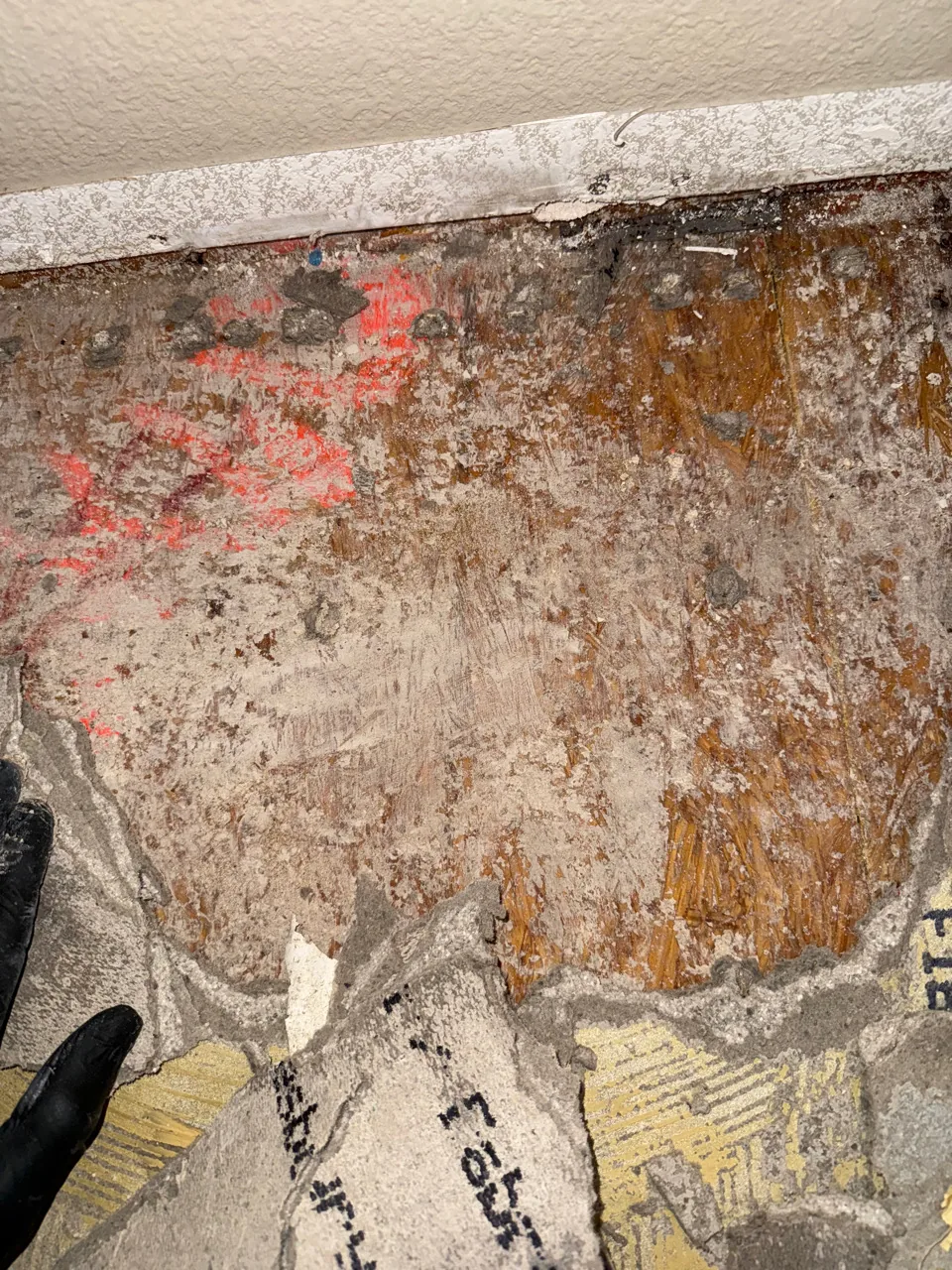
Dark growth like this looks alarming, but color alone doesn't identify the species.
Color is not a diagnosis
Short answer: not for figuring out how dangerous it is. The EPA and CDC don't use color to identify a mold's species or determine whether it's producing anything harmful. "Black mold" is a description, not a lab result. Plenty of mold species can look dark, greenish-black, or gray depending on the surface and how long they've been growing.
The CDC lists Cladosporium, Penicillium, and Aspergillus among the molds most commonly found indoors. Alternaria is common outdoors and blows in through doors and vents. Stachybotrys chartarum, the species usually behind "toxic black mold" headlines, is specifically tied to cellulose material that's stayed chronically wet, not a random leak from last week. None of that changes what happens next: whatever color it is, the material needs the same evaluation. Find the moisture, then clean or remove what's affected. For a fuller rundown, see the common types of mold found in Las Vegas homes.
Removal vs. cleaning vs. inspection
These three terms get used interchangeably online, but they're not the same job.
Mold cleaning fits smaller, surface-level problems: mold on a shower tile grout line, a windowsill, or a hard surface that hasn't spread into the material underneath. If your situation matches the small-area criteria above, mold cleaning for smaller, surface-level problems is often the right scope.
Mold removal and mold remediation cover the bigger jobs: containment, negative air, removing porous material that can't be cleaned to a standard anyone would sign off on, and drying the structure back to normal moisture levels. This page focuses on that removal decision for Las Vegas specifically; our full mold remediation process covers the technical side in more depth.
Inspection is a separate step, and it isn't always required first. When mold is visible and you already know where the water came from, CDC and NIOSH guidance leans toward visual inspection over routine lab testing, since there's no test result that reliably tells you "safe" or "unsafe" anyway. Testing earns its keep when growth is hidden, the source is unclear, or you need documentation for an insurance claim or a landlord dispute. If that's your situation, a mold inspection to confirm hidden growth or moisture sources is the better starting point than jumping straight to removal.
The removal process
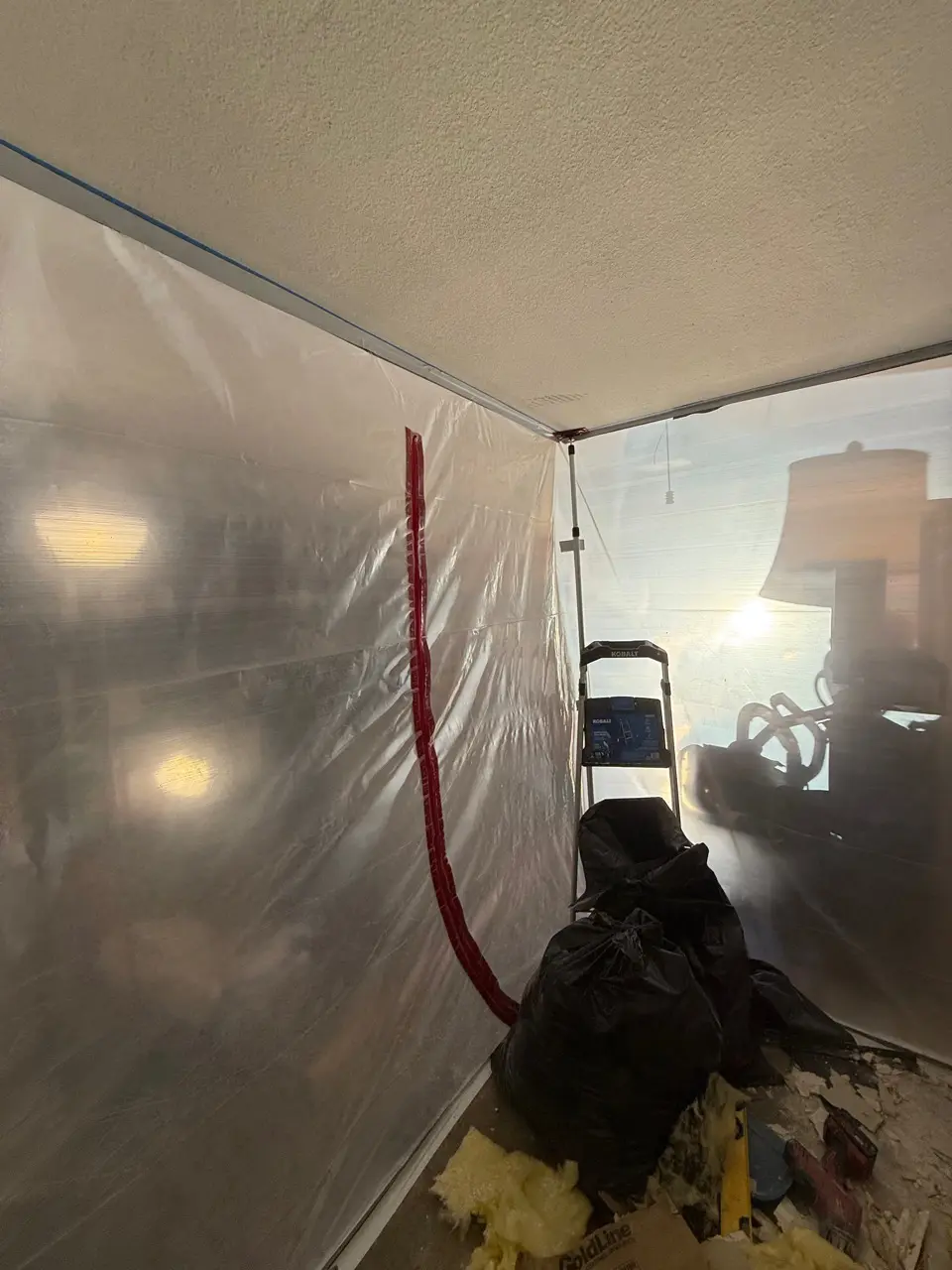
A defensible mold removal job follows roughly the same order every time, whether the reference point is the ANSI/IICRC S520 standard or just plain common sense: find the water first, then deal with the mold.
That means sealing the work area with plastic sheeting so spores don't spread into the rest of the house, running negative air through HEPA filtration so the air leaving containment is cleaner than the air that was inside it, and removing porous materials (drywall, insulation, carpet padding) that can't be cleaned back to a usable condition. Framing and subfloor that can be salvaged get cleaned, treated, and checked with a moisture meter before anything gets closed back up.
None of that holds if the water source doesn't get fixed. A wall that's cleaned or replaced but still getting wet from the same leak will grow mold again. That's just how moisture and porous material behave. When the mold traces back to a leak or plumbing failure, water damage mold removal is the more complete service to look at, since it addresses the water damage and the mold together.
Our technicians are IICRC-certified, and crews work licensed, insured, and OSHA-compliant, with EPA Lead-Safe Certified practices applied where the job calls for it.
Desert climate, indoor moisture
Mold doesn't care how dry the air outside gets. It only cares about the material it's touching. The EPA is direct about this: indoor mold does not grow without water or moisture present. Which means a desert climate doesn't make Las Vegas homes more or less prone to mold than a house in a humid city; moisture indoors decides that, not the weather report.
The moisture sources repeat across the valley, over and over. Plumbing and appliance leaks. AC condensate lines and drip pans that clog or leak hardest during the months the system runs nonstop. Monsoon rain finding a weak point at a roof edge, window seal, or stucco crack. Irrigation overspray or poor drainage against a foundation. Older evaporative coolers that develop leaks or get neglected.
On that last point: Las Vegas's monsoon season officially runs June 15 through September 30, with the heaviest activity in July and August, and the National Weather Service's main warning during that stretch is flash flooding, not mold. A storm doesn't cause mold by itself. What happens is a storm exposes a weak spot, water gets into a porous material through that spot, and if the material doesn't dry out in time, mold follows. Skip any one of those steps and the chain doesn't complete. For more on how that plays out inside a house that looks bone-dry from the street, see how mold gets started even in a dry climate like Las Vegas.
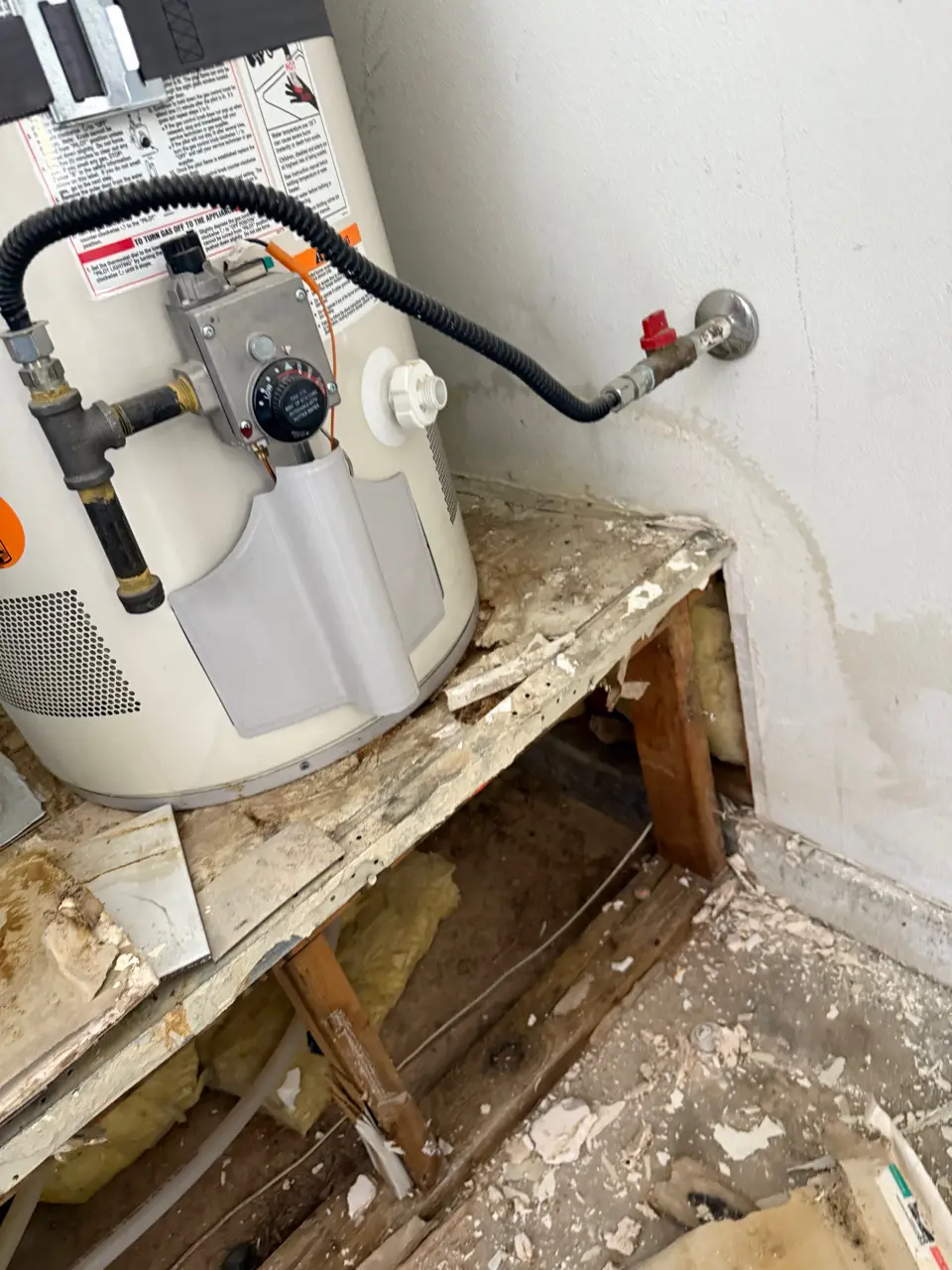
A slow appliance leak is exactly the kind of moisture source a dry climate hides.
Ready when you are
You call the number below and describe what you're seeing: where the smell or stain is, whether there was a recent leak or storm, how large the area looks, and whether it's anywhere near the HVAC system. From there, the conversation covers whether this looks like a cleaning job, a removal job, or something worth an inspection first, and what the next step looks like for your situation.
Quality 1st Restoration is based in Henderson and answers this line 24/7, because a leak, a storm, or a musty smell doesn't wait for business hours. If you want to check us out before you call, our Google reviews are public.
Still not sure which category your situation falls into? Call 888-453-3591 and we'll talk through it. The line is answered 24/7.
The EPA's rule of thumb is about 10 square feet, roughly a 3-by-3-foot patch, on a hard, non-porous surface, with no one in the household who has asthma, mold allergies, or a compromised immune system. Bigger than that, caused by contaminated water, involving the HVAC system, or affecting someone with health concerns, and it's worth calling a professional.
Not because it's black. The EPA and CDC don't use color to identify species or toxicity. A mold can look dark and be harmless, or look pale and still need attention. What actually matters is fixing the moisture and addressing the affected material, regardless of color.
Not always. If the mold is visible and you already know what caused it (a leak, a monsoon storm, a condensate problem), CDC and NIOSH guidance supports skipping straight to cleanup rather than routine testing. An inspection earns its cost when the source is unclear, the growth is hidden, or you need documentation for insurance or a rental dispute.
Nevada doesn't currently run a state mold-remediation licensing program, so there's no state license to check. That makes the contractor's own certifications and documentation more important. Ask directly about general contractor licensing, insurance, and industry certifications like IICRC when you're vetting who to hire.
No. Painting or caulking over a moldy or damp surface doesn't fix what's underneath, and NIOSH guidance is clear that doing so usually creates more problems later. The mold and the moisture feeding it are both still there; paint just hides them until the surface fails again.
Mold removal, Las Vegas
Why trust us
For mold removal in Las Vegas, trust comes from what gets verified on site: the source, the moisture, the affected materials, the cleanup scope, and the record that supports the job afterward.
A clean restoration job should leave you with a dry structure, a clear explanation of what was done, and documentation that makes sense weeks later if an adjuster asks a question.
IICRC-certified technicians follow accepted drying, cleaning, containment, and remediation procedures instead of deciding by appearance alone.
Photos, scope notes, equipment logs, and moisture readings are collected as the work moves so homeowners and adjusters can see what changed.
Crews test affected materials before and during the job, then adjust air movers, containment, and dehumidification to match the actual moisture load.
Emergency cleanup, controlled demolition, drying, cleaning, and build-back coordination stay under one restoration plan instead of being handed off blindly.
The team works across Henderson and the Las Vegas Valley, where slab leaks, appliance lines, roof leaks, AC condensate issues, and fast desert drying conditions are common.
What needs immediate attention, what can wait, and what should be handled by a licensed trade outside the restoration scope.
We avoid opening finished materials until moisture readings, contamination risk, and practical access have been checked.
Emergency response stays focused on stabilization first, then drying, cleaning, and repair decisions after the building is under control.
Guides & answers
Real questions from Henderson homeowners, answered by the crew that does the work. Read up, then call when you're ready.
All guidesCall Quality 1st. We identify the moisture concern, explain the inspection or remediation path, and help you take the next safe step.