“Great price. Highly recommend this company for any service or repair.”
Emergency Water Extraction in Henderson, NV
Emergency water extraction means pulling standing water out of your carpet, pad and floors before it soaks in any deeper. We bring truck-mounted extraction for larger losses and portable units for rooms a hose can't reach. On the spot, we tell you whether your carpet and pad can be saved, and drying starts before we leave.
Most Henderson homes are built on a slab, with no crawl space for water to drain into. So it spreads sideways, under the baseboards and into the next room, until somebody pulls it out. What happens after extraction depends on where the water came from, so that's the first thing we ask.
24/7 Response
IICRC-Certified
Licensed & Insured
Insurance Support
Google Reviews
Why Henderson homeowners trust Quality 1st.
Reviews from Henderson and Las Vegas Valley customers after extraction and drying jobs.
5.0 10 verified reviews
Write a review
“Quality First Restoration is fair and they cared about me. They helped me through the entire process...”
“I was referred to Quality Restorations from an insurance agent. I was impressed that they answered the call...”
“Literally life savers!! I had been dealing with some skin issues...”
“We had a drainage pipe burst inside the wall of our laundry room, and the leak went downstairs...”
“Quality First Restoration is fantastic! The crew did a wonderful job with water damage.”
“I had the opportunity to meet with Todd. He is knowledgeable and responsive. We made the right choice moving forward...”
“The team at Quality First Restorations did a great job taking care of a water leak above our bathroom...”
“Quality First Restoration did an amazing job from start to finish. Professional, responsive, and high-quality work.”
“So I've worked with Todd at Quality First Restorations previously on a rental I have. The tenants had a leak...”
Water can travel farther than the visible puddle.
This clip from a home water loss shows water across finished flooring near a rug and furniture. Extraction gets the visible water first. Then the meter finds what's still wet underneath.
The water category changes the cleanup plan.
Category 1, 2 or 3 describes where the water came from and how dirty it is. It has nothing to do with how much is on the floor. The category can change if water sits, moves through materials, or picks up contaminants, so the final classification happens during the assessment.
Category 1: clean water
A sanitary source, like a broken supply line or a sink that overflowed with clean water. Get it out fast and more of your carpet and flooring can usually be dried in place.
Category 2: gray water
Water with some contamination, like a dishwasher or washing machine discharge. Pad usually comes out. Left standing, Category 2 can turn into Category 3.
Category 3: heavily contaminated
Sewage, floodwater from outside, or anything else grossly contaminated. Carpet and pad that it touched get thrown out. Stay out of it, and don't try to vacuum it up yourself.
The IICRC S500 process overview explains the professional framework for evaluating and restoring water-damaged buildings.
Carpet, pad and floors: what can be saved
Once the water is out, this is the decision everyone wants to know about.
Can my carpet be saved?
It depends on the water and how long it sat. Clean water that we reach quickly usually means the carpet can be extracted, lifted and dried. Water from a toilet, a drain or outside means the carpet goes, even when it looks fine.
Why pull the pad but keep the carpet?
The pad under your carpet holds water like a sponge, and it's the inexpensive part. Drying it in place takes longer than replacing it. It's usually the first thing to smell, too. The carpet on top can often be dried and stretched back down.
What about vinyl plank or wood floors?
Water gets under plank flooring through the seams, where the wand can't reach. We extract what's on top, then check the floor with a meter. Sometimes a few rows have to come up so the slab underneath can dry.
Why does it matter how fast you get here?
Pulling water out as a liquid is far faster than drying it out of the air later. Every hour it sits, more of it moves into the pad, the baseboards and the bottom of the wall. Clean water that sits can also pick up enough contamination to change category.
How much does it cost? Will insurance pay?
Water mitigation in the Las Vegas Valley usually costs $1,500 to $4,800. That covers getting the water out, drying the structure and checking it with moisture meters until the readings are back to normal. If drywall, baseboards or flooring had to come out, the repairs are a separate estimate, so you see each part on its own.
For extraction, the price changes with the water category and how much of the floor it covered. A clean-water leak on tile is quick. Carpet and pad soaked by dirty water add removal and disposal. A flooded ground floor may need a truck-mounted unit and a drying chamber.
Water mitigation
$1,500–$4,800
Extraction, drying equipment and moisture checks.
Repairs
Priced separately
Only if drywall, baseboards or flooring had to come out.
Estimate
Free
On site, before any work starts.
Insurance or self-pay, you decide
Insurance usually pays when the water came on suddenly, like a supply line that split overnight. A leak that dripped for months usually isn't covered. Your carrier makes that call, not us.
We handle the record: photos, moisture readings and a line-item estimate built in Xactimate, the same software most adjusters use. Then you compare it with your deductible and decide whether to file.
Paying yourself? Ask about the self-pay discount. The estimate is free, and you see the price before we start.
Book a free estimatePlanning figures from our work in the Las Vegas Valley, not a quote for your property.
A laundry room and a flooded ground floor are not the same call.
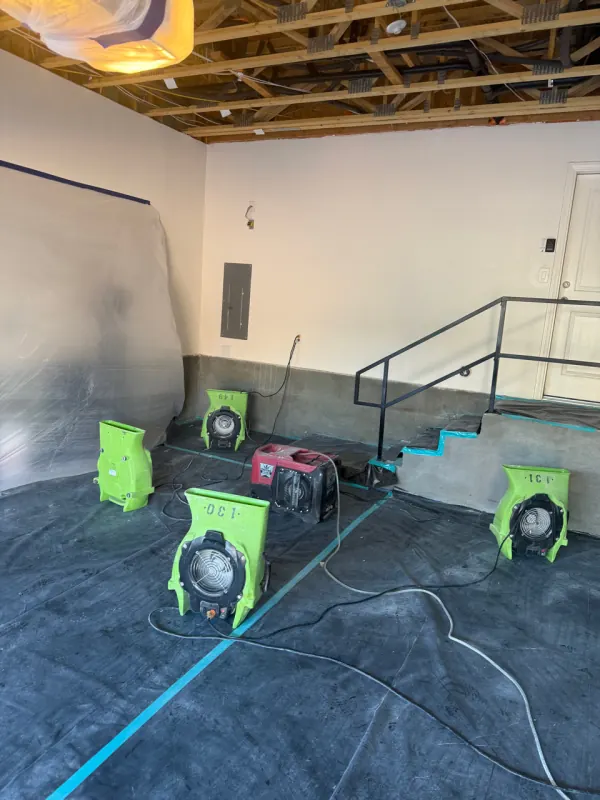
The amount of water changes the extraction plan. A small laundry-room leak may need portable equipment moved room to room. A flooded ground floor or multi-unit loss may require truck-mounted extraction and a drying chamber.
We look at the affected rooms and check the flooring and the lower walls before equipment goes in. Then we bring what the loss actually needs, and the scope stays clear as the job moves from extraction into structural drying.
The industry's professional standard treats extraction, moisture instruments, drying equipment, and documentation as connected parts of the job; review the IICRC S500 process overview .
Pulling the puddle is half the work.
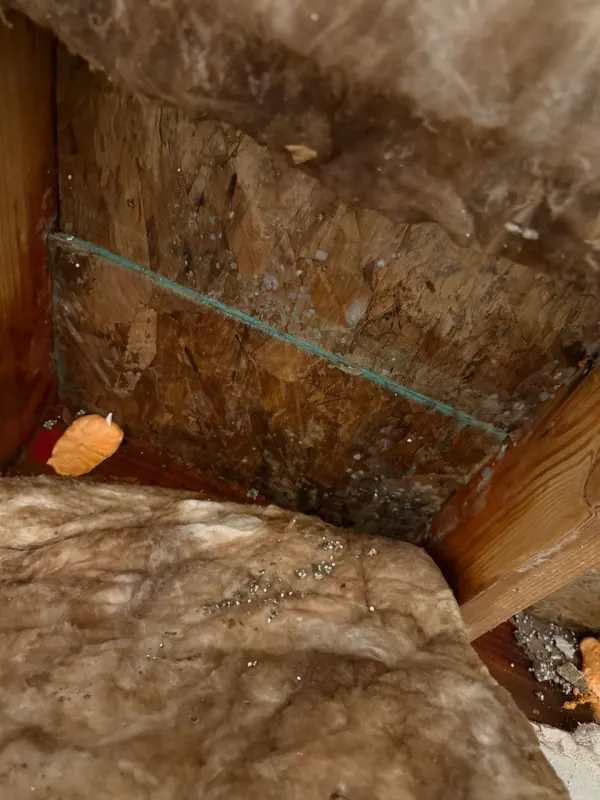
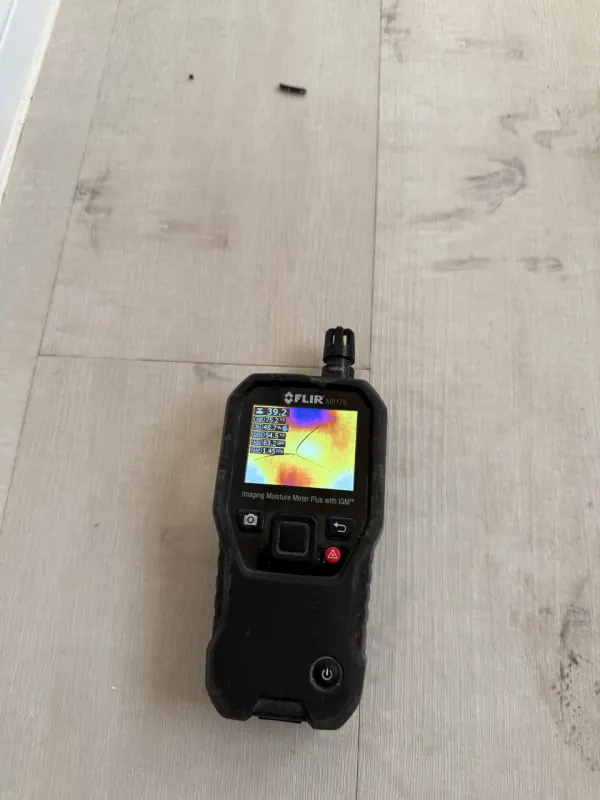
Water under flooring and inside wall cavities does not extract through a wand. It has to be located first with thermal imaging and confirmed with a moisture meter.
Then the drying equipment goes where it's needed, instead of being scattered around the room and hoping it hits the wet spots.
Emergency water extraction questions
How much does emergency water extraction cost?
Extraction is priced as part of the dry-out, which usually runs $1,500 to $4,800 in the Las Vegas Valley. If carpet, pad or drywall has to be replaced, the rebuild often costs about twice the dry-out. The on-site estimate is free.
How long does emergency water extraction take?
The extraction is normally finished on the first visit. The drying that follows usually takes three to five days, with readings each visit so you can see when it's done.
Does homeowners insurance cover water extraction?
When the water came from a sudden break, like a burst supply line, extraction and drying are usually part of the claim. Damage from a slow leak often isn't covered. Your carrier decides, and we photograph and log readings from the start.
Is truck-mounted extraction better than a portable unit?
Neither one is automatically better. Truck-mounted units pull harder and make sense for a flooded ground floor. Portable units go where the truck's hose can't reach, like an upstairs condo. We bring whichever the job needs, and sometimes both.
Should I move furniture before you arrive?
Grab the small things, like rugs, electronics and anything with papers or photos in it. Leave heavy furniture to us. If you can, slide foil or a plastic lid under the legs so wood stain doesn't bleed into wet carpet.
Clear work, clean documentation, no mystery in the middle.
For Emergency Water Extraction, you should be able to see what we found and what we did about it. That's what the paperwork is for.
When we leave, you should have a plain explanation of the work and paperwork that still makes sense weeks later if an adjuster asks.
Certified standards
IICRC-certified technicians work to the published industry standards instead of judging the job by how it looks.
Claim-ready documentation
Photos and scope notes are collected as the work moves, so you and your adjuster can see what changed and why.
Measured drying
Crews meter the wet materials before and during the job and move equipment to wherever the readings are still high.
One accountable plan
The emergency work and the rebuild stay under one plan, so nothing falls into the gap between two contractors.
Local loss experience
The team works across Henderson and the Las Vegas Valley, where slab leaks, supply lines, roof leaks and AC drain lines are the usual sources.
What we tell you before work expands
What needs action now
What needs attention today and what can wait. If part of it belongs to a plumber or roofer, we say so.
What should stay closed
We don't open finished walls or ceilings until the readings and the access tell us it's worth it.
What happens next
Stabilize first. Repair decisions come after the building is under control.
Water damage restoration in Henderson, Las Vegas, and nearby communities.
From slab leaks and burst pipes to monsoon water and roof leaks, every water loss starts differently. We identify the source, remove standing water, dry affected materials, and plan the cleanup around the property.
Request emergency water cleanupCoverage
Las Vegas Valley
Las Vegas Henderson Summerlin North Las Vegas Paradise Spring Valley Enterprise Whitney Sunrise Manor Boulder City
Need help with water damage, fire damage, mold, or rebuilding?
Call Quality 1st Restoration. We help homes and businesses across the Las Vegas Valley with water damage restoration, fire and smoke cleanup, mold remediation, and building restoration.