A plumber or appliance tech fixes the source.
The failed angle stop, the worn pump seal, the cracked ice-maker line — that's plumbing and appliance-repair work. We don't repair appliances or replace fixtures.
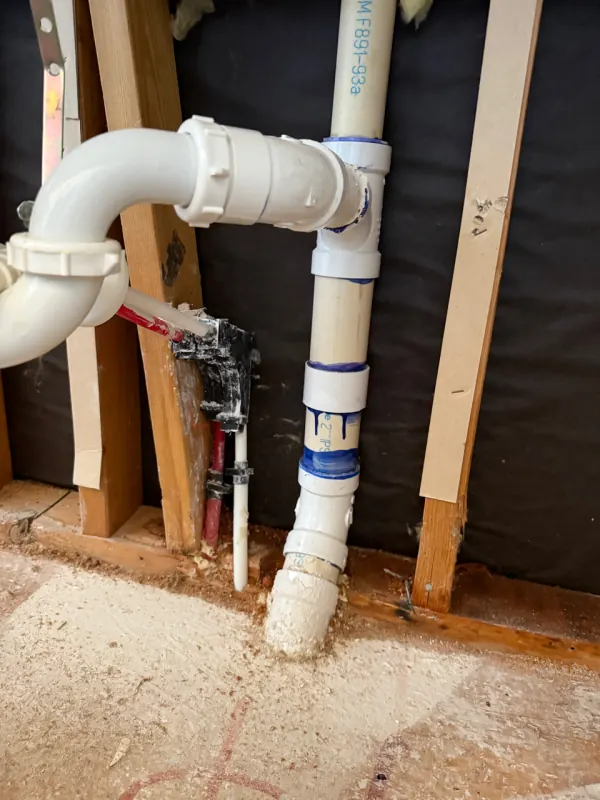
A kitchen looks like one room. It isn't. Underneath the cabinets it's more than twenty separate water connections, each one a place a fitting can loosen, a seal can wear through, a hose can split. Almost none of them are visible from the counter, which is why leaks run for days before anyone notices a soft spot in the cabinet floor.
Quality 1st Restoration finds where the water went, dries what can be saved, and rebuilds what can't. If the leak itself is still active, that's plumbing or appliance-repair work, and we'll say so. Call 888-453-3591. Someone answers, day or night.
More than 20 leak points
Most kitchen leaks aren't dramatic. A slow drip finds gravity, follows the cabinet wall down, and sits in a corner nobody checks — for weeks, sometimes. Grouped by fixture, here's where they start.
Twenty-six documented points. One kitchen. If the leak is still coming from an appliance or fixture, our appliance leak damage page covers that boundary further.
Cabinets are the first casualty
Most production kitchen cabinets are particleboard or MDF, not solid wood, and both handle water badly. Particleboard absorbs it fast, swells, warps, and loses most of its structural strength almost immediately. MDF holds up a little longer, but wet fibers still swell and delaminate the panel or bubble the surface, thickness swelling, in the trade's own term.
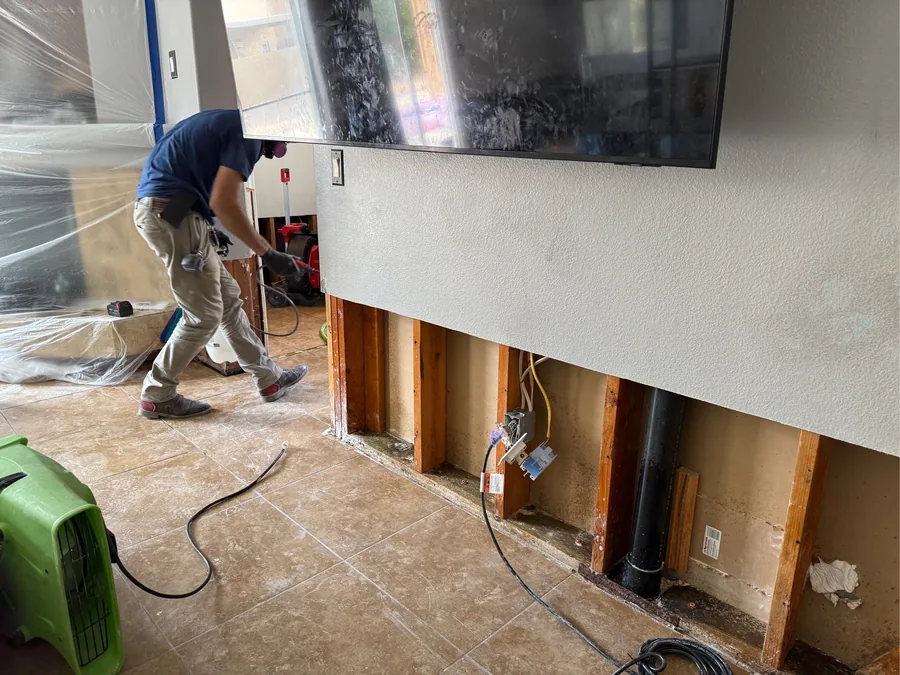
Once particleboard swells, it doesn't shrink back after it dries. The damage is permanent. A soaked cabinet floor or toe-kick usually means removal and rebuild, not a fan running for a few days. The toe-kick void is also where water travels first and hides longest, spreading under the flooring before it shows on top. When cabinets and subfloor are both affected, that overlaps with our flooring replacement work and, where drywall got wet too, our drywall repair and replacement work.
Gray water
Water from a dishwasher or disposal connection isn't the same as a clean supply-line leak. Per IICRC S500 industry guidance, dishwasher discharge is classified Category 2 — gray water, carrying enough contamination to cause illness on contact. That changes the job. Porous materials it touched generally come out rather than just dry, and the area gets an antimicrobial treatment rather than a wipe-down.
The EPA notes mold can start growing on damp material within 24 to 48 hours, and gray water sitting in a warm kitchen is a head start on exactly that. A dishwasher or disposal leak that sat more than a day or two is a gray-water job, not a wipe-and-dry one. Our gray water cleanup page covers that process.
Who fixes what
The failed angle stop, the worn pump seal, the cracked ice-maker line — that's plumbing and appliance-repair work. We don't repair appliances or replace fixtures.
Drying the cabinet cavity, pulling swollen particleboard, drying or replacing subfloor, rebuilding drywall behind the cabinets if it got wet too. Rebuilding around a leak that's still active just means doing the job twice, so if the source isn't fixed yet, we'll say so first.
Not sure which side of that line your problem is on? Call 888-453-3591: we'll tell you straight, including when the answer is a plumber, not us.
Call 888-453-3591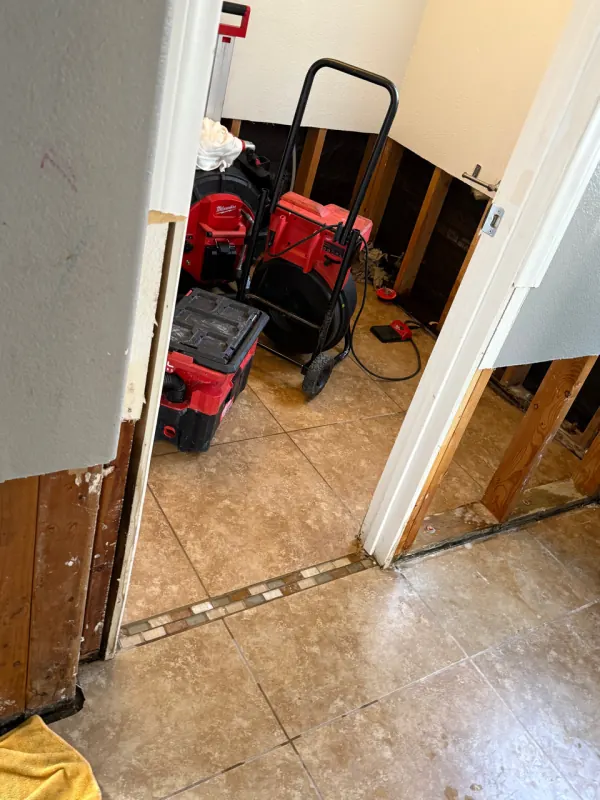
What the fix involves
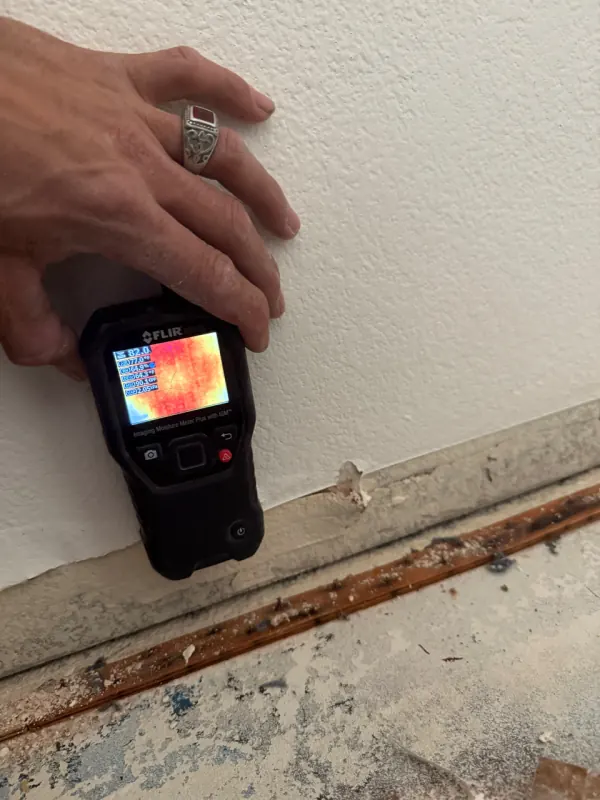
The first step on site is measurement, not demolition. We map how far the water traveled with moisture meters, checking behind cabinet kicks and under flooring where a leak has usually spread past what's visible. That reading, plus the water's category and the cabinet material's condition, decides what dries in place and what comes out.
Drying runs until readings match a known-dry reference point, not until a calendar says it's done. Then comes the rebuild: subfloor, cabinet components, drywall, matched to the rest of the room. We log readings and photos you can hand your insurance carrier — our insurance claim assistance page covers that side, and moisture mapping is the tool behind it. Kitchen repair is one piece of our Water Damage Restoration in Henderson, NV.
Quality 1st Restoration is based in Henderson and works across the Las Vegas Valley. The number is 888-453-3591, answered 24/7. If water has gotten into your cabinets or under your kitchen floor, call before it decides how much of the room it's going to take.
Call 888-453-3591Before you decide
If your situation does not fit neatly into one answer, call 888-453-3591 and describe what you see.
It depends on how long the water sat and what the floor and subfloor are made of. A leak caught within a few hours on sealed flooring is a different job than water soaked overnight into particleboard cabinet bottoms. We measure moisture before saying anything definitive. Guessing from a stain isn't how the call gets made.
Shut off the angle stops if you can reach them, stop using the sink, and move stored items out with the door propped open. Beyond that, the leak source is plumbing work, and how far the water spread is ours to assess.
Swollen particleboard usually needs replacing, not drying. Once it absorbs water and swells, it doesn't shrink back to its original shape, even fully dry. Solid wood components sometimes survive; particleboard and MDF generally don't.
That depends on your policy and how the leak happened; we can't promise what a carrier will decide. What we can do is document the damage: readings, photos, a written scope, so your claim rests on evidence, not a guess.
No. Appliance repair and plumbing are separate trades. We handle the water damage the leak caused: drying, removal, rebuild, and point you to the right person for the fixture.
Water Damage Restoration Service
Kitchen Water Damage Cleanup & Repair is one part of our water damage restoration service work. If the damage is bigger than one task, start at the main category page and we'll scope the whole job.
Water Damage Restoration in Henderson, NVWhy trust us
For Kitchen Water Damage Cleanup & Repair, trust comes from what gets verified on site: the source, the moisture, the affected materials, the cleanup scope, and the record that supports the job afterward.
A clean restoration job should leave you with a dry structure, a clear explanation of what was done, and documentation that makes sense weeks later if an adjuster asks a question.
IICRC-certified technicians follow accepted drying, cleaning, containment, and remediation procedures instead of deciding by appearance alone.
Photos, scope notes, equipment logs, and moisture readings are collected as the work moves so homeowners and adjusters can see what changed.
Crews test affected materials before and during the job, then adjust air movers, containment, and dehumidification to match the actual moisture load.
Emergency cleanup, controlled demolition, drying, cleaning, and build-back coordination stay under one restoration plan instead of being handed off blindly.
The team works across Henderson and the Las Vegas Valley, where slab leaks, appliance lines, roof leaks, AC condensate issues, and fast desert drying conditions are common.
What needs immediate attention, what can wait, and what should be handled by a licensed trade outside the restoration scope.
We avoid opening finished materials until moisture readings, contamination risk, and practical access have been checked.
Emergency response stays focused on stabilization first, then drying, cleaning, and repair decisions after the building is under control.
From slab leaks and burst pipes to monsoon water and roof leaks, every water loss starts differently. We identify the source, remove standing water, dry affected materials, and plan the cleanup around the property.
Request emergency water cleanupCall Quality 1st. We answer 24/7 and help with water removal, drying, cleanup, repairs, and insurance paperwork.