Does Renters Insurance Cover Water Damage in Las Vegas?
Quality 1st Restoration
The short answer
Usually, but only part of it. In a Las Vegas rental, renters insurance can help replace your belongings and pay covered extra living costs after a sudden, accidental water loss like a burst pipe. It doesn’t insure the apartment itself, which is the landlord’s side, and standard policies generally exclude outside flooding. Your policy wording decides.
Usually, but only part of it. In a Las Vegas rental, renters insurance can help replace your belongings and pay covered extra living costs after a sudden, accidental water loss like a burst pipe. It doesn’t insure the apartment itself. That’s the landlord’s side. Standard policies generally exclude outside flooding. Your policy wording decides the details. (Triple-I renters insurance guide)
That split matters when water comes through a ceiling, moves down from an upstairs apartment or spreads across more than one floor. One leak can create several insurance questions at once. Your clothes and furniture, a hotel while the unit dries out, the building itself, the neighbor’s unit: each one may land under a different part of a different policy.
What renters insurance usually covers after water damage
Most renters policies are built around these protections:
- Personal property. Your policy can help repair or replace belongings damaged by a covered water loss. How much you get depends on your limit and deductible, the exclusions, and whether the policy pays actual cash value or replacement cost.
- Personal liability. If the insurer decides you’re legally responsible for damage to someone else’s property, this part can respond, up to the limit. That doesn’t mean every leak from your apartment becomes your bill. It also doesn’t mean every leak is covered.
- Additional living expenses. If a covered loss makes the rental unlivable, the policy can help with qualifying extra costs like a hotel or short-term rental. Limits, time periods and receipts all matter here, and so does whether the loss was covered in the first place.
The landlord’s policy has a different job. It deals with the building: walls, ceilings, floors, plumbing and the rest of the structure. Your renters policy deals with your stuff and some personal protections. The landlord’s insurance generally won’t replace your laptop, clothes or couch just because they were inside the rental. (Triple-I renters insurance guide)
So if a pipe bursts and ruins your bedroom furniture, you may have a contents claim while the owner has a building claim. Call the property manager and your own insurer. Don’t wait for the two sides to sort out who’s supposed to call whom.
Situations that may be covered and situations that often are not
Where the water came from and how long it had been going on usually matter more than how big the puddle is. These are general patterns. Your policy makes the actual call.
| Situation | What may happen | What to verify |
|---|---|---|
| A supply pipe suddenly bursts | Your belongings may be covered if it’s a covered, sudden event. Building repairs are usually the owner’s side. | Cause of loss, deductible, contents limit and any source-repair exclusions. |
| A toilet or appliance overflows by accident | Personal-property coverage may apply to your damaged things. Liability may come into it if water reaches another unit and you’re found responsible. | Whether the overflow was sudden, whether anyone claims negligence, and what your liability coverage says. |
| A slow leak runs behind a wall or under a cabinet | Gradual damage, seepage, wear or poor maintenance is often excluded or limited. | When the leak started, what was visible and the policy’s gradual-damage language. |
| Rain gets in through a sudden storm opening | Some policies cover belongings damaged by rain coming through an opening a covered event created. | Whether a covered event caused the opening or it was left unrepaired. |
| Water rises from outside during a flood or flash flood | Standard renters insurance generally doesn’t cover flood damage. | Separate flood insurance, contents limits, waiting periods and how the policy defines flood. |
| A sewer or drain backs up | Standard coverage may not include it without an endorsement. | Whether you added sewer or drain backup coverage and what sublimit applies. |
Nevada’s Division of Insurance says standard homeowners and renters insurance doesn’t cover flood damage to the home or personal items. Separate flood coverage may be available through the National Flood Insurance Program or another provider. (Nevada Division of Insurance flood guidance)
That’s why “water damage” and “flood damage” aren’t the same thing to an insurer. A burst pipe in a second-floor apartment and stormwater pouring into a first-floor unit can look alike afterward. The policies can still treat them completely differently.
The landlord’s insurance and your renters policy do different jobs
Whether you rent an apartment, a condo, a townhome or a house, start by separating the building from your things.
The owner or property manager usually handles the building side. That means stopping a shared plumbing failure, protecting the structure, arranging access and lining up repairs. Your renters policy is where you ask about your belongings, your liability and extra living costs after a covered loss.
None of that settles who caused the loss or who pays in the end. A building supply line that failed, a tenant’s accidental overflow, a roof opening, a storm, a leak that ran for months: each one raises different coverage and responsibility questions. Your insurer, the property manager and anyone else involved may all look at the same event from different angles.
Nevada’s landlord-tenant statutes describe habitability duties that include weather protection, plumbing, water supply and keeping certain parts of the dwelling in good repair. They also describe tenant duties, like using plumbing reasonably and not damaging the place on purpose or through negligence. Those rules don’t replace your lease, your insurance contract or legal advice. They’re one more reason to report the problem fast and keep it in writing. (Nevada Revised Statutes Chapter 118A)
Why a water loss in a multistory Las Vegas building gets complicated
In a one-story rental, the questions are mostly about your belongings, where the water came from and the building owner. In a multistory apartment or condo building, water can travel through a ceiling cavity, a wall, the floor between units, a plumbing chase or a hallway before anybody sees how far it went.
That can turn one leak into several separate tracks:
- The source unit. Whoever has the pipe, toilet, appliance, roof opening or other source may need to give access and document it.
- The affected unit. Each renter documents their own belongings and asks their own insurer what it covers and what the deductible is.
- The building and common areas. The owner, landlord, HOA or property manager may have a separate building claim and repair scope for ceilings, walls, floors, shared spaces and systems.
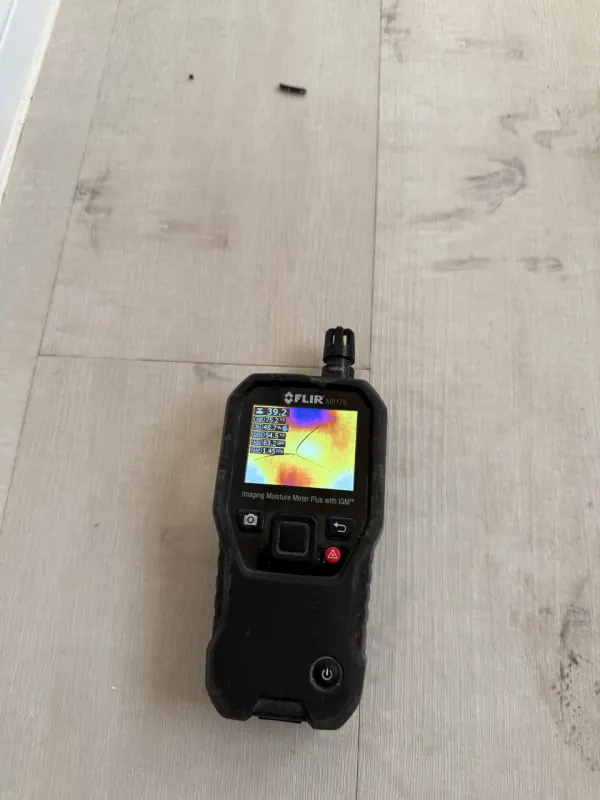
- The restoration record. A professional response may need photos and moisture readings unit by unit, drying records, access notes and a clear line between affected and unaffected areas.
This is where renters get stuck. The property manager is arranging building repairs while your carrier wants a list of what you lost. A neighbor says their insurance is handling it, but your ceiling is still wet. Several tenants may be out of their units, and every one of them has a different limit, deductible and temporary-housing situation.
Don’t assume one claim covers everyone in the building. Report the loss to the property manager and your own insurance company, keep copies of messages and photos, and ask who’s coordinating access to your unit. If a leak hits several apartments, common areas or a managed building, see our commercial water damage restoration for multi-unit properties page for how that kind of job is run.
Start with safety and documentation. Figure out where the moisture went, protect belongings when you can, and keep the records clean so each party can deal with its own part.
Roommates and neighbors on separate policies
If you share a Las Vegas rental, check who’s actually listed as an insured. Chipping in on a roommate’s premium doesn’t automatically mean your belongings and liability are protected on the same terms. Some insurers let roommates share a policy. Others require separate ones, and a shared limit can cause its own problems.
Have each person confirm:
- whose name is on the declarations page;
- whose belongings are included and up to what limit;
- whether the policy pays actual cash value or replacement cost;
- whether each person has liability and additional-living-expense coverage; and
- what the deductible is and which endorsements apply.
If water from another unit damaged your things, you may still need to open a claim with your own carrier. Your insurer can tell you whether it’ll pay your contents first and go after another party later. That’s not something a restoration company should promise or decide for you.
Las Vegas and Nevada details renters should know
Las Vegas is dry. That doesn’t make it flood-proof. The National Weather Service says monsoon moisture usually moves into the Mojave Desert in July and August and brings scattered thunderstorms. Heavy rain can cause flash flooding in normally dry washes and low spots. (NWS Las Vegas climate information)
For coverage, ask your insurer how it classifies the water: indoor plumbing failure, roof or storm opening, surface water, sewer backup or flood. For safety, treat outside floodwater as dangerous. Clark County warns that flash flooding can happen without warning and says never to drive through floodwater. (Clark County flash-flood guidance)
If you rent near a wash or a low-lying area, or the property has had stormwater come in before, ask about separate flood contents coverage before the next storm. Don’t wait until water is coming under the door. Flood policies and endorsements have their own eligibility rules and waiting periods.
What to do after water damage in your rental
While water is still moving, safety comes first. Paperwork comes second. Then work through these steps:
- Stop the source only if you can do it safely. Don’t touch electrical equipment around water or wade into contaminated water. Call emergency services if anyone’s in immediate danger.
- Tell the landlord or property manager. Use the emergency number in your lease or tenant portal, and keep a time-stamped copy of what you sent.
- Call your insurance company or agent. Ask for a claim number and the adjuster’s contact info, and ask what they want you to do about damaged items, temporary housing and emergency cleanup.
- Document before you move things. Photograph or video the source, the ceilings and walls, the floors and closets, and each damaged item. Get wide shots and close-ups when it’s safe.
- Keep it from getting worse without making repairs you can’t back up. Move dry items away from the wet area if it’s safe. Don’t throw out damaged belongings or approve permanent work until your insurer tells you what it needs, unless safety forces it.
- Save records. Keep every receipt: hotel, laundry, storage, anything you had to replace or buy in a hurry. Save texts, emails, work orders, photos, moisture reports and the names of everyone who comes into the unit.
Professional restoration standards put a lot of weight on inspection, drying decisions and documentation. The ANSI/IICRC S500 standard covers water damage restoration in homes, commercial buildings and institutions, including drying technology, contents evaluation and risk management. (IICRC S500)
Questions to ask your insurance company
When you call, ask direct questions. “Water is covered” isn’t an answer.
- Is the reported cause of this loss a covered peril under my policy?
- Does my coverage apply to my belongings, and what deductible, limit or sublimit applies?
- Is my property insured at actual cash value or replacement cost?
- Does additional living expense coverage apply if I can’t stay in the unit, and what receipts or approval do you need?
- Do I have sewer or drain backup coverage? Do I have separate flood coverage for outside water?
- If water came from another unit or damaged another unit, should I report a liability claim?
- What should I do with damaged belongings, wet materials and emergency cleanup before an adjuster inspects?
- Is the landlord or property manager listed as an additional interest, and what do you need from them?
- Are there any issues with the policy’s effective date, maintenance, vacancy or prior losses that affect this claim?
Write down the answers. Ask for important decisions and any denial in writing. If a term doesn’t make sense, ask the carrier or a licensed insurance professional to explain it. A restoration company can document the water and the work needed. It can’t make your insurer’s coverage decision.
When to call a water-damage professional
Call for help when water is still spreading, a ceiling is soaked or sagging, flooring or drywall is wet, you can’t find the source, the water may be contaminated, or more than one apartment or floor is involved. Multi-unit losses are the hardest, because access, tenant belongings, common areas and drying records all have to be tracked at once.
We handle commercial water damage for offices, retail spaces, warehouses and multi-unit properties across Henderson and the Las Vegas Valley. When you call, we can look at the water, dry it out and keep the documentation straight. Your insurance company still decides what’s covered.
If water is coming in right now, call or text Quality 1st Restoration at 888-453-3591 once you’ve taken reasonable safety steps. Ask your insurer what your plan covers and tell your property manager. Then get someone out who can stop the damage and the paperwork from getting worse.
This article is general information, not insurance, legal or claims advice. Coverage, exclusions, deductibles, limits, endorsements and responsibilities vary by policy, lease, cause of loss and facts. Direct coverage questions to your insurer or licensed agent, and get qualified legal or tenant advice for a dispute.
References
- Nevada Division of Insurance: Flood Insurance
- Insurance Information Institute: Your renters insurance guide
- Allstate: Does Renters Insurance Cover Water and Flood Damage?
- National Association of Insurance Commissioners: Renting Your Home
- Nevada Revised Statutes: Chapter 118A
- National Weather Service Las Vegas: Climate of Las Vegas
- Clark County Public Works: Emergency Response
- IICRC: ANSI/IICRC S500 Standard for Professional Water Damage Restoration
Water still spreading? Every hour it sits, the repair gets bigger.
Quality 1st Restoration answers 24 / 7 / 365 across Henderson and the Las Vegas Valley.
888-453-3591