
Water Damage · Answered
Why Is There a Brown Water Stain on My Ceiling?
Quality 1st Restoration
The short answer
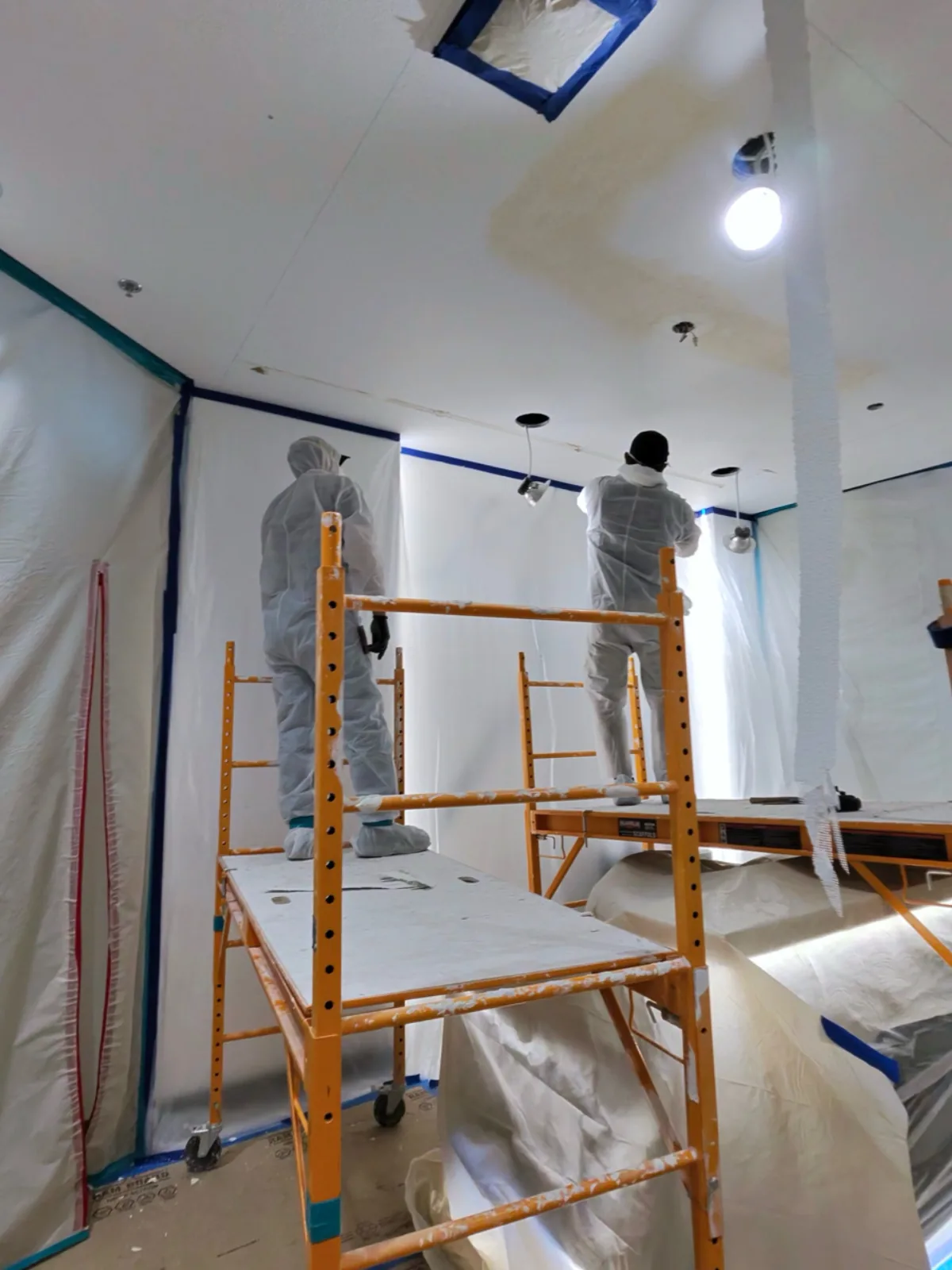
A brown water stain on a ceiling means water has soaked through the drywall from above — usually a roof leak, a plumbing line, or an overflowing fixture on the floor above. The brown color is dissolved minerals and glue the water leaves behind as it dries. A soft, damp, or growing stain means the leak is still active.
You walked into a room, looked up, and there it was — a brown ring on the ceiling that wasn’t there last month. Maybe it’s the size of a coffee cup. Maybe it’s the size of a dinner plate and getting bigger. Either way, your ceiling is telling you something, and it’s rarely good news.
Here’s the honest version: that stain is the symptom. The actual problem is above it, out of sight, and it’s been going on longer than you think.
What the brown color actually is
Drywall is basically pressed gypsum wrapped in paper. When water passes through it, the water dissolves minerals in the gypsum and the glue in the paper, carries them to the surface, and then evaporates — leaving those dissolved solids behind as a brown or yellowish ring. The darker and more defined the edge, the more times water has traveled that same path.
So a faint tan patch might be one bad night. A dark, layered, ringed stain usually means water has been coming through repeatedly, drying, and coming through again. That’s why the color matters less than one thing: is it still wet?
First, figure out if it’s still active
Before anything else, you want to know whether water is still getting in. Put on a glove and press gently near the edge of the stain.
- Soft, damp, or spongy — the leak is active or very recent. Water is in the ceiling cavity right now.
- Sagging or bulging downward — the drywall is holding a pocket of water. This can let go and come down all at once. Keep people out from under it.
- Firm, dry, and unchanged after a rainstorm or a day of normal upstairs water use — it may be an old, already-fixed leak. May.
The surface can lie. Drywall dries from the outside in, so the paper face can feel dry while the cavity behind it is still soaked. That’s the part homeowners consistently underestimate, and it’s why a stain that “looks dry” can still be feeding hidden moisture that leads to structural problems.
If you take one thing from this: the mark on your ceiling is where the water came out, not where the problem is. The wet area above it is almost always bigger than the stain — and it's the part that decides whether this is a quick fix or a mold job.
Where the water is coming from
Ceiling stains have a short list of usual suspects. Walk it from most to least common:
Something on the floor above. If there’s a bathroom, laundry, kitchen, or an upstairs unit over that spot, start there. An overflowing toilet, a slow supply-line drip under a sink, a failed washing-machine hose, or a shower pan that’s leaking around the edge will all show up as a stain on the ceiling below. If a line let go suddenly and dumped water fast, that’s burst-pipe territory, and the cleanup is about how far it traveled before anyone found the valve.
The roof. If the stain is on a top-floor ceiling, especially near an exterior wall, a chimney, or a vent, the roof is the prime suspect. Roof leaks are sneaky — water gets in at one point, runs along the framing, and drips down somewhere completely different. A stain in the middle of the room can trace back to a lifted shingle ten feet away. This is classic roof-leak water damage, and it tends to reappear with the next storm if the entry point isn’t found.
HVAC and condensation. A sweating AC line, a clogged condensate drain, or an attic air handler can drip onto the ceiling below and mimic a plumbing leak exactly.
Here in the Las Vegas Valley, we don’t get much rain — so people assume roof and don’t check it. Then a single monsoon-season downpour finds every weak spot at once. The dry climate also means a slow leak can quietly wet a ceiling for weeks before you ever see a mark.
What NOT to do
- Don’t paint over it yet. Paint on a wet or active stain bleeds through in weeks and seals moisture inside — which is how a water stain becomes a mold problem. Mold can start growing on wet material in as little as 24 to 48 hours.(1)
- Don’t ignore a sag. A bulging ceiling holding water is a safety issue. Move what’s underneath and stay clear.
- Don’t assume small stain, small problem. The mark you see is where water exited. What it soaked on the way is usually much larger.
What actually fixes it
The order matters, and it’s always the same:
- Stop the source. A stain is pointless to repair while water is still coming in. Find the leak first.
- Open and dry the cavity. The wet insulation, the back of the drywall, and the framing above have to reach a normal moisture level — not just feel dry to the touch. This is where equipment and moisture readings replace guessing.
- Repair and seal. Once it’s genuinely dry, damaged drywall gets cut out and replaced, then primed with a stain-blocking sealer before paint.
That middle step is the one people skip, and it’s the one that decides whether the stain stays gone. Drying to a documented standard — the kind the industry’s S500 guideline lays out — is the whole difference between a clean repair and a callback two months later.(2) It’s the same standard we hold on every water damage cleanup and repair job we run across Henderson and the valley — and if you want the full picture of how leaks, drying, and mold connect, our water damage restoration hub lays out the whole process.
The bottom line
A brown ceiling stain is a message: water got in, and it may still be getting in. Read whether it’s wet, trace it to the floor above or the roof, and — most important — don’t seal it up until the source is stopped and the cavity is actually dry. Do those in order and it’s a clean fix. Skip a step and it comes back.
If the stain is spreading, sagging, or you just can’t find where it’s coming from, that’s the point to call. We answer around the clock. For the bigger picture on how leaks are graded and dried, see our guide to the different types of water damage.
"The key to mold control is moisture control. If you clean up the mold but don't fix the water problem, then, most likely, the mold problem will come back."
— U.S. Environmental Protection Agency (1)References
- U.S. Environmental Protection Agency, "Mold Cleanup in Your Home." https://www.epa.gov/mold/mold-cleanup-your-home
- IICRC, ANSI/IICRC S500 Standard for Professional Water Damage Restoration. https://iicrc.org/s500/
Water still spreading? Every hour it sits, the repair gets bigger.
Quality 1st Restoration answers 24 / 7 / 365 across Henderson and the Las Vegas Valley.
888-453-3591