Water Damage · Answered
What Is Water Restoration? A Complete 2026 Guide for Henderson Homeowners
Quality 1st Restoration
The short answer
Real water restoration is a step-by-step process that gets your property back to pre-loss condition after water intrusion. It involves extraction, dehumidification, monitoring, antimicrobial treatment, and rebuilding. Water mitigation is the emergency phase; water restoration is the rebuild phase that brings your property back to its original condition.
Water Restoration Is More Than Drying Out a Room
Most people think water restoration means pointing some fans at wet carpet and calling it done. That misses the mark. Real water restoration is a step-by-step process that gets your property back to pre-loss condition after water intrusion. It involves extraction, dehumidification, monitoring, antimicrobial treatment, and rebuilding. Every step counts.
Here’s what happens during a proper water restoration job:
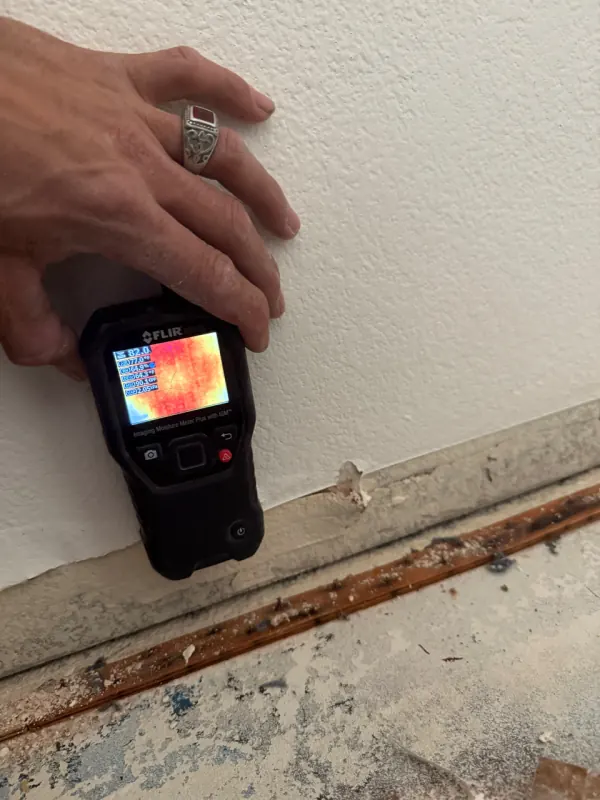
- Inspection and assessment. A technician uses moisture meters and thermal imaging to map where water has traveled. Water hides behind walls, under floors, inside cabinets. You can’t fix what you can’t find.
- Water extraction. Standing water gets removed fast with truck-mounted pumps or portable extractors. Speed matters here because mold can start growing within 24 to 48 hours, according to the EPA.
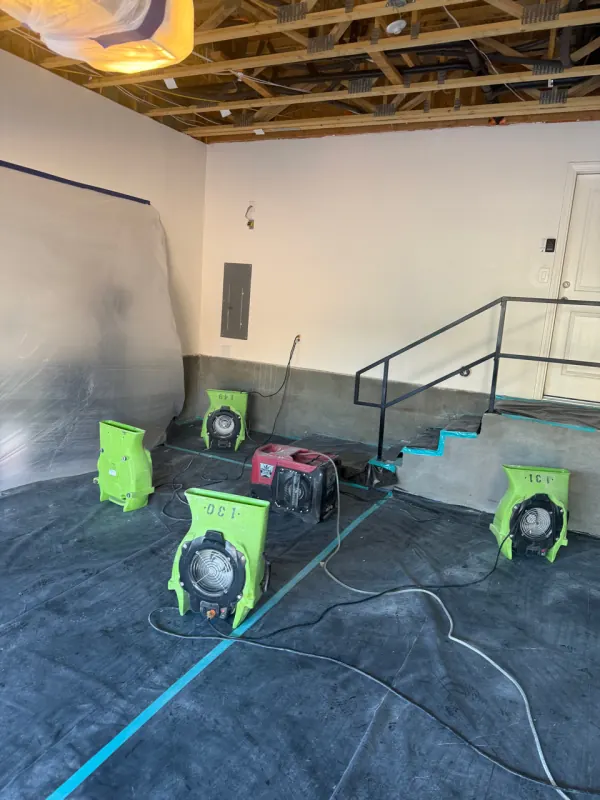
- Drying and dehumidification. Industrial air movers and commercial dehumidifiers run for days. Technicians take daily moisture readings to track progress. The goal is hitting specific drying targets set by IICRC standards.
- Cleaning and sanitizing. Affected surfaces get treated with antimicrobials. Contents like furniture and personal items are cleaned or documented for removal.
- Restoration and repairs. This is the rebuild phase. Drywall replacement, new flooring, painting, baseboards. Whatever it takes to make the space whole again.
We see Henderson homeowners try to handle water damage with a shop vac and a box fan. By the time they call us, moisture has wicked up into wall cavities and mold is already forming behind the drywall. That two-day delay turned a manageable job into a much bigger one.
And here’s something most people don’t realize. Water doesn’t just sit where you can see it. In homes around Green Valley and Anthem, we regularly find moisture trapped beneath vinyl plank flooring that looks perfectly dry on the surface. Thermal imaging cameras show temperature differences that reveal hidden saturation. Without that tool, you’d never know.
The “drying” part is the technical phase. It’s not about blasting air around a room. Technicians calculate the volume of the affected space, set up equipment in specific patterns, and adjust daily based on psychrometric readings. That’s the science of how air holds moisture. Too few air movers and the space won’t dry. Too many dehumidifiers in the wrong spots, you’re wasting time and energy.
Documentation runs through the entire process. Photos, moisture logs, equipment placement records. Every reading gets noted. This paperwork protects you during insurance claims and proves the job was done right.
So why does all this matter to you? Because water restoration done wrong leads to secondary damage. Warped subfloors. Mold behind walls. Musty smells that won’t go away. A proper water restoration project prevents those problems before they start.
Think of it this way. A burst supply line under your kitchen sink in a Henderson home can send water flowing for hours before anyone notices. It soaks through the cabinet base, runs under the tile, and reaches the adjacent living room. The visible puddle is maybe 20 percent of the actual damage. Water restoration addresses the other 80 percent you can’t see.
But the process only works when it starts fast and follows a proven sequence. Skipping steps or cutting corners creates problems that show up months later.
The Water Restoration Process Follows a Strict Order
Skip a step and you’ll pay for it later. That’s the reality. Water restoration follows a strict sequence because each phase depends on the one before it. We’ve seen homeowners in Henderson try to jump straight to repairs, only to find mold growing behind new drywall three weeks later. our water damage restoration service page our water damage restoration service page
Here’s the process, broken down the way IICRC-certified professionals do it:
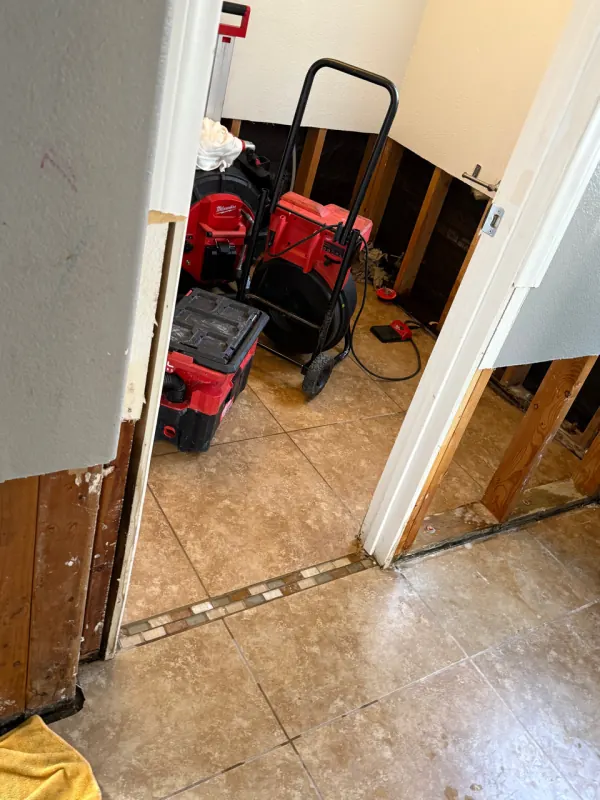
- Emergency contact and inspection. A technician arrives and uses moisture meters and thermal imaging to find every affected area. Not just the obvious wet spots. Water travels along baseboards, under flooring, inside wall cavities. In Henderson homes with slab foundations, moisture can wick up through concrete in ways you’d never expect.
- Water classification and categorization. The water source matters. Clean water from a broken supply line is Category 1. Gray water from a dishwasher overflow is Category 2. Sewage or floodwater is Category 3. Each category requires different safety protocols, the category also determines how much material needs to be removed.
- Standing water removal. Industrial pumps and truck-mounted extractors pull out bulk water fast. Speed matters here. According to the Institute of Inspection, Cleaning and Restoration Certification, secondary damage increases dramatically after the first 24 hours.
- Drying and dehumidification. This is the longest phase. Commercial air movers and dehumidifiers run for days. Technicians take daily moisture readings to track progress. The goal is hitting specific moisture content targets in every material type before moving on.
- Cleaning, sanitizing, and odor removal. Affected contents get cleaned. Antimicrobial treatments go on surfaces. Air scrubbers with HEPA filtration pull contaminants out of the air.
- Documentation and restoration. Photos, moisture logs, and detailed scope notes get compiled. Then the actual rebuild begins. Drywall, flooring, paint, trim. Everything goes back to how it was before the loss.
Most people don’t realize how much documentation happens during water restoration. Every moisture reading gets logged. Every photo is timestamped. This paper trail protects you during the insurance claims process, it’s not just busywork.
Why the Order Can’t Change
Think about it this way. Would you paint a wall that’s still wet? Of course not. But that’s basically what happens when someone rushes past the drying phase. We see this mistake all the time in the Green Valley and Anthem areas of Henderson. A homeowner gets anxious, wants things back to normal, and pushes for early repairs.
The drying phase alone can take three to five days depending on the materials involved. Hardwood floors need different drying techniques than carpet. Plaster walls hold moisture longer than standard drywall. A good restoration team adjusts equipment placement and airflow daily based on what the readings show.
And here’s something people miss. The inspection at the start isn’t a quick walkthrough. Thermal imaging cameras reveal moisture behind walls that looks completely dry on the surface. Without that step, you’re guessing. Guessing leads to mold.
If you want to understand how each of these steps applies to your specific situation, visit our water damage restoration service page for a closer look at what the process involves from start to finish.
Henderson’s desert climate can fool you into thinking things dry out on their own. They don’t. Not inside wall cavities. Not under tile. Proper water restoration means verifying with instruments, not assumptions.
Water Mitigation and Water Restoration Are Not the Same Thing
Most people use these terms like they mean the same thing. They don’t. And mixing them up can cause real problems when you’re dealing with water damage in your Henderson home.
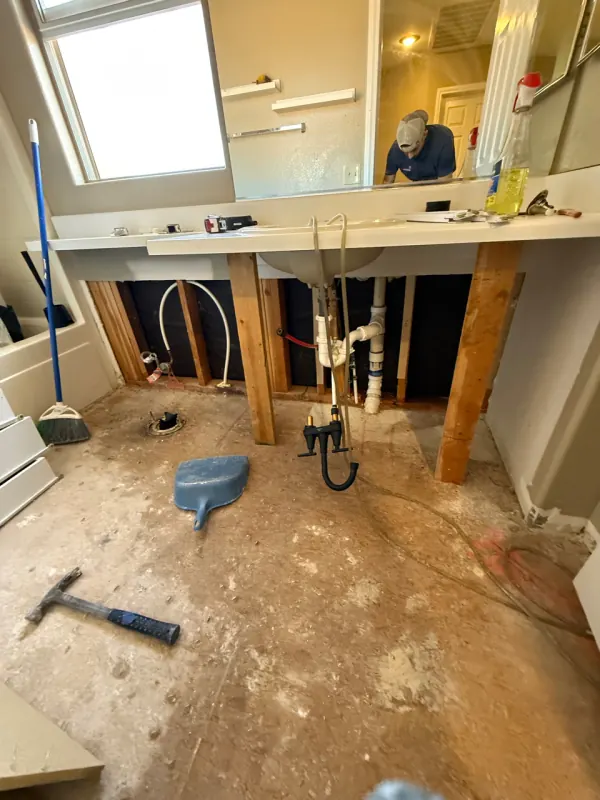
Water mitigation is the emergency phase. It’s everything that happens to stop the damage from getting worse right now. Water restoration is the rebuild phase. It’s everything that brings your property back to its original condition.
Think of it this way. A pipe bursts in your kitchen at 2 a.m. The mitigation crew shows up to extract standing water, set up commercial air movers, and place dehumidifiers. They use moisture meters to check walls and subfloors. They remove wet drywall if it can’t be saved. The whole goal is containment, stop the spread before it reaches your living room or crawl space.
What Mitigation Covers
Mitigation is fast, focused work. Here’s what it typically includes:
- Emergency water extraction using truck-mounted or portable pumps
- Structural drying with industrial dehumidifiers and air movers
- Moisture mapping with thermal imaging cameras to find hidden pockets of water
- Removing materials that are too saturated to dry, like carpet padding or swollen baseboards
We see this mistake all the time in Henderson neighborhoods like Green Valley and Anthem. A homeowner thinks the water’s gone because the floor looks dry. But moisture trapped behind cabinets or under tile can cause mold growth within 48 hours. That’s why IICRC-certified technicians document moisture readings at every visit. The numbers tell the real story, not how things look on the surface.
What Restoration Covers
Once everything is dry and documented, water restoration begins. This is the part that makes your home feel like home again.
Restoration might mean replacing drywall, repainting, installing new flooring, or rebuilding a damaged vanity. It could be as simple as replacing a section of baseboard. Or it could mean gutting a bathroom down to the studs and starting over. The scope depends entirely on how much damage the water caused before mitigation started.
Here’s why the difference matters for you. Your insurance adjuster treats these as separate line items. Mitigation costs are almost always covered because they prevent further loss. But restoration work sometimes requires additional approval, especially for older homes in areas like Henderson’s Water Street District where building materials vary widely.
So why should you care about the distinction? Because timing changes everything. The faster mitigation starts, the less restoration you’ll need. A small leak caught early might only need two days of drying and a fresh coat of paint. That same leak ignored for a week could mean tearing out an entire wall and replacing subflooring.
We document every step of both phases with photos, moisture readings, and detailed scope notes. This isn’t just good practice. It protects you during the insurance claims process and gives you a clear record of what was done.
One more thing people don’t realize. Not every company handles both phases. Some only do mitigation, then hand you off to a general contractor for the rebuild. That handoff creates gaps in communication, gaps where things get missed or delayed. If you’re looking for water restoration in Henderson, our water restoration service page breaks down exactly how both phases work together under one roof.
Bottom line: mitigation stops the bleeding, restoration heals the wound. You need both done right.
Water still spreading? Every hour it sits, the repair gets bigger.
Quality 1st Restoration answers 24 / 7 / 365 across Henderson and the Las Vegas Valley.
888-453-3591