Water Damage · Answered
What Happens During Water Restoration? Step-by-Step Process Explained for Henderson Homeowners
Quality 1st Restoration
The short answer
Water restoration has a set order, and each step leans on the one before it: emergency contact and initial response, inspection and damage assessment, water removal, drying and dehumidification, cleaning and sanitizing, then restoration and repairs. Skip one, and you invite mold, warped floors, or damage that shows up months later.
The Real Steps of Water Restoration, In Order
Most people picture water restoration as “dry everything out.” That’s part of it. The real process has a set order, and each step leans on the one before it. Skip one, and you invite mold, warped floors, or damage that shows up months later.
Here’s how water restoration works from start to finish.
- Emergency contact and initial response. You call, we respond. In Henderson, fast response matters because our dry desert heat can push moisture deeper into materials before anyone notices. A crew should be on-site within hours, not days. The CDC offers guidance on safely reentering a flooded home before crews arrive.
- Inspection and damage assessment. This is where moisture meters and thermal imaging cameras come out. We check walls, floors, ceilings, and cabinets. Not just what looks wet. Water moves behind drywall and under tile, so we map every affected area. We also classify the water type. Clean water from a supply line is different from contaminated water from a sewer backup. That classification changes how the job gets handled.
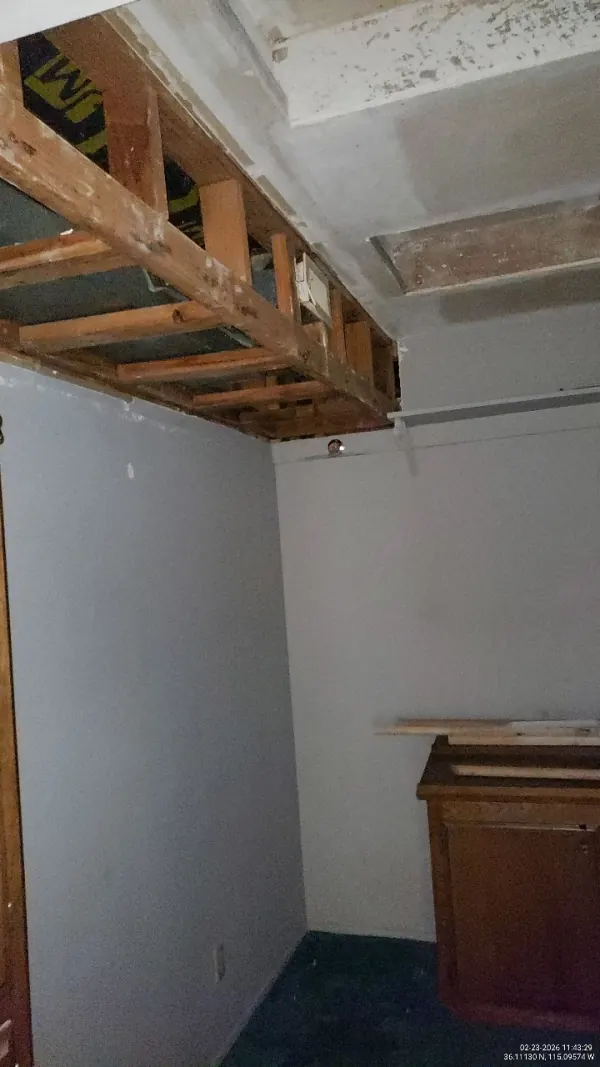
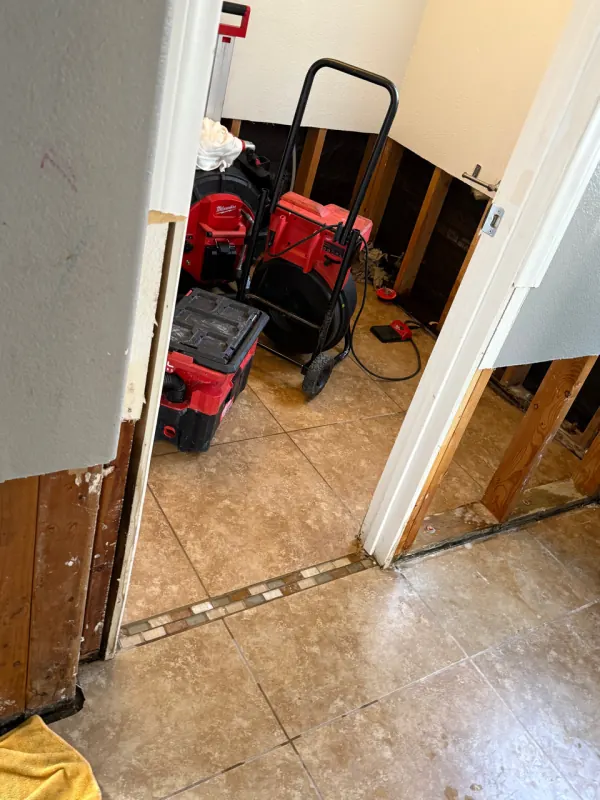
- Water removal. Industrial pumps and truck-mounted extraction units pull standing water out fast. In homes near the Water Street District or Green Valley, we’ve seen supply line failures dump hundreds of gallons in under an hour. Getting that water out quickly is the biggest factor in saving flooring and limiting structural damage.
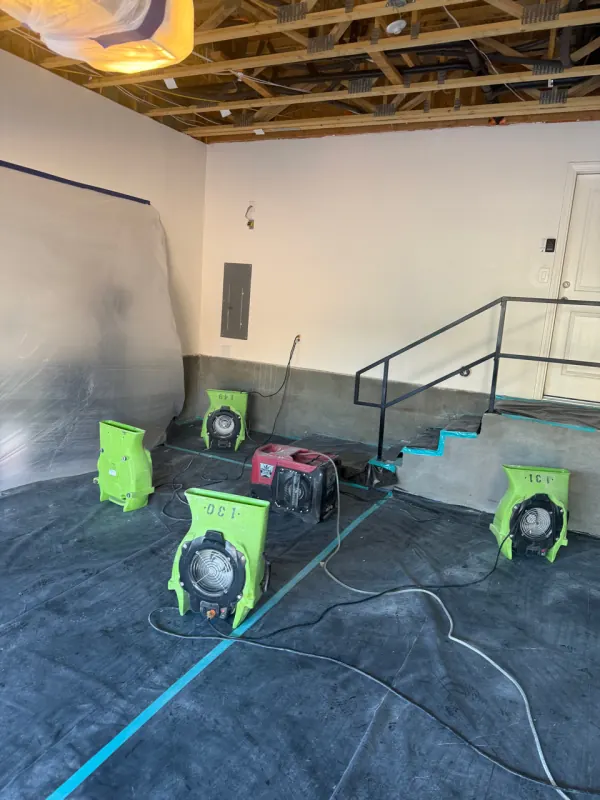
- Drying and dehumidification. This is the step most people underestimate. Extraction removes the water you can see. Drying removes the water you can’t. Commercial air movers and dehumidifiers run for days, and we monitor progress with daily moisture readings. The goal is getting materials back to their dry standard, a specific number based on the material type.
- Cleaning and sanitizing. Once everything’s dry, surfaces get cleaned. Antimicrobial treatments go on affected areas. Soft goods like carpets and upholstery get treated or removed depending on the water category. Personal belongings get assessed too.
- Restoration and repairs. The final step brings your home back together. That could mean replacing drywall, installing new flooring, or repainting. Some jobs need minor patches. Others need full reconstruction of a room.
We see homeowners try to handle step three on their own with a shop vac. Then they jump straight to step six, putting new flooring over subflooring that’s still holding moisture at 40%. Three weeks later, mold.
And that’s the part people miss. Every step has a job. The inspection tells us what we’re dealing with. The extraction makes drying possible. The drying helps stop mold. The cleaning makes the space safe. The restoration makes it yours again.
One detail worth knowing: documentation happens throughout every step. Photos, moisture readings, scope notes. Your insurance company needs that paper trail. A good water restoration crew builds the file as they go so your claim moves forward without delays.
But here’s what surprises most Henderson homeowners. The drying phase alone can take three to five days even in our low-humidity climate. According to the Institute of Inspection, Cleaning and Restoration Certification (IICRC), proper drying requires monitoring until materials reach acceptable moisture levels. Rushing it is the most common mistake in the industry.
To see how our team handles each of these steps locally, check out our water restoration service page for what to expect when you call.
How Technicians Decide When a Space Is Dry
Here’s something most people don’t realize. “Dry to the touch” means almost nothing in water restoration. A wall can feel dry on the surface while holding 30% moisture deep inside. That’s why we never trust our hands alone. For more on how we handle assessments in Henderson homes, check out our water damage restoration page for Henderson. our water damage restoration page for Henderson our water damage restoration page for Henderson
The real answer lives inside the tools.
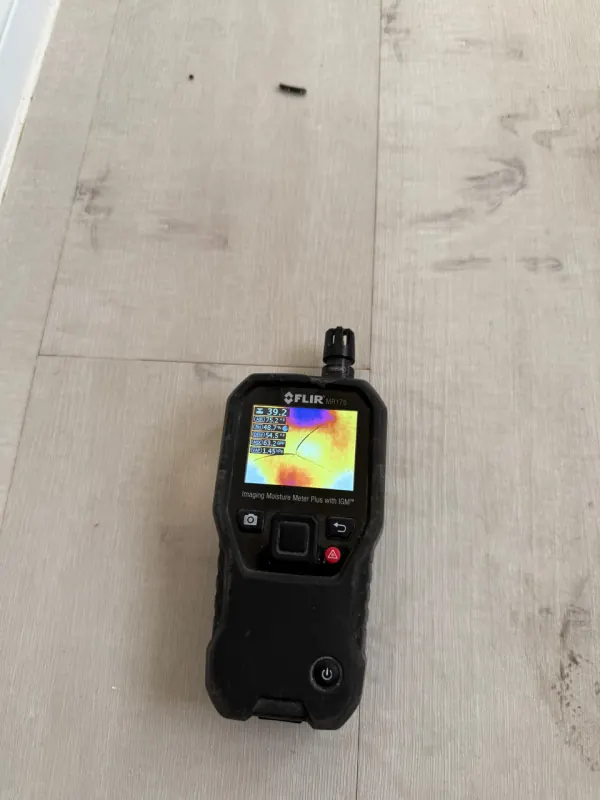
IICRC-certified technicians use moisture meters every day on a water restoration job. Two types matter most. Pin-type meters push small probes into drywall, wood, or baseboard material. They give a direct reading of moisture content at that exact depth. Pinless meters use radio frequency to scan broader areas without poking holes. Both serve different purposes, both get used.
What the Numbers Mean
Wood framing in a Henderson home should read below 15% moisture content before anyone calls it dry. Drywall needs to hit a similar range. Concrete slabs are trickier, they can hold moisture for days longer than other materials. Every reading gets logged and compared against a “dry standard” taken from an unaffected area of the same home. That comparison is the real benchmark.
Think about it this way. If your hallway drywall reads 8% in a spot that never got wet, that’s your target number. The damaged bedroom wall needs to match it. Not just get close. Match it.
Thermal imaging cameras add another layer. They show temperature differences across surfaces. Wet areas appear cooler on the screen because evaporation pulls heat away. A technician scanning walls in a Green Valley home might spot a cold patch behind a cabinet that nobody could see or feel. Without thermal imaging, that hidden pocket stays wet and grows mold within 48 to 72 hours.
Daily Monitoring Changes Everything
Water restoration isn’t a one-visit job. Technicians return daily to take fresh readings. They document every number at every checkpoint. Here’s what that monitoring process looks like:
- Readings taken at each affected material surface with pin and pinless meters
- Atmospheric readings captured for humidity and temperature in the room
- Thermal imaging scans run on walls, floors, and ceilings
- Equipment placement adjusted based on which zones are drying slower
- All data logged into a moisture map that tracks progress over time
That moisture map matters more than people think. Insurance adjusters want to see documented proof that the space reached dry standard. Your home’s long-term health depends on it too.
Henderson’s desert climate helps during this phase. Low outdoor humidity means dehumidifiers can work faster here than in humid states. But don’t let that fool you. Slab foundations common in neighborhoods like Anthem and Inspirada trap moisture underneath. A technician who knows local building styles will check those trouble spots without being asked.
We see homeowners try to rush this step all the time. They want equipment out of their house. They want life back to normal. But pulling equipment one day early can mean moisture gets sealed behind new paint or flooring. That’s how small problems become big ones.
The job is done when every reading matches the dry standard. Not when the floor looks fine. Not when the air smells okay. When the numbers say so. Curious how this step fits into the full water restoration process? Visit our water damage restoration page for Henderson to see the complete picture.
Good technicians never guess. They measure, they document, they prove it.
Why Some Steps Take Hours and Others Take Days
This is probably the biggest question we hear from homeowners in Henderson. “Why is this taking so long?” Or sometimes the opposite: “Wait, you’re already done with that part?” The truth is, water restoration doesn’t move at one speed. Some steps wrap up in a couple hours. Others need days to finish properly.
Here’s why the timeline varies so much.
The Fast Parts
Water extraction is usually the quickest phase. Industrial pumps can pull hundreds of gallons per hour. A flooded kitchen in a Green Valley Ranch home might take two to three hours to extract. A small bathroom leak could be done in under one. The equipment does the heavy lifting here, it’s mostly about getting standing water out before it spreads further.
The initial inspection also moves fast. A trained tech with a moisture meter and thermal imaging camera can map the affected area in about an hour. But don’t mistake speed for carelessness. That hour of scanning tells us exactly where moisture is hiding behind walls, under cabinets, in subfloor layers you can’t see.
The Slow Parts
Drying is where time stretches out. And there’s no shortcut.
Industrial air movers and dehumidifiers run continuously. In Henderson’s dry climate, you’d think things would dry faster. Sometimes they do. But materials like drywall, hardwood, and carpet padding hold moisture deep inside. Surface-level dryness means nothing. We check moisture readings twice a day during this phase. The goal is hitting specific moisture content targets set by IICRC standards before moving forward.
Most drying takes three to five days. Some jobs take longer. A slab leak in an older home near Downtown Henderson might need extra time because concrete holds water stubbornly. A second-floor bathroom overflow that dripped into the ceiling below creates two separate drying zones. Each one needs its own timeline.
We’ve seen homeowners try to speed things up by turning off equipment early. That’s a mistake that leads to mold growth within 24 to 48 hours, according to the Environmental Protection Agency.
What Controls the Clock
Several factors decide whether your water restoration job takes three days or ten. Not all of them are obvious.
- Water category matters. Clean water from a supply line dries faster than gray water from a washing machine because contaminated materials sometimes need removal instead of drying
- Material type changes everything. Tile floors dry in hours, hardwood floors can take days, and carpet padding often gets replaced entirely
- How long the water sat before you called. A pipe that burst while you were at work for eight hours creates a bigger job than one you caught in twenty minutes
- The layout of your home. Open floor plans in newer Henderson subdivisions dry more evenly than older homes with lots of small rooms and limited airflow
So when someone asks “how long will this take,” the honest answer depends on what we find during that first inspection.
And that’s exactly why documentation matters at every stage. Daily moisture readings, photos of progress, thermal images showing dry-down patterns. These aren’t just for insurance claims. They prove the job is done right, not just done fast.
Rushing water restoration is like pulling a cast off a broken bone early. It looks fine on the outside. But the damage underneath hasn’t healed. For the full scope of what proper water restoration involves and why each phase exists, our main water restoration page walks through everything in detail.
Water still spreading? Every hour it sits, the repair gets bigger.
Quality 1st Restoration answers 24 / 7 / 365 across Henderson and the Las Vegas Valley.
888-453-3591