
Water Damage · Answered
Why Acting Fast Helps Your Water Damage Claim in Las Vegas
Quality 1st Restoration
The short answer
Because policies generally treat sudden, accidental water events differently from gradual damage. The longer water sits, the more it can resemble the excluded kind of loss. Fast reporting and early documentation (photos, moisture readings, and an identified failure point) help keep the claim looking like what it actually was.
Water is on your floor, maybe your ceiling too, and the clock is already running — on the damage and on how your insurance claim will look once someone reviews it. Homeowners insurance is generally built around events that are sudden and accidental, not damage that developed slowly. What you do in the first hours and days can shape which category your claim falls into.
This isn’t about negotiating with an adjuster or predicting what your policy will pay. It’s about understanding why speed and documentation matter, so you don’t accidentally make a covered loss look like something it wasn’t.
Sudden versus gradual: the line insurers actually draw
Most standard homeowners policies cover the “accidental discharge or overflow of water or steam from within a plumbing, heating, air conditioning, or automatic fire-protective sprinkler system, or from a household appliance.” That’s the classic sudden-and-accidental event: a supply line lets go, a water heater fails, a fitting cracks overnight. What policies generally don’t cover is damage tied to a lack of maintenance or a problem that was left to develop over time. (Insurance Information Institute: Which disasters are covered by homeowners insurance?)
That distinction sounds clean on paper. In practice, it’s not always obvious from looking at wet drywall whether the water arrived last night or has been seeping for two months. That’s the problem: the longer water sits, the more it can start to resemble the excluded kind of damage, even when the underlying cause was genuinely sudden. Staining spreads, wood swells, drywall sags, and by the time anyone photographs it, the visual evidence no longer clearly says “this happened fast.” An adjuster reviewing the file later has to work from whatever record exists — so the earlier that record is created, the more accurately it reflects what actually occurred.
This is exactly why acting fast is not just about limiting damage. It’s about limiting the ambiguity around when and how the damage happened, before that ambiguity gets read against you.
Mold adds a second clock
There’s a physical reason to move quickly that has nothing to do with paperwork. The EPA notes that mold can begin growing on wet materials within 24 to 48 hours. (EPA: A Brief Guide to Mold, Moisture, and Your Home) Mold coverage is frequently limited or excluded on homeowners policies in the first place, and if growth has already taken hold by the time anyone inspects the loss, that can complicate how the insurer treats that portion of the claim. Two clocks are running from the moment water hits a surface: one on how the claim will read, and one on what starts growing while nobody’s looking.
A short checklist for the first hours
None of this requires special training. It requires doing a few things in the right order, before cleanup erases the evidence.
- Stop the water if you can do it safely. Shut off the source or the main if you know how. Don’t touch electrical equipment near standing water.
- Photograph and video before you touch anything. Capture the source, the spread, and the damaged materials (wide shots and close-ups) before you move belongings or start drying.
- Keep the failed part. A burst supply line, a cracked softener fitting, a failed valve: set it aside instead of throwing it out. It’s physical evidence of what happened and how.
- Note the time you discovered it and what you saw. A simple written note with a date and time is more useful later than a memory of “sometime last week.”
- Call your carrier promptly. Ask for a claim number and what they need from you next. Most policies expect notice without unnecessary delay.
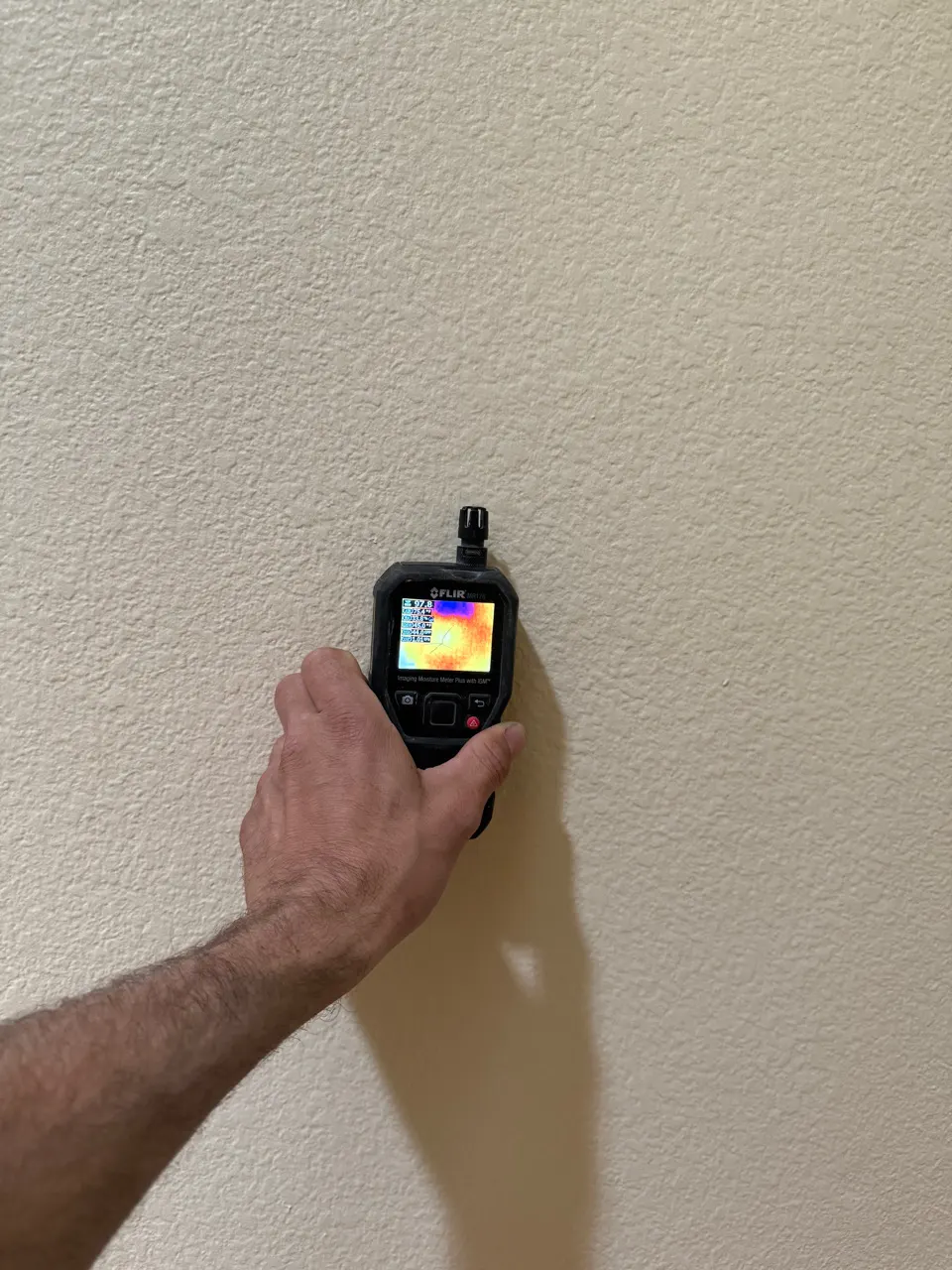
- Get moisture readings documented. A moisture meter or thermal camera creates a record of how far the water traveled and how wet the materials actually are, evidence that’s gone once everything dries or gets replaced.
Why the failed part sometimes matters beyond your claim
Set the physical evidence aside for a reason beyond your own file. When a water heater, supply line, or appliance fitting fails, insurers occasionally pursue subrogation: recovering what they paid from the manufacturer or installer if a defect or workmanship issue caused the loss. That’s a decision your carrier makes on its own, using its own investigation, and it’s not something a restoration crew or homeowner can promise or predict. But if the part gets tossed in a dumpster during cleanup, that avenue may close before it’s ever considered. Keeping it costs you nothing and preserves an option that isn’t yours to give up.
Documentation is where restoration and claims meet
This is also where a professional response earns its keep, separate from the physical drying work. A proper inspection generates moisture readings across the affected materials, identifies where the water traveled, and (where visible) points to the failure origin. That kind of record is what our water damage cleanup and repair crews build as part of the job, not as an afterthought. If you’d rather have someone help organize that documentation specifically for your insurer, our insurance claim assistance team can help put together the photos, moisture logs, and cause-of-loss notes your carrier will likely ask for. None of that is a guarantee of coverage — your policy and your insurer decide that — but a clear, early record gives the claim the best chance of being evaluated on the facts of what actually happened.
If you’re also trying to sort out what your policy is likely to cover in the first place (sudden pipe failures versus long-term leaks, source repair versus resulting damage), our guide to does homeowners insurance cover water damage walks through that separately from the claim-timing question covered here.
When water damage in Las Vegas needs a fast, documented response
Speed matters most in the first 24 to 48 hours, which is also the window where mold risk climbs and evidence of “sudden” starts to blur. If you’re dealing with an active water loss anywhere in the valley, our team provides water damage restoration in Henderson, NV and the surrounding area, with documentation built into the response from the first visit.
Call Quality 1st Restoration at 888-453-3591 after you’ve taken reasonable safety steps. Report the loss to your insurer, keep the failed part, get the moisture readings documented, and let the timeline work in your favor instead of against it.
This article is general information, not insurance, legal, or claims advice. Coverage, exclusions, deductibles, limits, and subrogation decisions vary by policy, carrier, and the specific facts of a loss. Direct coverage questions to your insurer or licensed agent.
References
Water still spreading? Every hour it sits, the repair gets bigger.
Quality 1st Restoration answers 24 / 7 / 365 across Henderson and the Las Vegas Valley.
888-453-3591