Water Damage · Answered
Should You Replace Water-Damaged Materials or Let Them Dry Out? A Henderson Homeowner's Guide
Quality 1st Restoration
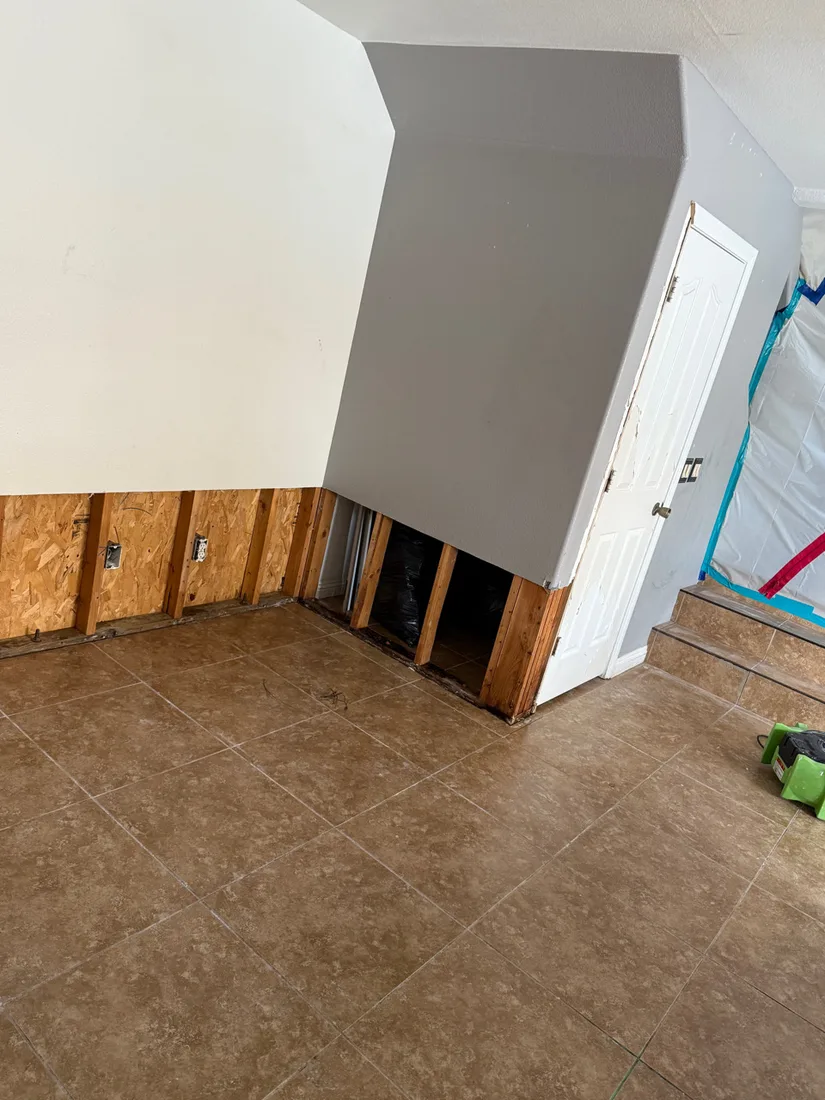
The short answer
Two factors drive the decision every time: how long the material stayed wet and what kind of water caused the damage. Clean water plus fast response usually means drying. Contaminated water or long exposure almost always means replacement. The decision has to come from data — moisture readings, thermal scans, and documented drying progress over time.
Wet vs. Damaged: Why Touch Tests Get It Wrong
Most people touch a wet wall or floor and think they know the answer. It feels damp, so it must just need to dry. Or it feels dry on the surface, so the problem’s gone. Both calls can be dead wrong.
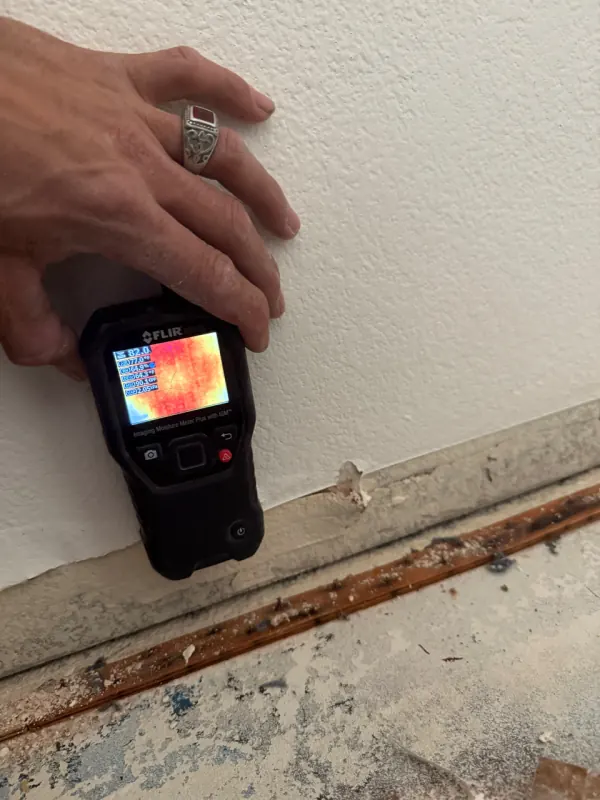
Here’s what we see constantly in Henderson homes. A homeowner has a water heater leak in the garage. They mop up the visible water, run a fan for a day, touch the drywall, and call it done. Two weeks later there’s a musty smell. By then, mold has started behind the wall where moisture sat trapped in the insulation.
The touch test fails for one big reason: your hand only reads the surface. Water moves through materials in layers. Drywall can feel dry on the painted face while the paper backing stays soaked. Carpet padding holds moisture long after the carpet fibers feel normal. Subflooring absorbs water from the bottom up, so the top might feel fine while the underside is saturated.
What Moisture Meters Tell You
Professional restoration crews use pin-type and pinless moisture meters. Pin meters push two small probes into the material and measure electrical resistance between them. Pinless meters use radio frequency signals to scan deeper without puncturing anything. Both give readings your fingers never could.
A typical dry piece of drywall reads between 0.5% and 1% moisture content. Anything above 1% means it’s still holding water. We’ve pulled readings of 25% or higher from drywall that felt barely damp to the touch. That’s the gap between what you feel and what’s really happening inside the material.
Thermal imaging cameras add another layer. They show temperature differences across surfaces. Wet areas cool through evaporation, so they show up as distinct cold spots on the screen. We use these in Henderson properties all the time to map water migration paths behind walls and under tile floors.
Materials That Fool You the Most
Some building materials are especially tricky. Here are the ones that mislead homeowners most often:
- Carpet and pad: the carpet dries fast, the pad underneath stays wet for days
- Laminate flooring: the surface repels water while the fiberboard core swells from beneath
- Baseboards: painted surfaces dry quickly, but the back side pressed against wet drywall stays damp
- Cabinet toe kicks: hidden from view and sitting right on the subfloor where water pools
And the desert climate in Henderson makes this worse in a specific way. Low humidity means surfaces dry fast. Really fast. But that rapid surface drying creates a false sense of security. The interior of porous materials hasn’t caught up. You end up with a dry shell hiding a wet core, the exact conditions mold needs to grow.
So what does this mean for your decision about replacing water-damaged materials versus drying them? It means you can’t make that call based on how something feels. The decision has to come from data. Moisture readings, thermal scans, and documented drying progress over time.
We’ve had clients in the Green Valley area ready to rip out entire sections of flooring that were salvageable once proper drying equipment was set up. We’ve also seen the opposite, homeowners convinced everything was fine because the surface felt dry, only to discover structural damage weeks later.
Don’t trust your hands on this one. Trust the numbers.
The Replace-or-Dry Decision: Three Common Scenarios
Every water damage job is different. But after years of restoration work in Henderson, we’ve noticed most situations fall into a few patterns. Here are three we see all the time. If you want more background on how this works, check our water damage restoration services in Henderson. water damage restoration services in Henderson water damage restoration services in Henderson
Scenario 1: The Slow Kitchen Leak
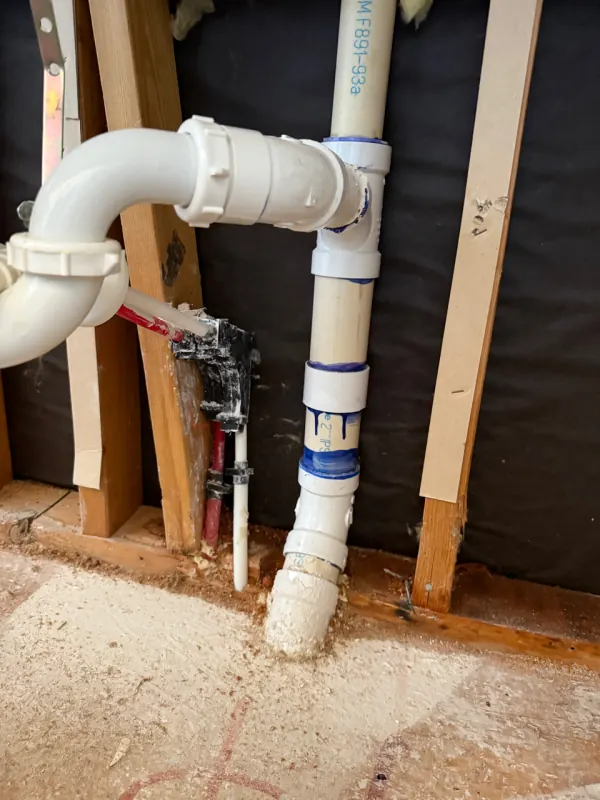
A homeowner near Green Valley Ranch notices soft spots under the kitchen sink. The leak’s been going for weeks, maybe months. By the time they call, the cabinet base is swollen and the subfloor smells musty.
This one’s almost always a replace situation. Long-term moisture exposure breaks down particleboard and MDF from the inside out. A moisture meter might read normal on the surface, the damage is already structural underneath. We pull the cabinet base, check the subfloor with a pin-type meter, and usually find readings above 20 percent. That means replacement.
Drying won’t reverse wood that’s already delaminated or warped beyond recovery.
Scenario 2: The Fast Supply Line Burst
A supply line behind a toilet fails in a home off Horizon Ridge Parkway. Clean water floods the bathroom and hallway. The homeowner shuts off the main valve within an hour.
This is where drying works well. Clean water from a supply line is Category 1 under IICRC standards. The exposure time was short. Drywall that hasn’t started to crumble can often be saved with proper extraction and air movement. We place dehumidifiers, set up air movers at the right angles, and monitor with daily moisture readings.
Here’s the key detail most people miss. Speed matters more than anything. If that same burst goes unnoticed for 48 hours, you’re looking at a totally different outcome. The drywall soaks through, insulation behind it traps moisture, and mold colonization can start. Same water source, same home, but the timeline changes everything.
Scenario 3: The Sewage Backup
Nobody wants this one. A sewer line backs up into a Henderson home’s lowest bathroom. Black water covers the tile floor and soaks into the baseboards and lower drywall.
There’s no drying option here. Category 3 water contains bacteria and pathogens that contaminate porous materials on contact. Baseboards, drywall up to the flood line, carpet, pad, and any insulation that got wet all need to come out. The IICRC S500 standard is clear on this, you don’t try to salvage porous materials after sewage contact.
We cut drywall at least 12 inches above the visible water line. Then we treat the exposed framing with antimicrobial solution before any rebuild happens. The framing itself is usually salvageable because dimensional lumber is dense enough to be cleaned and dried properly.
So what’s the pattern across all three? Two factors drive the decision every time: how long the material stayed wet and what kind of water caused the damage. Clean water plus fast response usually means drying. Contaminated water or long exposure almost always means replacement.
And here’s something worth remembering. Henderson’s dry desert climate can trick you into thinking materials dried on their own. Surface moisture evaporates fast in low humidity. But moisture trapped inside wall cavities or under flooring doesn’t follow the same rules. We’ve pulled up “dry” laminate flooring and found saturated subfloor underneath, weeks after the original event.
If you’re not sure which scenario fits your situation, a professional moisture assessment takes the guesswork out. A good next step is to look at how our Henderson restoration team handles these assessments.
How Professionals Measure Hidden Moisture
Here’s what most people don’t realize. Water doesn’t just sit where you can see it. It travels through drywall, seeps into subfloor layers, and wicks up inside wall cavities. The wet spot on your ceiling? That might be the smallest part of the problem.
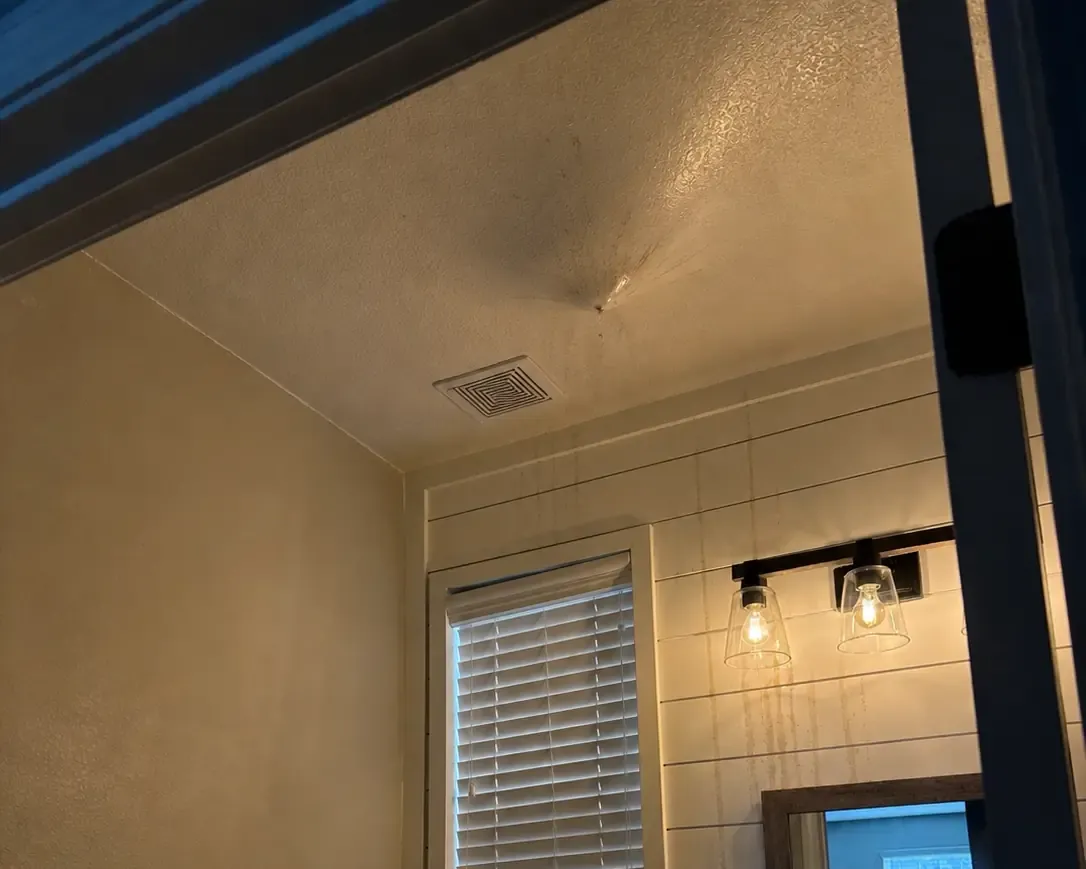
That’s why guessing never works.
Trained restoration pros use specific tools to find moisture you can’t feel or see. We rely on readings, not hunches. Every decision about whether to replace water-damaged materials or dry them in place starts with accurate data from these instruments.
Moisture Meters
There are two main types. Pin-type meters use small probes that penetrate the material’s surface. They measure the electrical resistance between two points, the wetter the material, the lower the resistance. These give precise readings at specific depths in wood, drywall, and other porous materials.
Pinless meters work differently. They use radio frequency signals to scan below the surface without making holes. We run these across walls and floors to map moisture patterns quickly. Both types matter, we often use them together on the same job in Henderson homes.
A dry piece of drywall reads around 0.5% moisture content. Anything above 1% tells us there’s a problem. Wood framing should stay below 15% to 16%. And when we see readings above 20% in wood studs, that’s a red flag for potential mold growth within 24 to 48 hours according to the Environmental Protection Agency.
Thermal Imaging Cameras
Infrared cameras don’t detect moisture directly. They detect temperature differences. Wet areas cool down faster through evaporation, so they show up as cooler zones on the thermal display. This lets us scan an entire room in minutes and spot hidden moisture behind walls, under tile, even inside ceiling assemblies.
In Henderson’s dry climate, evaporation happens fast on exposed surfaces. But trapped moisture behind vapor barriers or under cabinets doesn’t evaporate the same way. Thermal imaging catches what your eyes miss. We’ve found active leaks behind shower walls in Green Valley homes that owners had no idea existed, the only visible sign was a faint musty smell.
Hygrometers and Psychrometric Readings
Beyond the materials themselves, we measure the air. Thermo-hygrometers track temperature and relative humidity in the affected space. These readings tell us whether drying conditions are right or if we need to adjust equipment.
The goal is to create a drying environment where moisture moves out of materials and into the air, then gets removed by dehumidifiers. If the air is already saturated, nothing dries. Simple as that.
Why Documentation Matters
Every reading gets logged. We take initial moisture readings, then monitor daily until materials reach their dry standard. This documentation does two things. It proves the structure dried to safe levels. And it creates a record for insurance purposes.
But here’s the part that matters most to you. Without these measurements, there’s no way to know if a material should be saved or torn out. A piece of drywall that looks fine might be holding 40% moisture behind the paint. Hardwood floors that seem dry on top could be trapping water underneath against the subfloor.
We see homeowners make this mistake all the time. They towel things off, run a fan for a day, and assume everything’s fine. Three weeks later, mold shows up inside the wall cavity. Trapped moisture like that is exactly what leads to biological pollutants and mold growth according to CPSC’s home safety guide. The materials looked dry, they just weren’t.
If you’re dealing with water damage in Henderson, getting professional moisture readings is the first real step. It takes the guesswork out of every decision that follows. Learn more about what our restoration process involves once those readings confirm the scope of your damage.
Water still spreading? Every hour it sits, the repair gets bigger.
Quality 1st Restoration answers 24 / 7 / 365 across Henderson and the Las Vegas Valley.
888-453-3591