Water Damage · Answered
Does Renters Insurance Cover Water Damage in Las Vegas?
Quality 1st Restoration
The short answer
Usually, but only for certain losses. In a Las Vegas rental, renters insurance may help replace your belongings or pay covered additional living expenses after a sudden, accidental water event such as a burst pipe. It usually does not insure the apartment’s structure, and standard policies generally exclude outside flooding. Your policy wording controls.
Does Renters Insurance Cover Water Damage in Las Vegas?
Usually, but only for certain losses. In a Las Vegas rental, renters insurance may help replace your belongings or pay covered additional living expenses after a sudden, accidental water event such as a burst pipe. It usually does not insure the apartment’s structure, and standard policies generally exclude outside flooding. Your policy wording controls. (Triple-I renters insurance guide)
That distinction matters when water comes through a ceiling, moves from an upstairs apartment, or spreads across more than one floor. The water may be one event, but the insurance questions are not all the same. Your clothes, furniture, electronics, temporary housing, the building, and damage to another unit can fall under different parts of different policies.
What renters insurance usually covers after water damage
Renters insurance is generally built around three protections:
- Personal property: Your policy may help repair or replace belongings damaged by a covered water loss, subject to your limit, deductible, exclusions, and whether the policy pays actual cash value or replacement cost.
- Personal liability: If the insurer determines that you are legally responsible for damage to someone else’s property, the liability section may respond, up to the policy limit. That is not the same as saying every leak from your apartment becomes your bill—or that every leak is covered.
- Additional living expenses: If a covered loss makes the rental uninhabitable, the policy may help with qualifying extra costs such as a hotel or temporary rental. Limits, time periods, documentation, and the definition of a covered loss all matter.
The landlord’s policy generally has a different job. It may address the building’s walls, ceilings, floors, plumbing, and other structure, while your renters policy addresses your belongings and certain personal protections. The landlord’s insurance is not a replacement for your own policy. It generally will not replace your laptop, clothing, furniture, or other property just because those items were inside the rental. (Triple-I renters insurance guide)
So if an apartment pipe bursts and ruins your bedroom furniture, there may be a contents claim and a building claim at the same time. You should notify the property manager and your own insurer instead of waiting for the two sides to decide who is supposed to call whom.
Situations that may be covered and situations that often are not
The cause, timing, and source of the water usually matter more than the size of the puddle. These are general patterns, not a decision on your policy.
| Situation | What may happen | What to verify |
|---|---|---|
| A supply pipe suddenly bursts | Your belongings may be covered if the loss is a covered, sudden event. The building repairs are usually a separate owner-side issue. | Cause of loss, deductible, contents limit, and source-repair exclusions. |
| A toilet or appliance overflows accidentally | Personal-property coverage may apply to damaged belongings. Liability may matter if damage spreads to another unit and you are legally responsible. | Whether the overflow was sudden, whether negligence is alleged, and what liability coverage says. |
| A slow leak runs behind a wall or under a cabinet | Gradual damage, seepage, wear, or poor maintenance may be excluded or limited. | When the leak began, what was visible, and the policy’s gradual-damage language. |
| Rain enters through a sudden storm opening | Some policies may cover belongings damaged by rain entering through a covered accidental opening. | Whether the opening was caused by a covered event or left unrepaired. |
| Water rises from outside during a flood or flash flood | Standard renters insurance generally does not cover flood-related damage. | Separate flood insurance, contents limits, waiting periods, and the policy’s flood definition. |
| A sewer or drain backs up | Standard coverage may not include this without an endorsement. | Whether sewer or drain backup coverage was added and what sublimit applies. |
Nevada’s Division of Insurance says standard homeowners and renters insurance does not cover flood-related damage to the home or personal items. Separate flood coverage may be available through the National Flood Insurance Program or another provider. (Nevada Division of Insurance flood guidance)
That is why “water damage” and “flood damage” should not be treated as interchangeable phrases. A burst pipe inside a second-floor apartment and stormwater coming into a first-floor unit may look similar after the fact, but the policies can classify them differently.
The landlord’s insurance and your renters policy do different jobs
If you rent an apartment, condo, townhome, or house, start by separating the building from your things.
The owner or property manager typically handles the building’s response: stopping a shared plumbing failure, protecting the structure, arranging access, and coordinating repairs to the premises. Your renters policy is the place to ask about your belongings, your liability, and additional living expenses after a covered loss.
That does not automatically decide who caused the loss or who ultimately pays. A failed building supply line, a tenant’s accidental overflow, a roof opening, a storm event, and a long-term leak can lead to different coverage and responsibility questions. Your insurer, the property manager, and the parties involved may need to investigate the same event from different angles.
In Nevada, the landlord-tenant statutes describe habitability duties that include weather protection, plumbing, water supply, and keeping certain parts of the dwelling in good repair. They also describe tenant duties such as reasonable use of plumbing and avoiding deliberate or negligent damage. Those rules are not a substitute for your lease, your insurance contract, or legal advice. They are one more reason to report the problem promptly and keep a written record. (Nevada Revised Statutes Chapter 118A)
Why a water loss in a multistory Las Vegas building gets complicated
In a one-story rental, the main questions may involve your belongings, the source of the water, and the building owner. In a multistory apartment or condo building, water can travel through a ceiling cavity, wall, floor assembly, plumbing chase, hallway, or shared area before anyone sees the full extent of the damage.
That can create several overlapping workstreams:
- The source unit: The unit where the pipe, toilet, appliance, roof opening, or other source was first identified may need access and source documentation.
- The affected unit: Each renter needs to document their own belongings and ask their own insurer about contents, deductible, liability, and additional living expenses.
- The building and common areas: The owner, landlord, HOA, or property manager may have a separate building claim and repair scope for ceilings, floors, walls, shared systems, corridors, or other property.
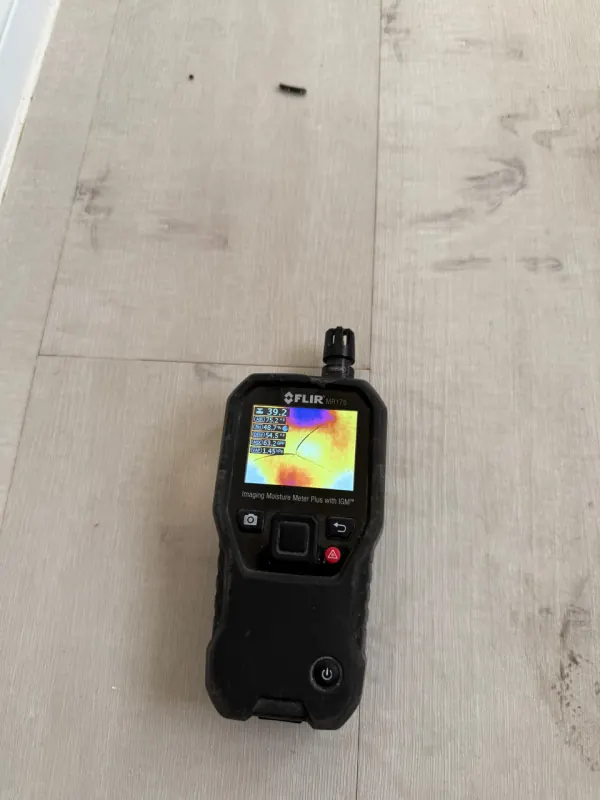
- The restoration record: A professional response may need unit-by-unit photos, moisture readings, drying records, access notes, and clear separation between affected and unaffected areas.
This is where a renter can feel stuck. The property manager may be arranging work on the building, while your carrier is asking for a list of damaged belongings. A neighbor may say their insurance is handling it, while your ceiling is still wet. Several tenants may be displaced, but each person may have a different policy limit, deductible, named-insured status, and temporary-housing question.
Do not assume that one claim covers every person in the building. Report the loss to the property manager and your own insurance company, keep copies of messages and photos, and ask who is coordinating access to your unit. If a leak affects several apartments, common areas, or a managed building, see our commercial water damage restoration for multi-unit properties page for the coordinated restoration scope.
Start with safety and documentation. Identify where the moisture moved, protect belongings when you can, and keep the records clear so each party can address its own part of the loss.
Roommates, neighbors, and multiple policies
If you share a Las Vegas rental, check who is actually listed as an insured person. Do not assume that paying part of a roommate’s premium means your belongings, liability, and additional living expenses are protected under the same terms. Some insurers allow certain roommates to share a policy; others require separate policies, and a shared limit can create its own problem.
Ask each person to confirm:
- whose name appears on the declarations page;
- whose belongings are included and up to what limit;
- whether the policy uses actual cash value or replacement cost;
- whether each person has liability and additional-living-expense coverage; and
- what the deductible and relevant endorsements are.
If water from another unit damaged your property, you may still need to open a claim with your own carrier. Your insurer can explain whether it will handle your contents first and pursue another party later. That process is not something a restoration company should promise or decide for you.
Las Vegas and Nevada details renters should know
Las Vegas is dry, but dry does not mean flood-proof. The National Weather Service says monsoon moisture typically moves into the Mojave Desert in July and August, bringing scattered thunderstorms. Heavy rain can trigger flash flooding in normally dry washes and low-lying areas. (NWS Las Vegas climate information)
For coverage purposes, ask your insurer how it classifies the water: an indoor plumbing failure, roof or storm opening, surface water, sewer backup, or flood. For safety purposes, treat outside floodwater as dangerous. Clark County warns that flash flooding can occur without warning and says never to drive through floodwater. (Clark County flash-flood guidance)
If you rent near a low-lying area, a wash, or a property with a history of stormwater entry, ask about separate flood contents coverage before the next storm. Do not wait until water is already entering the unit: flood policies and endorsements have their own eligibility, waiting-period, and coverage rules.
What to do after water damage in your rental
When water is active, safety comes before paperwork. Then work through these steps:
- Stop the source only if you can do it safely. Do not touch electrical equipment around water or enter contaminated water. Call emergency services for immediate danger.
- Notify the landlord or property manager. Use the emergency number in your lease or tenant portal, and keep a time-stamped copy of the notice.
- Call your insurance company or agent. Ask for a claim number, the adjuster’s contact information, and instructions about damaged items, temporary housing, and emergency mitigation.
- Document before you move things. Photograph or video the source, ceilings, walls, floors, rooms, closets, and each damaged belonging. Include wide shots and close-ups when safe.
- Prevent more damage without making repairs you cannot support. Move dry items away from the affected area if safe. Do not throw away damaged belongings or authorize permanent work until your insurer tells you what it needs, unless safety requires immediate disposal.
- Save records. Keep hotel, laundry, storage, replacement, and emergency-purchase receipts. Save texts, emails, work orders, photos, moisture reports, and names of everyone who visits the unit.
Professional restoration standards also recognize the importance of inspections, material and drying decisions, project documentation, and clear limitations. The ANSI/IICRC S500 standard covers water-damage restoration in residential, commercial, and institutional buildings, including drying technology, documentation, contents evaluation, and risk management. (IICRC S500)
Questions to ask your insurance company
When you call, ask direct questions instead of relying on a general statement that “water is covered”:
- Is the reported cause of this loss a covered peril under my policy?
- Does my coverage apply to my personal belongings, and what deductible, limit, or sublimit applies?
- Is my property insured at actual cash value or replacement cost?
- Does additional living expense coverage apply if the unit cannot be occupied, and what receipts or approval are required?
- Do I have sewer or drain-backup coverage? Do I have separate flood coverage for outside water?
- If water came from another unit or damaged another unit, should I report a liability claim?
- What should I do with damaged belongings, wet materials, and emergency cleanup before an adjuster inspects?
- Is the landlord or property manager listed as an additional interest, and what information do you need from them?
- Are there any policy-effective-date, maintenance, vacancy, or prior-loss issues that affect this claim?
Write down the answers. Ask for important claim decisions and denials in writing. If you do not understand a term, ask the carrier or a licensed insurance professional to explain the policy language. A restoration professional can help document the water condition and the work needed; they cannot replace your insurer’s coverage decision.
When to call a water-damage professional
Call for professional help when water is still spreading, a ceiling is saturated or sagging, flooring or drywall is wet, the source is hidden, the water may be contaminated, or more than one apartment or floor is involved. Multi-unit losses are especially difficult when access, tenant belongings, common areas, and drying records all need to be tracked at once.
Quality 1st Restoration’s current site lists a commercial water-damage service for offices, retail spaces, warehouses, and multi-unit properties in the Henderson and Las Vegas Valley market. Confirm current service area and availability when you call. The team can help assess the water-damage response and documentation needs; your insurance company still decides coverage under your plan.
If you are dealing with an active disaster, call Quality 1st Restoration at 888-453-3591 after taking reasonable safety steps. Ask your insurance plan what it covers, notify your property manager, and call an expert who can help keep the damage and the records from getting worse.
This article is general information, not insurance, legal, or claims advice. Coverage, exclusions, deductibles, limits, endorsements, and responsibilities vary by policy, lease, cause of loss, and facts. Direct coverage questions to your insurer or licensed agent, and seek qualified legal or tenant advice for a dispute.
References
- Nevada Division of Insurance — Flood Insurance
- Insurance Information Institute — Your renters insurance guide
- Allstate — Does Renters Insurance Cover Water and Flood Damage?
- National Association of Insurance Commissioners — Renting Your Home
- Nevada Revised Statutes — Chapter 118A
- National Weather Service Las Vegas — Climate of Las Vegas
- Clark County Public Works — Emergency Response
- IICRC — ANSI/IICRC S500 Standard for Professional Water Damage Restoration
Water still spreading? Every hour it sits, the repair gets bigger.
Quality 1st Restoration answers 24 / 7 / 365 across Henderson and the Las Vegas Valley.
888-453-3591